Revolutionizing fashion with data insights, smart inventory, and personalized engagement
Enhance game strategy and player performance with AI solutions for sports
We improve teaching, reduce costs, and expand reach with AI-based platforms
Advance healthcare with AI for personalized care and efficiency
Drive campaigns, boost engagement, and optimize results with AI solutions
AI solutions for smarter real estate management and customer experience
We help retailers cut costs and boost efficiency with AI
Enhance logistics, fleet management, and delivery performance
Streamline operations, reduce costs, and improve efficiency with AI
Optimize investments, detect fraud, and strengthen decision-making
Improve risk assessment, claims processing, and client satisfaction
Automate workflows, analyze cases, and improve client services with AI
We are your strategic partners, skilled in converting your unique challenges into AI-powered strategies
Explore how our company equips businesses, enterprises, and organizations with complete end-to-end AI solutions.
Get a FREE consultation! Our AI experts are ready to help you navigate the future with innovative AI-driven solutions.
Our AI tech stack offers everything you need, from expert AI developers to full-stack expertise.
Our awards showcase our commitment to delivering innovative solutions that drive business transformation.
Find out everything from when to choose us, to the types of work we do, to how the AI development process.
Revolutionizing fashion with data insights, smart inventory, and personalized engagement
Enhance game strategy and player performance with AI solutions for sports
We improve teaching, reduce costs, and expand reach with AI-based platforms
Advance healthcare with AI for personalized care and efficiency
Drive campaigns, boost engagement, and optimize results with AI solutions
AI solutions for smarter real estate management and customer experience
We help retailers cut costs and boost efficiency with AI
Enhance logistics, fleet management, and delivery performance
Streamline operations, reduce costs, and improve efficiency with AI
Optimize investments, detect fraud, and strengthen decision-making
Improve risk assessment, claims processing, and client satisfaction
Automate workflows, analyze cases, and improve client services with AI
We are your strategic partners, skilled in converting your unique challenges into AI-powered strategies
Explore how our company equips businesses, enterprises, and organizations with complete end-to-end AI solutions.
Get a FREE consultation! Our AI experts are ready to help you navigate the future with innovative AI-driven solutions.
Our AI tech stack offers everything you need, from expert AI developers to full-stack expertise.
Our awards showcase our commitment to delivering innovative solutions that drive business transformation.
Find out everything from when to choose us, to the types of work we do, to how the AI development process.
Revolutionizing fashion with data insights, smart inventory, and personalized engagement
Enhance game strategy and player performance with AI solutions for sports
We improve teaching, reduce costs, and expand reach with AI-based platforms
Advance healthcare with AI for personalized care and efficiency
Drive campaigns, boost engagement, and optimize results with AI solutions
AI solutions for smarter real estate management and customer experience
We help retailers cut costs and boost efficiency with AI
Enhance logistics, fleet management, and delivery performance
Streamline operations, reduce costs, and improve efficiency with AI
Optimize investments, detect fraud, and strengthen decision-making
Improve risk assessment, claims processing, and client satisfaction
Automate workflows, analyze cases, and improve client services with AI
We are your strategic partners, skilled in converting your unique challenges into AI-powered strategies
Explore how our company equips businesses, enterprises, and organizations with complete end-to-end AI solutions.
Get a FREE consultation! Our AI experts are ready to help you navigate the future with innovative AI-driven solutions.
Our AI tech stack offers everything you need, from expert AI developers to full-stack expertise.
Our awards showcase our commitment to delivering innovative solutions that drive business transformation.
Find out everything from when to choose us, to the types of work we do, to how the AI development process.
Revolutionizing fashion with data insights, smart inventory, and personalized engagement
Enhance game strategy and player performance with AI solutions for sports
We improve teaching, reduce costs, and expand reach with AI-based platforms
Advance healthcare with AI for personalized care and efficiency
Drive campaigns, boost engagement, and optimize results with AI solutions
AI solutions for smarter real estate management and customer experience
We help retailers cut costs and boost efficiency with AI
Enhance logistics, fleet management, and delivery performance
Streamline operations, reduce costs, and improve efficiency with AI
Optimize investments, detect fraud, and strengthen decision-making
Improve risk assessment, claims processing, and client satisfaction
Automate workflows, analyze cases, and improve client services with AI
We are your strategic partners, skilled in converting your unique challenges into AI-powered strategies
Explore how our company equips businesses, enterprises, and organizations with complete end-to-end AI solutions.
Get a FREE consultation! Our AI experts are ready to help you navigate the future with innovative AI-driven solutions.
Our AI tech stack offers everything you need, from expert AI developers to full-stack expertise.
Our awards showcase our commitment to delivering innovative solutions that drive business transformation.
Find out everything from when to choose us, to the types of work we do, to how the AI development process.
Theft and loss risk reduced through real-time travel alerts
Months demo built and shipped end to end
Working user flows delivered in demo
Most travel insurance products pay after a loss. They do not prevent one.
Rodi was built to change that. Ilia Mallioras, CEO of Rodi, came to Tezeract with a focused brief: build AI insurance software for agents and insurers that provides travelers with real-time protection for high-value items. The platform needed to handle item verification, location-based risk alerts, identity checks, and a clean claims flow, all inside a mobile-first experience that insurers could demo and trust.
Tezeract designed and built the full platform, from the AI verification layer and geolocation engine to the claims workflow, KYC checks, and insurer API integrations, and delivered a working demo in six months.
Ilia Mallioras is a China-based InsurTech founder building a B2C and B2B travel insurance product for travelers who need real coverage that works when they need it, not weeks later.
Ilia had a clear product thesis and a strong understanding of the gaps in existing travel insurance. What he needed was a technical partner who could build a working AI-powered insurance platform from scratch.
Client Name
Ilia Mallioras
Industry
Insurance / InsurTech
Business Model
B2C travelers + B2B insurer partnerships
Location
China
Product
Rodi
Duration
6 months
If you are building a travel insurance product, a valuables coverage platform, or any insurance tool where claims speed and fraud prevention are the core business problems, the challenge Ilia faced is one every InsurTech founder hits. Standard policies do not adapt. Manual claims create delays. Fraud exposure grows when the evidence is weak.
This is exactly where AI-based insurance creates its biggest operational and commercial advantage.
The Challenge
01
The core issue was trust on both sides of the transaction. Travelers had no simple, mobile-first way to register high-value items, set coverage for a specific trip, and get real-time alerts when risk rose in their location. Insurers had no reliable way to verify claims, verify item ownership, or assess fraud risk without slow, manual reviews.
Standard travel insurance workflows were built for a different era. They relied on paper receipts, static pricing, and claims teams manually chasing evidence. That caused delays in travel insurance claims, frustrated customers, and increased insurers’ support costs.
Rodi needed an AI travel insurance solution that could close both gaps at once, providing prevention for travelers and verification confidence for insurers.
Travelers rarely kept receipts or item records. Claims arrived with missing evidence, creating disputes and delays.
02
Existing products had no mechanism to alert users when incidents were reported in their travel area, making prevention impossible.
03
Without item verification and identity checks, inflated or false claims were difficult to catch early. The platform needed insurance fraud detection AI built into the claims flow.
04
Standard policies were not designed for short-trip, item-level cover. The platform needed to support flexible, time-bound coverage tied to specific travel windows.
05
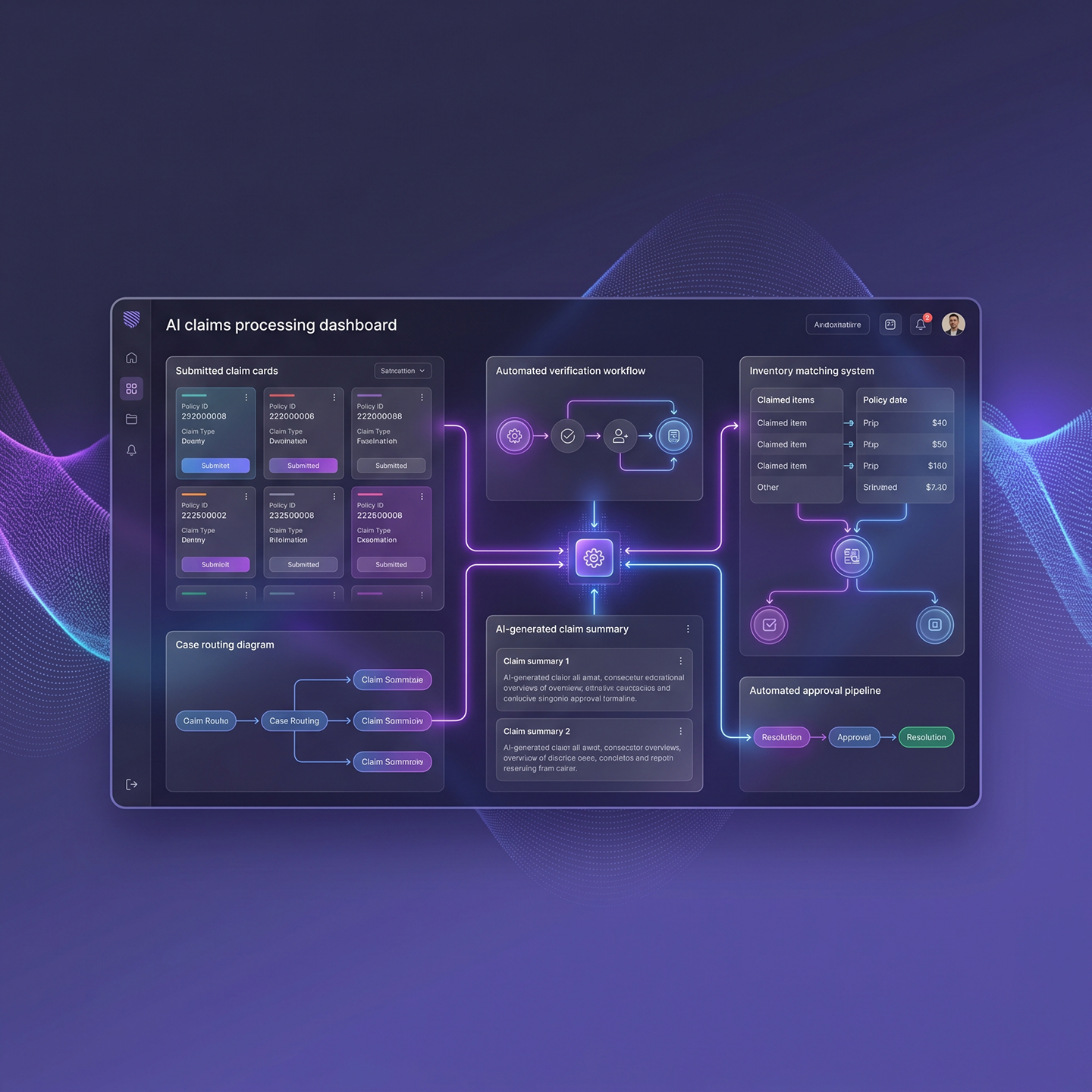
Manual triage meant claims sat in queues. The product needed AI claims processing software that could check completeness, flag issues, and route cases without human intervention at every step.
06
From receipt scanning to AI anomaly detection, Rodi II automated the entire trust layer of insurance onboarding. Tezeract helps insurance companies reduce manual work while improving fraud prevention accuracy.
Without a working AI-powered insurance platform, Rodi could not demonstrate a credible end-to-end journey to insurer partners. The demo had to show a complete flow, from signup and item registration to location alerts and claims steps, before any commercial conversations could move forward.
Journey Overview
Ilia did not start by evaluating dozens of vendors. He asked for referrals from his network and screened teams with experience in insurance products and mobile development. The evaluation came down to following questions:
Tezeract answered all five with a concrete technical plan, a phased delivery schedule, and clear acceptance criteria tied to working flows. The decision moved from the first conversation to approved scope in under three weeks.
The Solution
Tezeract built Rodi around one principle: the fastest way to reduce insurance losses is to prevent them, and the fastest way to process a claim is to have the right evidence before the incident happens.
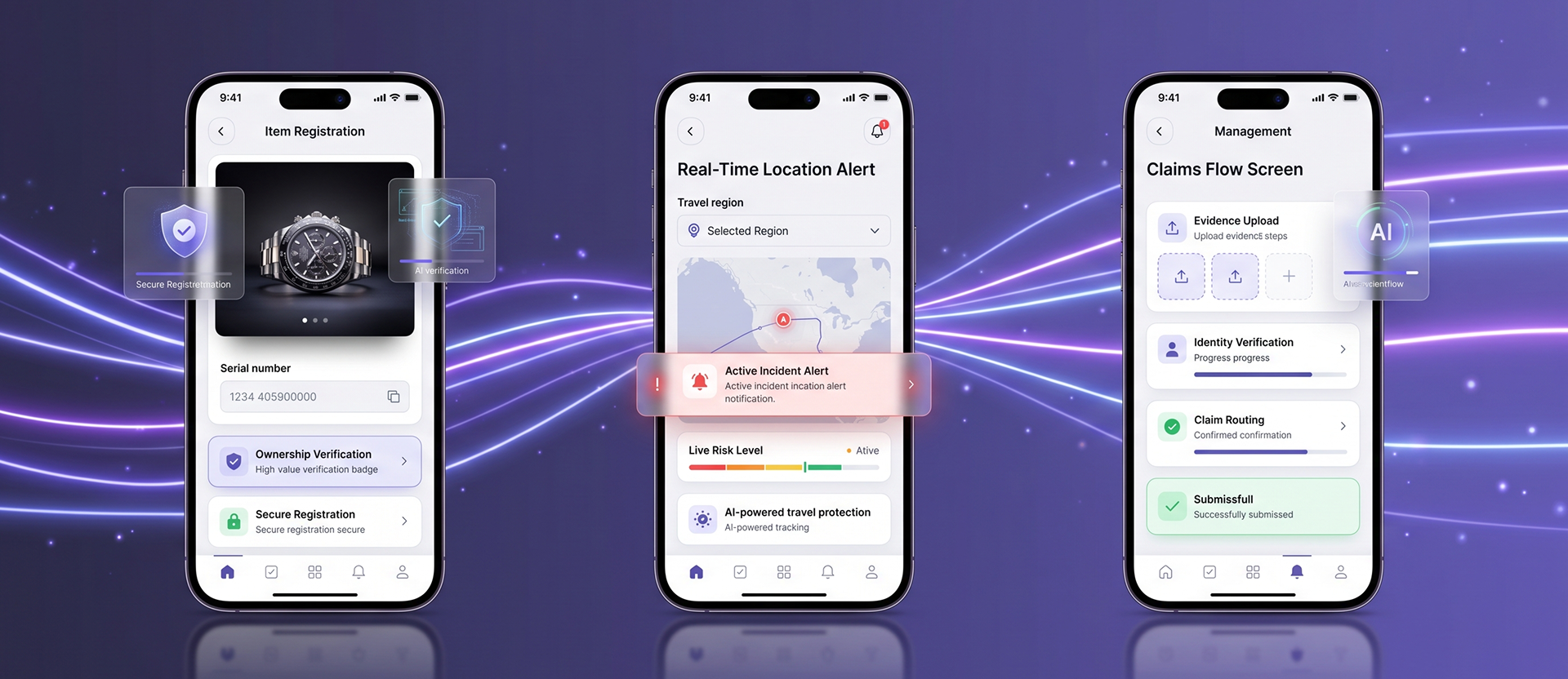
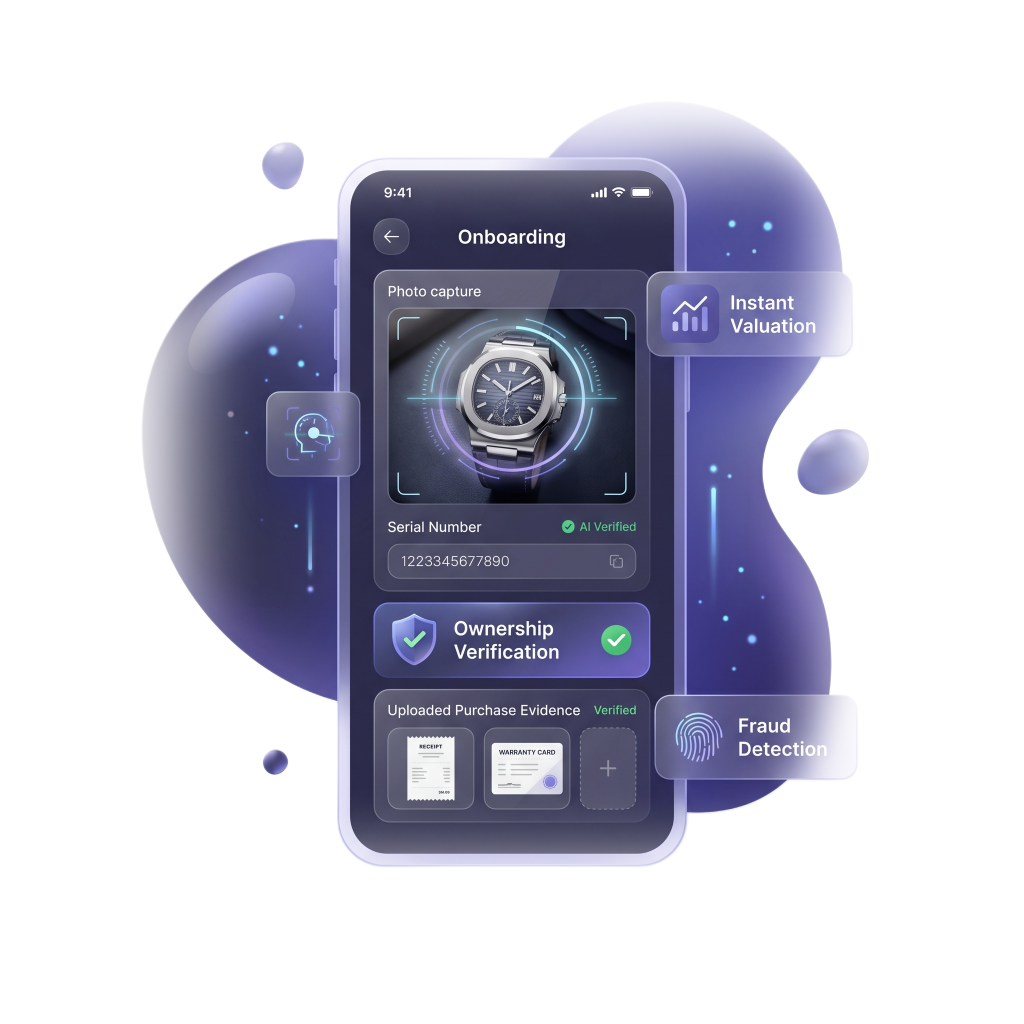
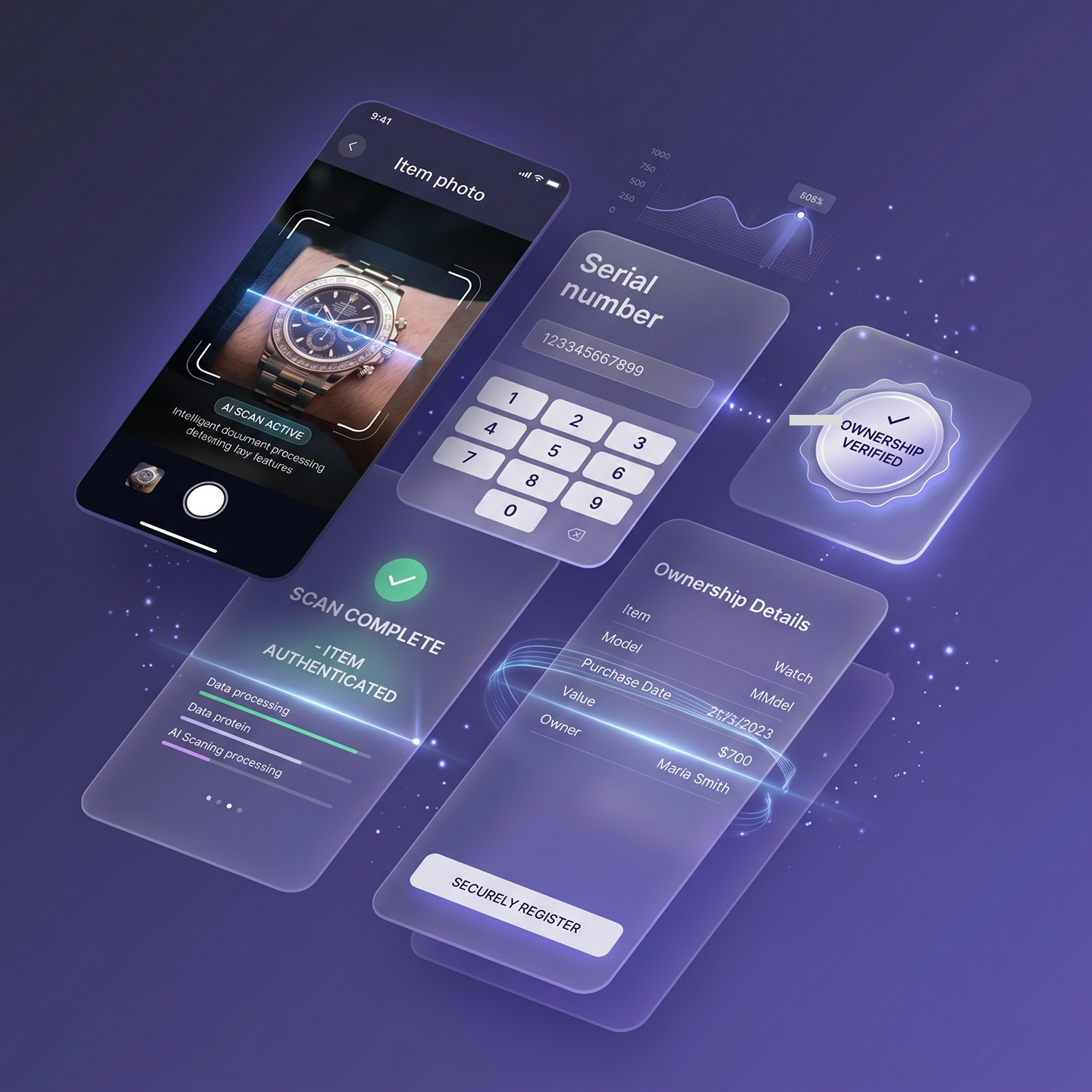
Rodi uses a Python and FastAPI AI service with OpenCV for item verification AI insurance. When a user registers a high-value item, the system captures structured item data, photos, serial numbers, item type, and ownership signals, and ties them to a verified identity. This creates a clean evidence record before any claim is ever filed.
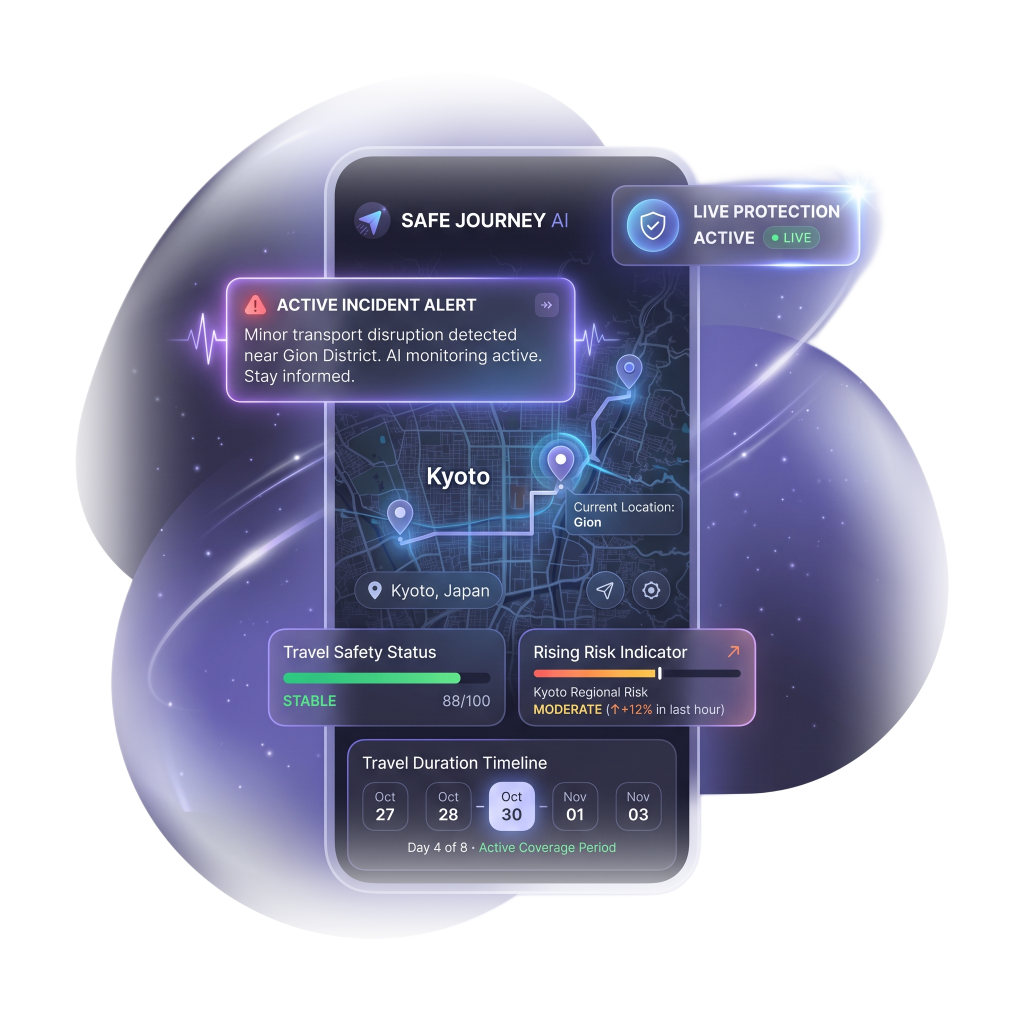
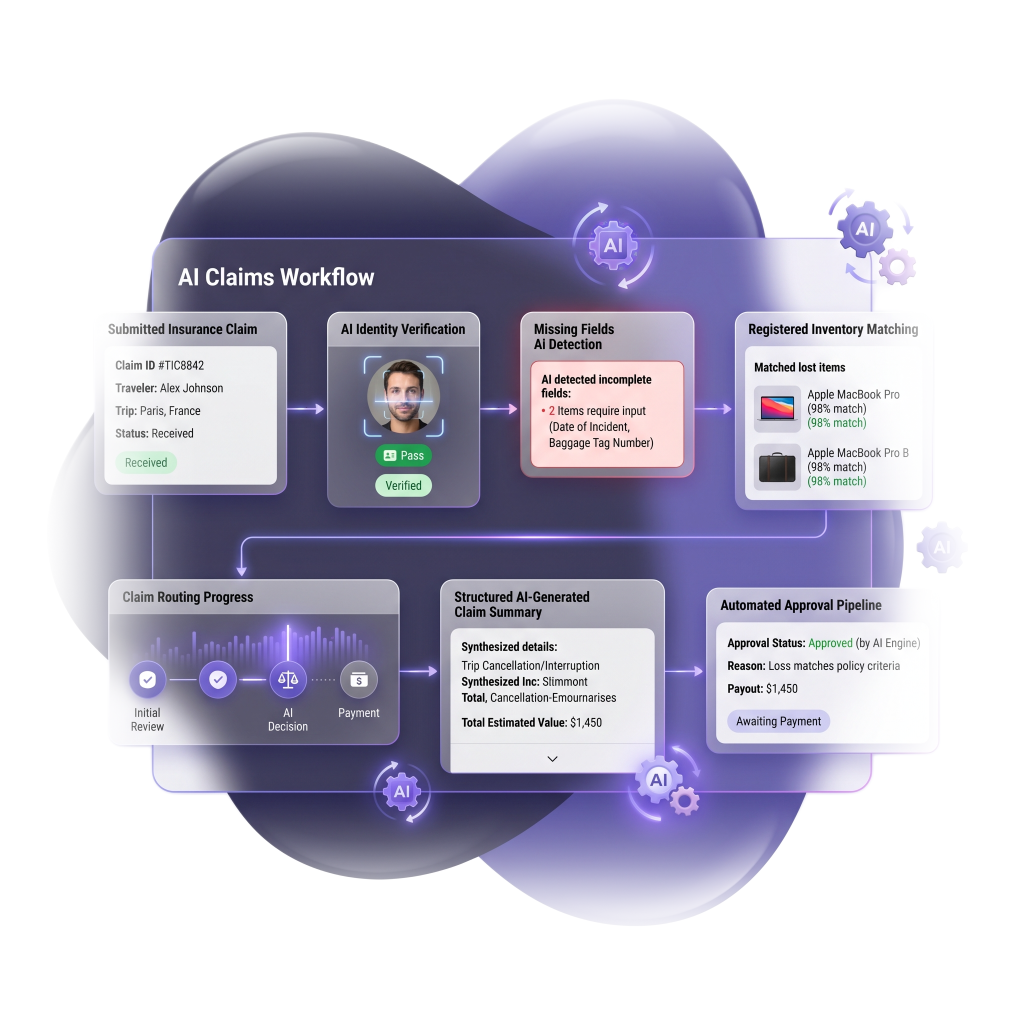
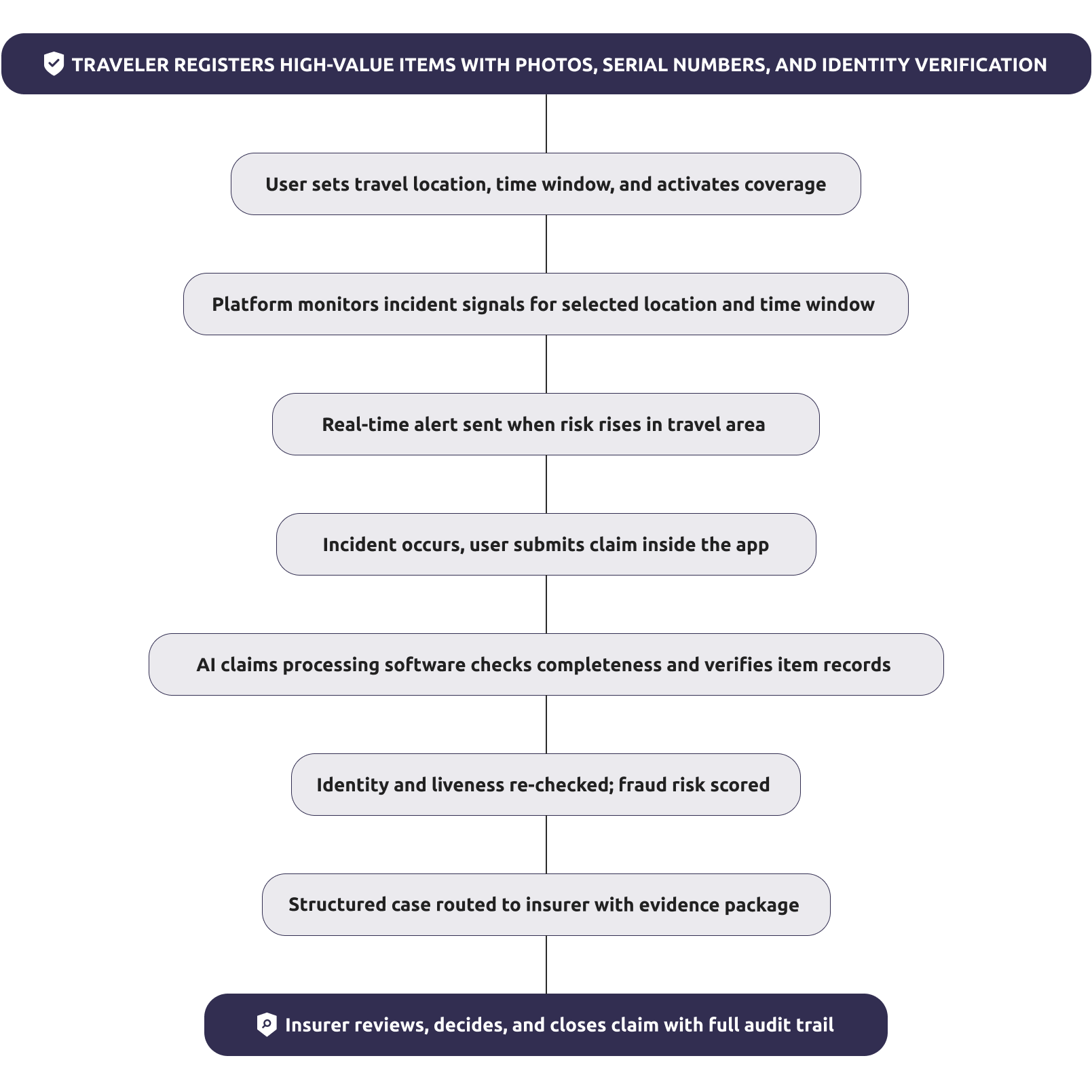
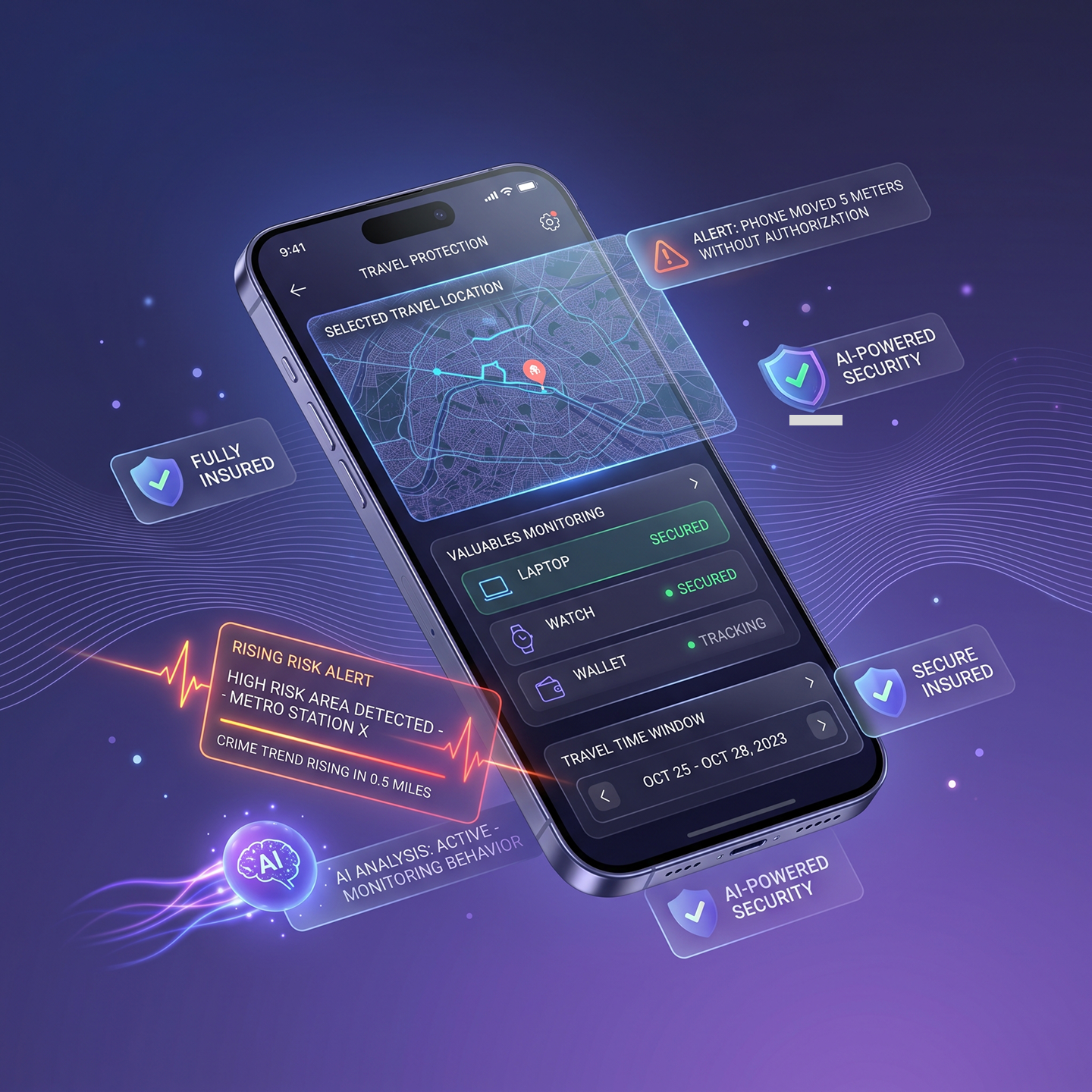
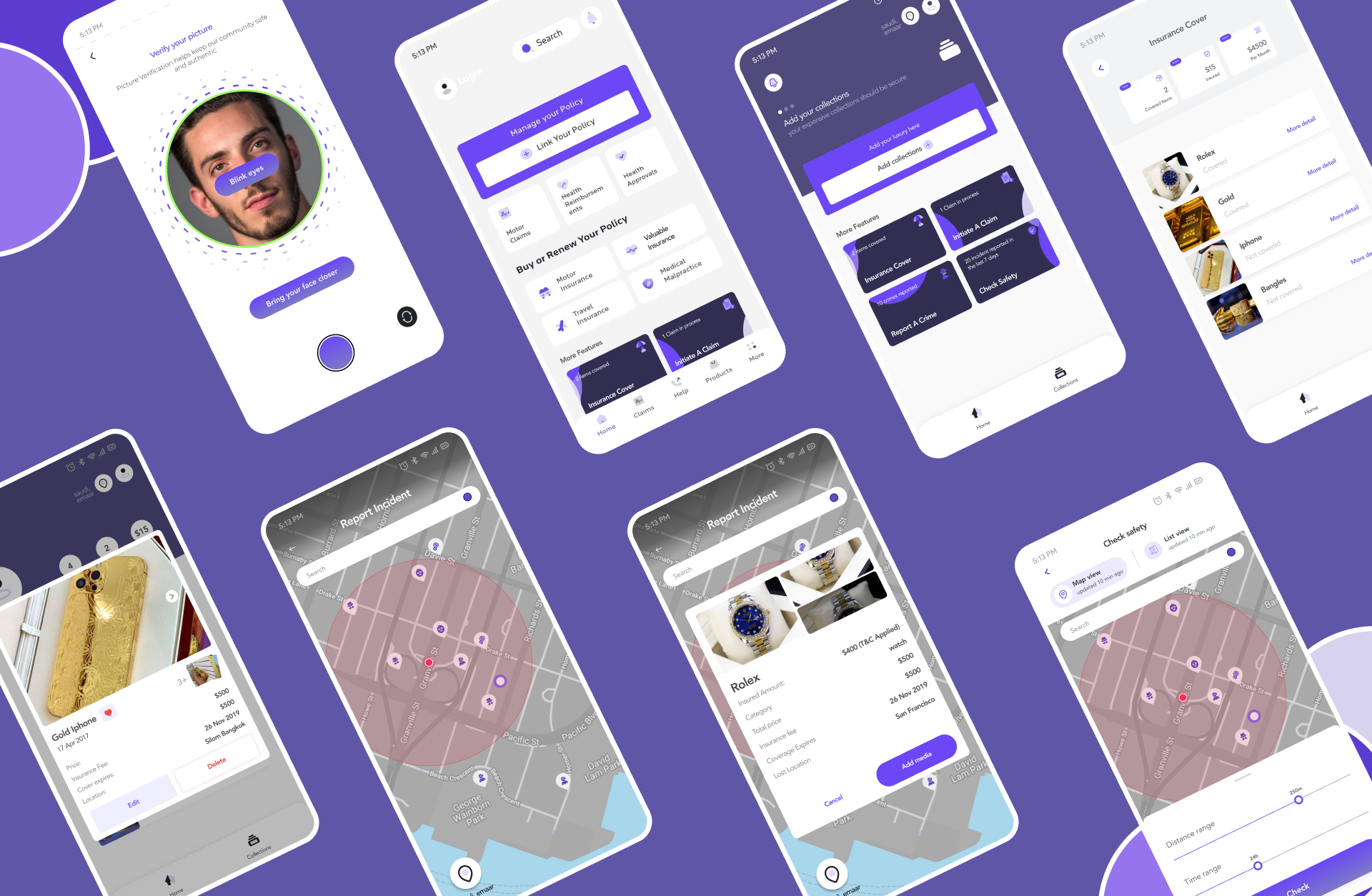
A traveler opens the app, registers their high-value items, sets a travel location and time window, and activates coverage. The platform monitors incident signals for that location and time window, sending real-time alerts when risk rises. If an incident occurs, the user submits a claim inside the app. The AI claims processing software checks completeness, verifies item records and identities, and routes the case to the insurer with a structured evidence package, reducing manual review time and supporting faster decisions.
Using computer vision, face recognition, and location-based logic, the platform delivers:
01
Users set a travel area and time window. The platform monitors incident reports for that location and sends alerts when risk rises. This shifts the product from reactive payout to active prevention.
02
A guided mobile flow captures item photos, serial numbers, and structured ownership details at onboarding. This solves the proof-of-ownership insurance claims problem at the source, before a claim is ever filed, and gives insurers a clean record of evidence to work from.
03
When a claim is submitted, the AI claims processing software checks for missing fields, verifies item records against the registered inventory, confirms identity, and routes the case with a structured summary. This reduces delays in travel insurance claims caused by incomplete submissions and manual triage.
Real-time face detection and matching against the enrolled student database, optimized for variable lighting conditions and the physical constraints of a moving vehicle environment. This engine was built on Tezeract’s facial recognition services stack.
04
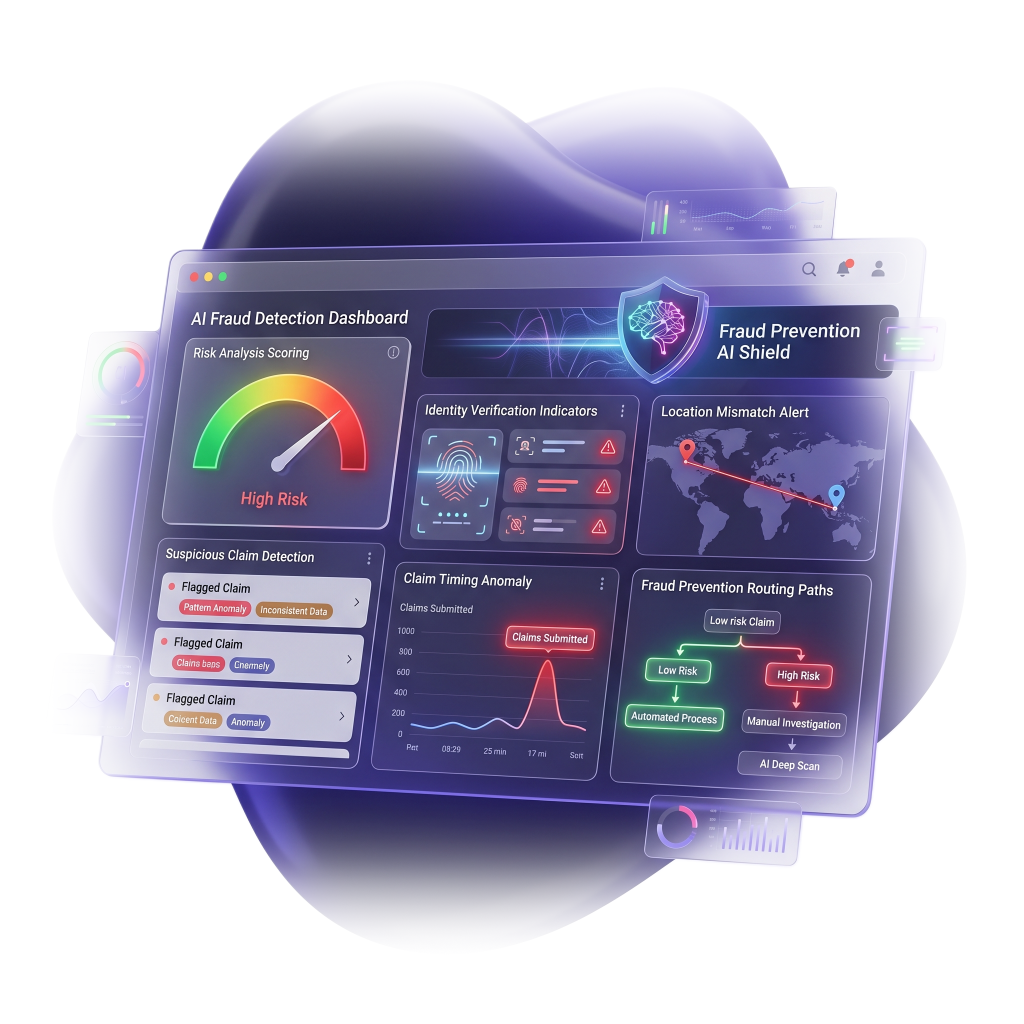
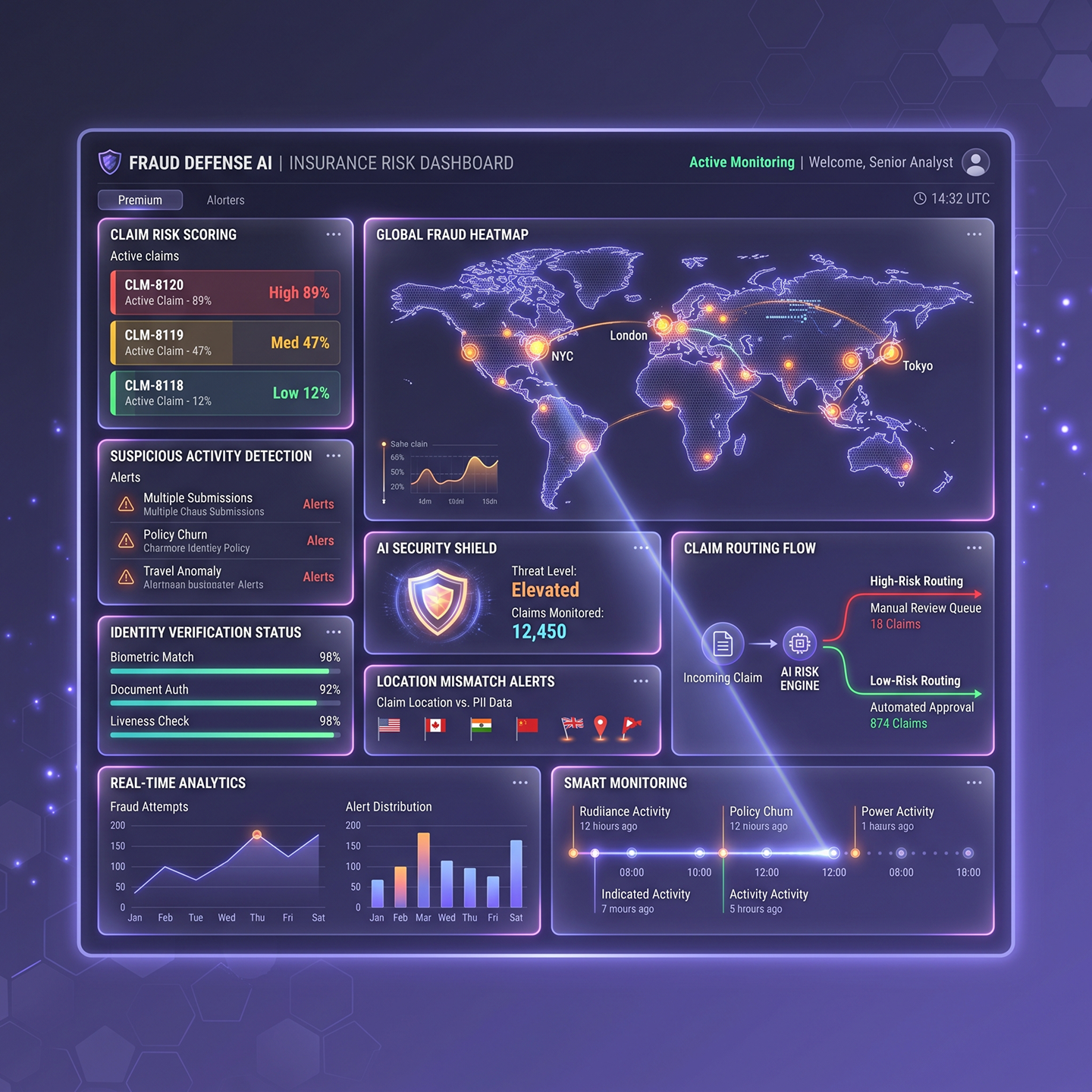
The platform assesses claim risk using item records, identity checks, location data, and claim-timing signals. High-risk cases are flagged and routed to specialist review. Low-risk cases move faster. This protects honest customers while reducing insurers’ exposure to fraud.
Real-time face detection and matching against the enrolled student database, optimized for variable lighting conditions and the physical constraints of a moving vehicle environment. This engine was built on Tezeract’s facial recognition services stack.
05
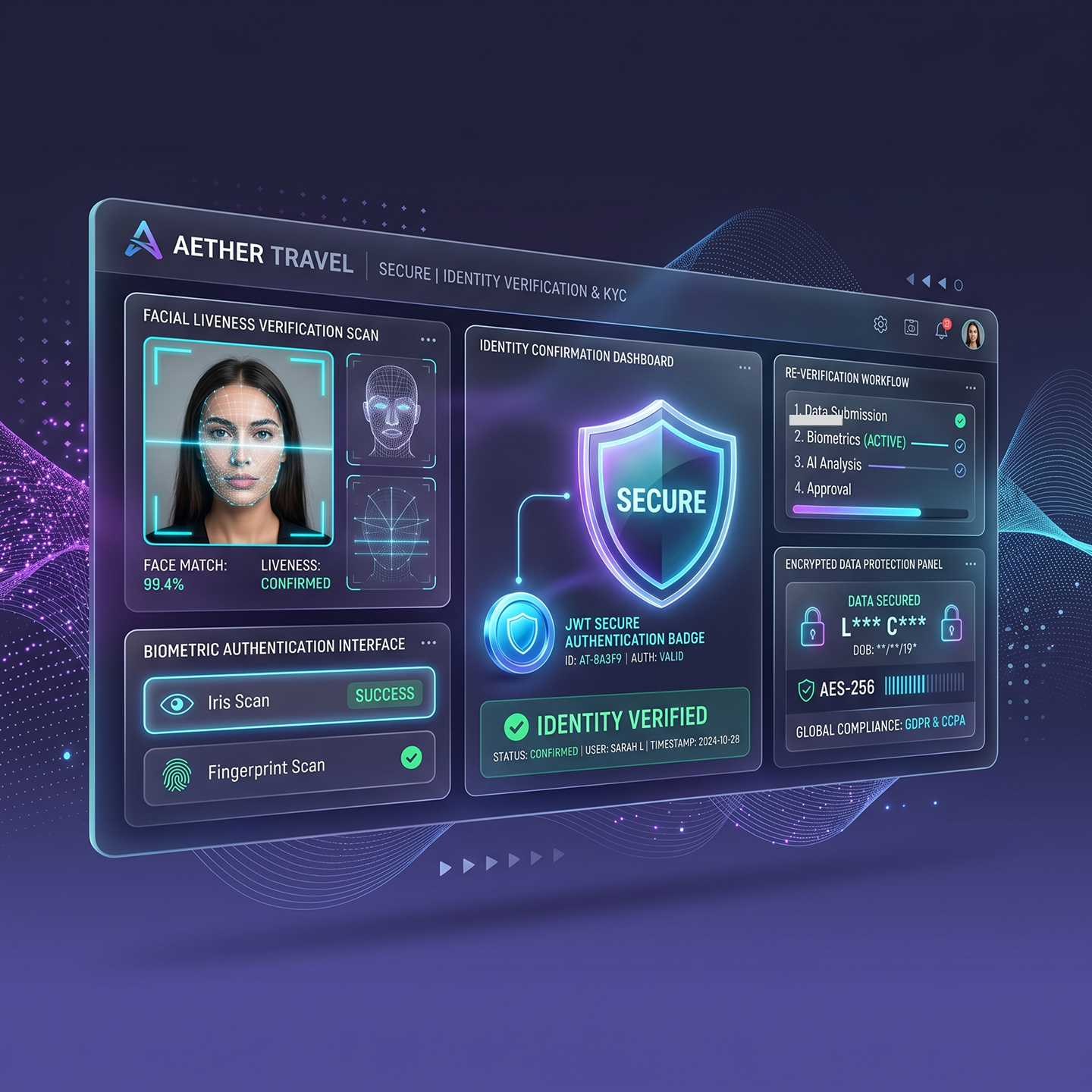
JWT-based authentication, liveness checks, and re-verification before access to sensitive screens protect user data and reduce unauthorized access to item and policy records.
The right AI architecture can automate onboarding, reduce fraud exposure, and speed up claims processing. Rodi is one example of how Tezeract turns insurance workflows into scalable digital systems.
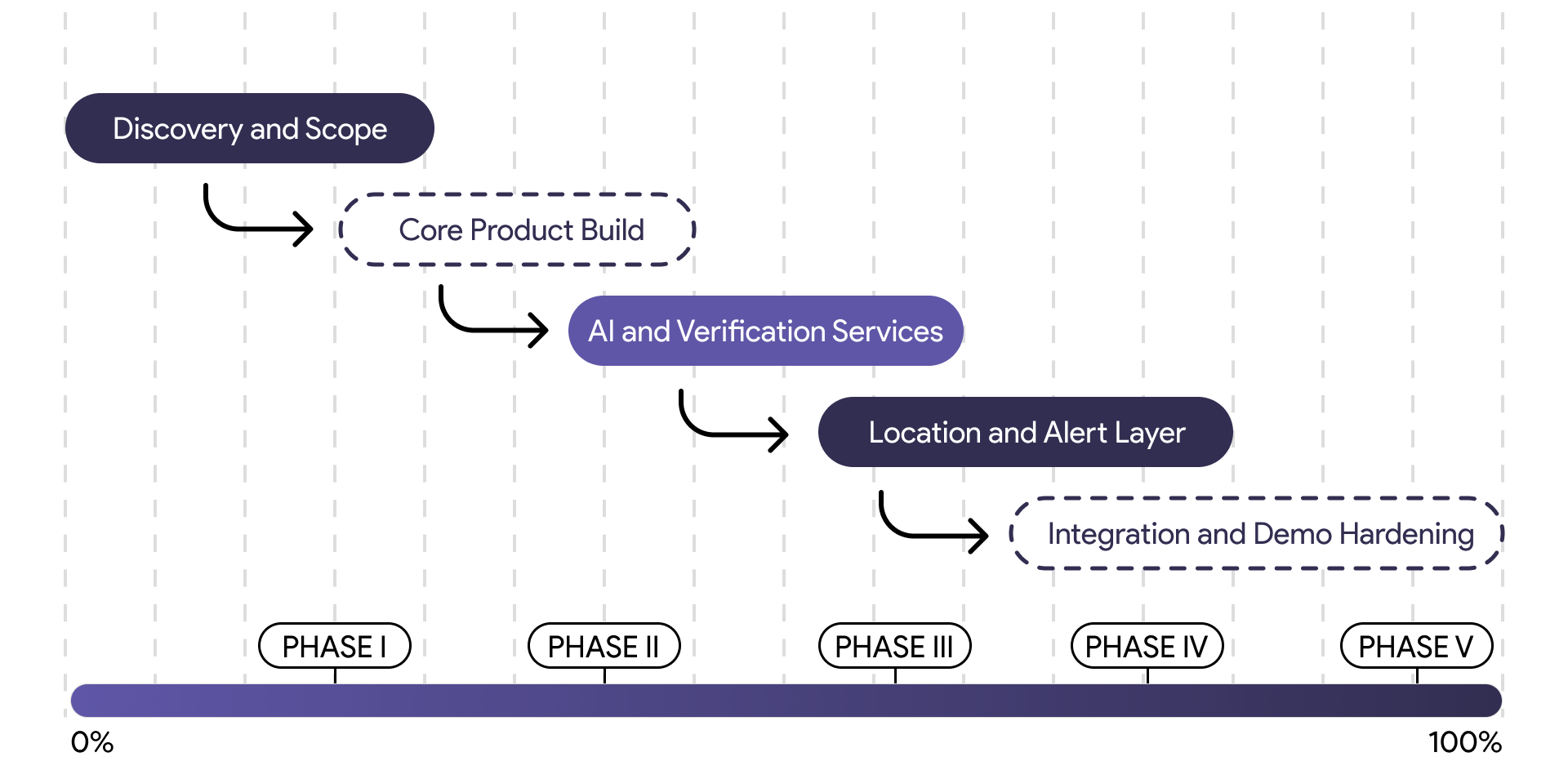
Tezeract delivered Rodi in five structured phases over six months, with weekly sprint reviews and real-user-style flows to validate each stage before moving forward.
01
Mapped the end-to-end user journey: signup, item registration, location setup, alerts, and claims steps. Defined acceptance criteria for item verification accuracy, alert timing, and claims flow completeness.
Key milestone: Scope approved. User journey, item data model, and insurer integration requirements signed off.
02
Built the React Native mobile app and NestJS backend for user accounts, item records, and policy management. Established the data model for items, coverage windows, and claims.
Key milestone: First end-to-end user flow working in staging — signup through item registration.
03
Delivered the Python FastAPI AI service with OpenCV for item verification AI insurance. Integrated face recognition, liveness checks, and identity verification APIs.
Key milestone: Item verification and identity checks working end to end with real test data.
04
Implemented real-time valuables coverage logic using geolocation and time-window signals. Built the incident alert engine and tested edge cases across different location scenarios.
Key milestone: Real-time alerts firing accurately for user-selected travel areas and time windows.
05
Connected to insurer APIs, mapped data formats into a unified model, tested the full claims flow, and prepared the insurer demo run-through. Added Stripe for billing, Metabase for analytics, and final security hardening.
Key milestone: Full demo delivered with four working user flows: signup, item onboarding, location alerts, and claims submission.
Different insurer APIs with inconsistent data formats
Real-time alerts had to be accurate without false positives
Security and access control across sensitive screens
Demo had to feel real to insurer partners, not just functional
Proof of ownership gaps for high-value items
Built a clean integration layer that mapped all insurer data into a single unified model, reducing rework and future integration cost
Tested geolocation edge cases extensively and tuned timing rules to avoid alert fatigue while maintaining genuine risk signals
Implemented JWT authentication, KYC checks, and re-verification before any sensitive data access
Hardened all four user flows with real test data, edge case handling, and a clean insurer walkthrough script
Built a structured item registration flow with photo capture, serial number fields, and ownership confirmation tied to verified identity
Rodi’s strongest gains landed exactly where the product needed them: loss prevention, claims readiness, and insurer confidence.
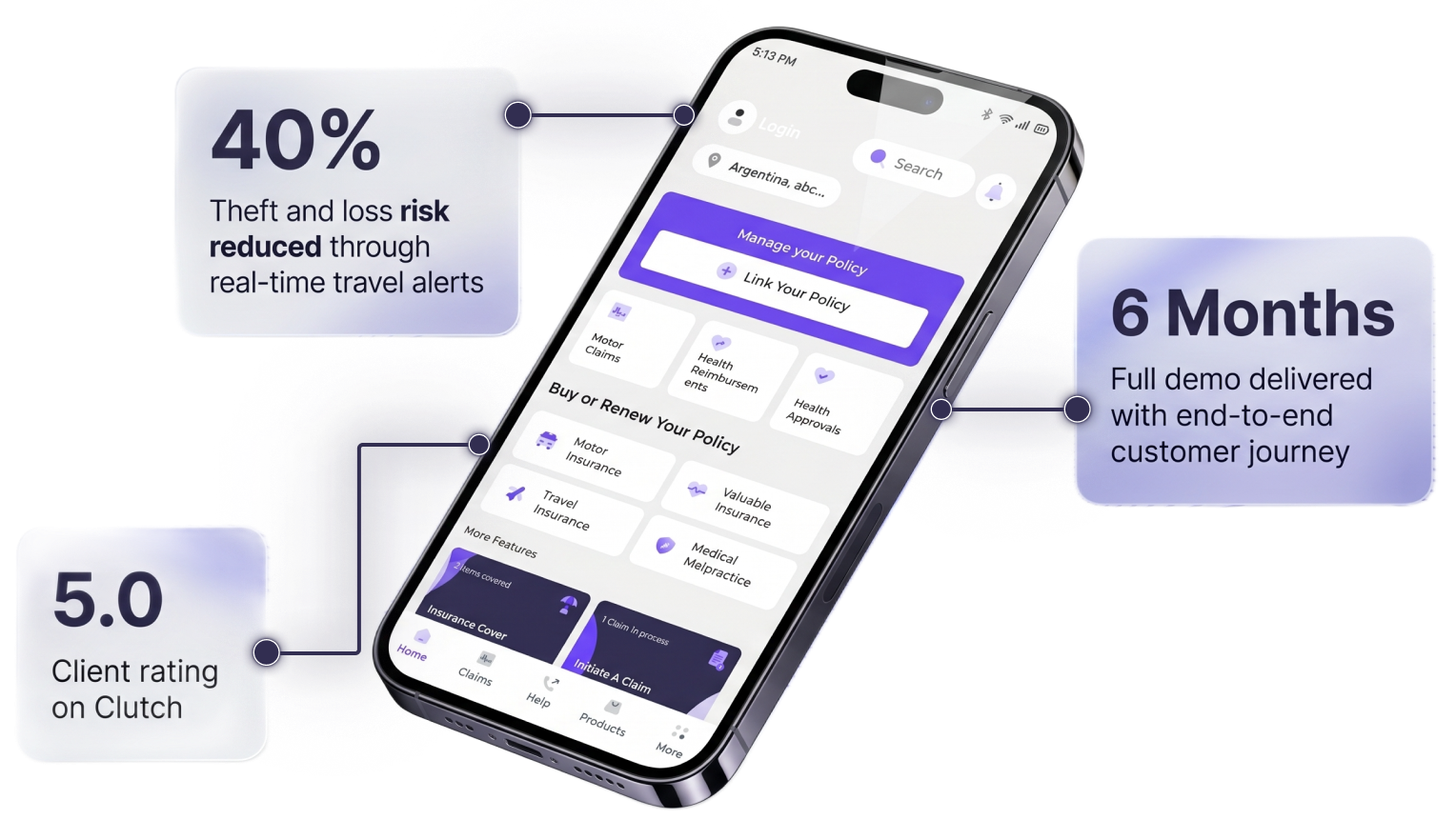
Theft and loss risk reduced through real-time travel alerts
Months full demo delivered with end-to-end customer journey
Client rating on Clutch
1
Register high-value items before a trip in under three minutes with photo and serial number verification
2
Receive real-time location-based alerts when entering high-theft zones so risk is visible before an incident happens
3
Submit a claim with verified item records already attached, removing the back-and-forth that delays payouts
4
Travel with documented proof of ownership that holds up at every stage of the claims process
1
Access a verified item registry per policyholder that removes manual documentation requests from the claims workflow
2
Reduce time spent chasing proof of ownership after an incident is reported
3
Route claims through a structured AI triage layer that flags fraud signals before a human reviewer touches the file
4
Offer a product that demonstrates prevention value, not just payout speed, which strengthens client retention
1
Reduce fraudulent claims through AI fraud detection in insurance that runs at registration, not after a loss event
2
Lower claims processing costs with automated triage that separates clean claims from flagged ones before manual review
3
Access structured item data and location history that supports faster, more defensible claims decisions
4
Scale coverage to new traveler segments without adding underwriting headcount
Rodi’s roadmap extends the platform from a traveler-facing coverage tool into a full insurer intelligence layer. The next phase introduces predictive risk scoring tied to travel destination data, expanded item category coverage, and deeper insurer API integrations that reduce onboarding time for new carrier partners.
From policyholders to insurance agents, every stakeholder benefited from Rodi II’s automation and verification systems. Let Tezeract help you create an insurance platform built for speed, trust, and scale.
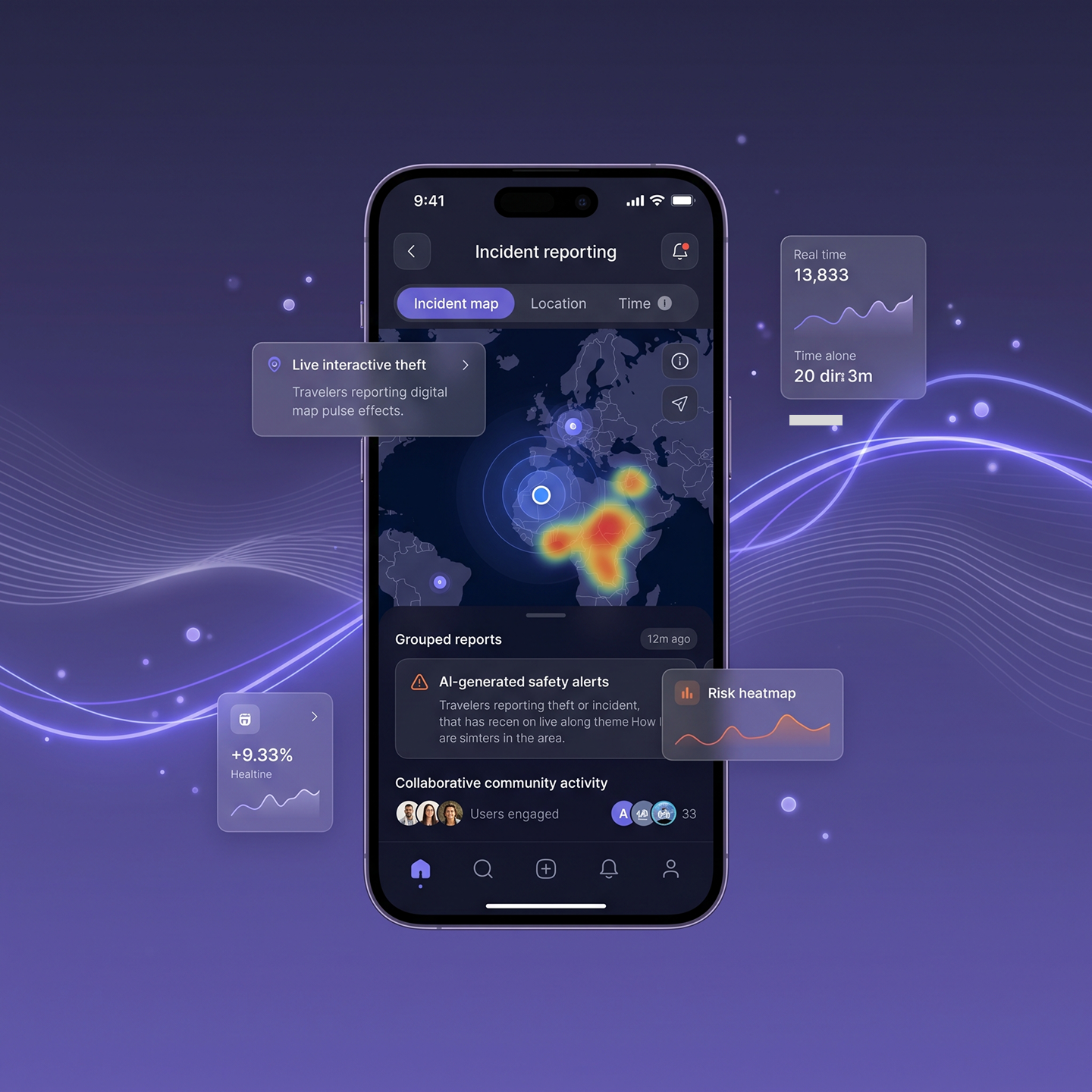
Travelers can report thefts and incidents inside the app while on the move. The system groups reports by location and time to improve future alerts and give users a clearer view of risk in a specific area. This creates a community-driven safety layer that improves over time as more users contribute incident data.
Rodi supports AI automation for insurance claims by verifying claim completeness, checking item records against the registered inventory, and routing structured case files to insurers. This reduces manual checks for agents and shortens claim handling time. Teams working on business process automation will recognize this pattern.
Users set a travel location and time window. The platform monitors incident signals for that area and sends alerts when risk rises. This turns travel insurance from a reactive product into an active prevention tool, and is the direct driver of the 40% reduction in theft and loss risk Rodi achieved.
A guided registration flow captures item photos, serial numbers, and structured ownership details at onboarding. This solves the proof-of-ownership problem before a claim is filed. This is the kind of intelligent document processing logic applied to physical item records, structured capture at the point of registration.
The platform assesses claim risk using item records, identity checks, location data, and claim-timing signals. High-risk cases are flagged and routed to specialist review. Low-risk cases move faster. This protects honest customers while reducing fraud exposure for insurers, a core capability of any serious AI-based insurance platform.
JWT-based authentication, liveness checks, and re-verification before access to sensitive screens protect user data and reduce unauthorized access. This is built on the same facial recognition services infrastructure Tezeract uses across identity-sensitive products.
What potential use cases AI-powered insurance platform?
Users choose where and when they are traveling. Rodi tracks those areas and sends real-time alerts when incidents are reported, helping cut theft and loss risk by 40%.
01
Users can sign up, register items, and view or manage coverage in a single app, so valuable items are easier to track and protect across multiple trips.
02
Rodi supports AI automation for insurance claims so agents can verify details faster, reduce manual checks, and move claims forward with less back and forth. This is the same structured automation logic behind automated insurance claims processing at scale.
03
KYC and liveness checks protect sensitive user data and reduce unauthorized access to item and policy records.
04
Rodi connects to insurance providers via APIs, enabling users and agents to manage coverage options without switching between tools.
05
Travelers can report incidents inside the app. These reports improve safety alerts and give other users a clearer view of risk in a location.
06
An AI-powered insurance solution for agents is a custom system that helps agents sell, service, and support policies with less manual work. Day to day, it reduces time spent on copying data between tools, chasing documents, and sending repeated status updates. It can guide agents through the right questions during onboarding, then create a cleaner record that claims teams can use later. For claims, it can check whether required fields are present, flag missing evidence early, and route the case to the right queue. That reduces claim delays that frustrate customers and increase inbound support load. It can also add risk signals that help agents and insurers spot suspicious claims earlier, without forcing every claim into long reviews. In the Rodi case study context, this type of system also supports location alerts and item records, which improves prevention and reduces avoidable loss events.
An AI travel insurance solution supports real-time valuables coverage by linking coverage to travel context. A user can set a location, a time window, and the items they want covered. The system can then watch for incident signals tied to that location and time window, then notify the user when risk rises. This shifts the product from only paying after a loss to also helping reduce the chance of loss. For insurers, it creates a clearer story for underwriting and claims because the policy context is more specific. It also helps with evidence, since the app can keep item records, photos, and timestamps in one place. This reduces the proof of ownership problem that causes disputes. In a case study like Rodi, the metric is tied to theft and loss risk reduction, which can be a strong business case for carriers that want a differentiated travel product. The best results come when alerts, item records, and claims steps are connected inside one flow.
A travel insurance AI agent should do two jobs well. For customers, it should guide them through purchase, coverage choices, and claims with clear steps. It should tell users what evidence is needed before they submit a claim, such as photos, item details, travel dates, and incident details. This reduces rework and improves first-time claim quality. It should also answer common questions fast, such as coverage limits and claim status, which cuts support load. For agents, it should reduce admin work. It can capture structured details, create a clean case file, and route claims to the right team. It can also support item registration and identity checks when a product includes valuables coverage. If fraud risk is a concern, it can ask follow-up questions when a claim looks unusual, then send the case for review instead of blocking the user. A strong travel insurance AI agent is not only chat. It is a workflow tool tied to claims, policy, and evidence systems.
AI automation for insurance claims reduces delays by improving speed at the start of the claim. Many delays happen because claims arrive with missing fields, unclear timelines, or missing documents. Automation can check completeness, request missing items right away, and guide users to upload the right proof. It can also categorize claims by type and urgency, then route them to the correct queue. That removes waiting time caused by manual triage. On the insurer side, automation can connect policy details, item records, and identity checks into one view. That reduces time spent searching across tools. It can also generate a clear summary for a human reviewer, which speeds decisions while keeping control. For travel and valuables, automation helps because evidence is often collected while traveling, under stress, and without receipts. A good flow is mobile-first and keeps steps short. In a case study like Rodi, claims automation works alongside real-time alerts and item records, which can reduce both loss events and claim friction.
To detect insurance fraud using AI without hurting good customers, insurers need a balanced process. The goal is not to auto-deny claims. The goal is to score risk and route the right cases to human review. Good systems use a mix of signals like claim timing, claim history, device patterns, location patterns, repeated item details, and inconsistent narratives. The AI flags anomalies and explains which signals drove the risk score. That makes reviews faster and more fair. For most claims, the system should speed approval by confirming the basics. For higher-risk claims, it should ask for more evidence or move the case to a specialist queue. This reduces manual work while lowering fraud exposure. It also reduces disputes because the insurer can show clear reasons for extra checks. In travel claims, fraud can rise because incidents happen abroad and evidence is hard to verify. AI helps spot patterns across many claims that a single adjuster cannot see.
For ai in insurance tech projects, data needs depend on the product scope. For travel and valuables coverage, start with five data groups. First, policy data like coverage limits, deductibles, and active dates. Second, customer identity data for login and verification, with privacy controls. Third, item data such as item type, brand, model, photos, and proof of ownership signals. Fourth, claims data like incident type, time, location, narrative, and uploaded evidence. Fifth, location context if the product includes real-time alerts, such as user-selected locations and time windows, and incident reports tied to those locations. Data quality matters more than volume early on. A small, clean dataset supports a better MVP than a large messy one. Teams also need a plan for data access, retention, and consent. When the system connects to multiple insurer platforms, the data model should handle different formats and still produce a unified view. This reduces delays and helps agents and claims teams work faster.
AI based insurance is an insurance product or platform where AI supports decisions and workflows, not only UI screens. A normal insurance app may let users buy a policy, upload documents, and see status updates. AI based insurance goes further by improving how the product works. It can adjust flows based on risk, help users collect the right evidence, and help teams process claims faster. For example, it can guide a customer to take the right photos of an item, detect missing information before submission, and reduce back and forth. It can also add fraud risk scoring and route cases to the right reviewer. In travel insurance, it can support real-time valuables coverage by linking coverage to location and time settings, then sending alerts when incidents occur. For agents, AI based insurance can reduce manual data entry and support a cleaner customer record. The key difference is that AI changes the operating model, not just the interface. It saves time, reduces disputes, and can improve loss prevention when real-time signals are used.
AI fraud detection insurance refers to the use of AI methods to reduce fraud losses in insurance. It fits into the claims process at three points. First is intake, when a claim arrives. AI can check for missing fields, duplicated details, and patterns that match known fraud behavior. Second is triage, when claims are sorted. AI can score risk and route high-risk cases to a specialist team while allowing low-risk cases to move faster. Third is investigation support, where AI can highlight why a claim looks unusual, such as repeated item details across claims, strange timing patterns, or mismatched location data. In travel claims, fraud risk can rise because proof is hard to gather abroad and items are high value. That is why AI fraud detection insurance is often paired with item records and identity checks. A well-designed system keeps humans in control of final decisions and focuses AI on prioritization and evidence checks. This protects honest customers while reducing manual review load.
An AI-powered insurance solution for agents can support item coverage by making item records easy to create and hard to fake. The system can guide users to capture item photos, serial numbers, and structured item details at onboarding. It can also add identity checks so the item record is tied to a verified user. This helps with proof of ownership insurance claims, since many claims fail because receipts are missing or details are unclear. For agents and insurers, an item record reduces disputes and speeds assessment. It also helps with underwriting, since coverage limits and pricing can match the item type and value range. In travel contexts, the system can tie item coverage to a travel period or location settings. That supports real-time valuables coverage and adds context when an incident occurs. A good design keeps the flow short, mobile-first, and clear about what evidence is needed. It also sets expectations on what is covered and what is not covered to reduce disputes later.
CEOs and CTOs should focus on outcomes, data access, and delivery risk. Start with outcomes: what claim cycle time should improve, what manual review rate should drop, and what fraud loss exposure should be reduced. Ask how the vendor will measure success and how often you will review it. Next, data access: what systems need to connect, what data is required, and what happens if data quality is weak. Ask how the vendor handles data mapping across insurer platforms and whether they can build a shared data model. Then delivery risk: ask for a staged plan with an MVP, clear milestones, and demo-ready outputs. Ask who is on the team, what roles they fill, and what you must provide. For fraud, ask how the system avoids auto-deny and supports human review with clear reasons. For compliance, ask how identity checks, consent, and retention are handled. A vendor should be able to explain all of this in plain English and show a realistic timeline.
ROI for AI automation for insurance claims can be calculated using cost savings, avoided losses, and growth impact. Start with claims handling cost. Measure how many claims are processed per month, the average handling time per claim, and the cost per hour for claims staff. Estimate how automation changes triage time, evidence collection time, and rework. Next, measure fraud and leakage. Use historical fraud rates or investigation rates, then estimate how better scoring and evidence checks change those numbers. For travel and valuables, include avoided losses when real-time alerts reduce theft and loss events. That can reduce both payouts and customer complaints. Growth impact can include higher conversion from simpler flows, fewer abandoned claims, and better retention due to faster service. Use a conservative baseline and track results in phases, starting with an MVP. Many teams prefer to pilot with one claim type, then expand. In a case study like Rodi, the theft and loss risk reduction metric is a strong input into this ROI model.
These topics map cleanly into a marketing roadmap and pitch tool because they match buyer intent. For a roadmap tool, you can group content by funnel stage. Top of funnel content can explain AI travel insurance solution basics and real-time valuables coverage. Mid funnel content can focus on AI automation for insurance claims, process change, and integration plans. Bottom funnel content can focus on ROI, vendor evaluation, and security. For a pitch tool, each FAQ can become a slide: problem, solution, proof, and next steps. Use the Google queries as landing page headlines and H2s, since they match how buyers search. Use the LLM prompts to generate first drafts of product one-pagers, demo scripts, and sales emails. Tie everything back to the case study by referencing a real outcome like theft and loss risk reduction, plus delivery facts like timeline and working demo scope. Keep claims precise and avoid vague promises. This creates trust with CEOs and CTOs.
Rodi demonstrates what becomes possible when AI insurance software for agents is built around the actual mechanics of risk prevention and claims confidence. Real-time alerts. Verified item records. Structured claims routing. Fraud signals built into the flow from day one.

Whether you are building a travel insurance product, a valuables coverage platform, or an AI-powered insurance platform that needs a prevention and verification layer, Tezeract can design and build it. We do not adapt templates. We build for your coverage types, your insurer integrations, and your growth targets.
If you are evaluating how AI agents for insurance can reduce manual work across your claims and policy operations, or exploring how predictive analytics services can improve underwriting and fraud detection, we can map the right architecture for your product.
Ready to build an insurance product that prevents losses and processes claims faster? Let’s talk.
We help businesses by automating their processes and developing customized end-to-end AI solutions that deliver proven ROI.