Introduction
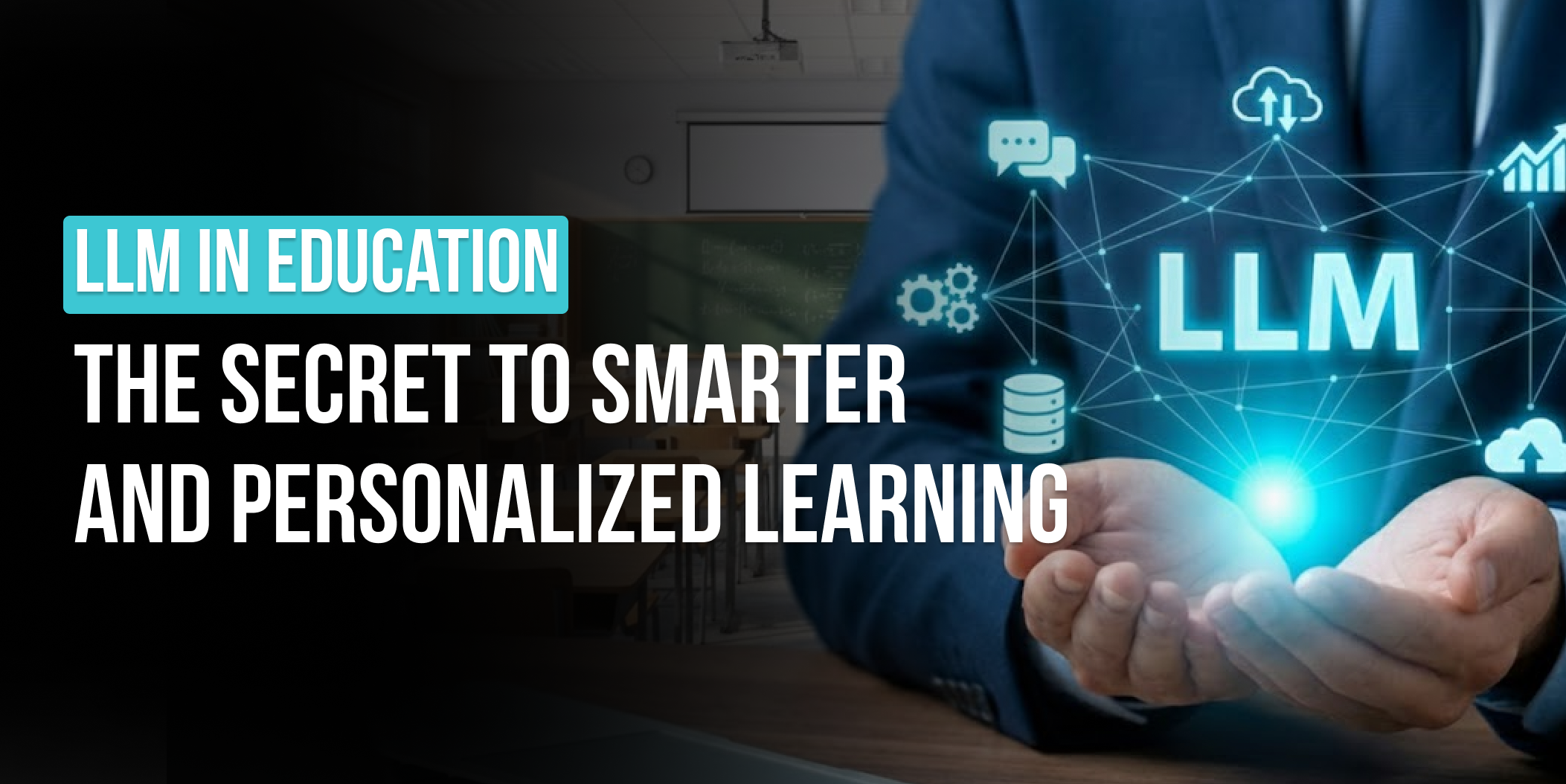
Remember when education meant one-size-fits-all? Every student got the same textbook, same pace, same teaching method regardless of how they actually learned best. Those days are rapidly becoming history, thanks to AI in education and the revolutionary power of Large Language Models (LLMs).
Here’s what’s fascinating: while traditional classrooms struggle to adapt to individual learning styles, personalized learning powered by AI is quietly transforming how students absorb, process, and master new concepts. We’re talking about technology that doesn’t just deliver information it understands each student’s unique learning pattern and adapts in real-time.
Think about it what if every student had access to AI-powered tutoring that never gets tired, never judges, and always knows exactly what concept to introduce next? That’s not science fiction anymore. Companies like Tezeract are already building these intelligent systems that make personalized learning with AI a reality for educational institutions worldwide.
In this article, we’ll explore how LLM in education is creating smarter, more adaptive learning experiences that actually work for every type of learner.
Understanding LLM In Education
What Is LLM In Education
Think of Large Language Models (LLMs) as incredibly smart teaching assistants that never get tired, never lose patience, and can adapt to every student’s unique learning style instantly. But what exactly are LLMs in education?
At its core, an LLM is an AI system trained on vast amounts of text data that can understand, generate, and manipulate human language with remarkable accuracy. When applied to education, these models become powerful tools for personalized learning that can transform how students absorb and interact with information.
Here’s where it gets interesting: LLMs don’t just deliver pre-written content. They create adaptive learning paths tailored to each student’s pace, comprehension level, and learning preferences. Imagine a system that notices when you’re struggling with algebra and automatically shifts to visual explanations, or recognizes your strength in creative writing and challenges you with more complex literary analysis.
Companies like Tezeract are pioneering this space by developing intelligent tutoring systems that use natural language processing to create truly responsive educational experiences. The result? Learning that feels less like memorization and more like having a conversation with the world’s most knowledgeable mentor.
The Importance Of Educational Technology
Why does educational technology matter so much right now? Simple: traditional education wasn’t designed for the diverse, fast-paced world our students live in today.
Consider this reality check in a typical classroom of 30 students, you might have visual learners, auditory processors, kinesthetic thinkers, and everything in between. One teacher, no matter how skilled, can’t simultaneously deliver personalized learning with AI to each unique mind. That’s where technology steps in as the great equalizer.
Adaptive learning platforms powered by LLMs can analyze learning patterns in real-time, identifying knowledge gaps before they become roadblocks. They provide real-time data analysis that helps educators understand not just what students are learning, but how they’re learning it.
The beauty of modern educational technology lies in its ability to scale personalization. While a human tutor might work with one student at a time, AI-powered tutoring systems can simultaneously support thousands of learners, each receiving customized content and feedback.
At Tezeract, we’ve seen firsthand how adaptive curriculum technology transforms learning outcomes. When students receive content that matches their learning style and current knowledge level, engagement soars and retention improves dramatically. It’s not about replacing teachers it’s about giving them superpowers.
Applications Of Large Language Models In Education
1. Adaptive Learning Platforms And Adaptive Curriculum
Think of adaptive learning platforms as your smartest teaching assistant one that never gets tired and remembers exactly how each student learns best. These systems use LLMs to create dynamic educational experiences that adjust in real-time based on student performance and learning patterns.
Here’s what makes them powerful: traditional curricula follow a one-size-fits-all approach, but adaptive curriculum powered by LLMs can identify when a student struggles with fractions and immediately provide additional practice problems, visual aids, or alternative explanations. It’s like having a personal tutor for every student in your classroom.
At Tezeract, we’ve seen how adaptive learning algorithms can transform educational outcomes. Our intelligent tutoring systems analyze student responses and automatically adjust difficulty levels, pacing, and content delivery methods. For instance, if a student excels in verbal reasoning but struggles with mathematical concepts, the system adapts by presenting math problems through storytelling or real-world scenarios.
The beauty of adaptive learning systems using LLMs lies in their ability to create truly personalized learning paths. Instead of forcing students through rigid lesson plans, these platforms build custom learning journeys that respect individual learning styles, speeds, and preferences making education more engaging and effective for everyone.
2. Personalized Learning With AI
Personalized learning with AI isn’t just a buzzword it’s a fundamental shift in how we approach education. When we talk about personalized learning AI, we’re discussing systems that understand each student as an individual learner with unique strengths, challenges, and interests.
LLMs excel at this because they can process vast amounts of student data and identify patterns that human teachers might miss. They analyze everything from response times to error patterns, creating detailed learner profiles that inform instructional decisions. This level of personalization was impossible just a few years ago.
Consider this: a student struggling with essay writing might receive AI-generated prompts tailored to their interests, while another student who excels in creative writing gets advanced challenges. The system doesn’t just adjust difficulty it adapts teaching methods, content presentation, and even motivational strategies.
Tezeract’s approach to personalized learning leverages natural language processing in education to understand not just what students know, but how they think and learn. Our systems can detect when a student is frustrated, confused, or ready for more challenging material, then respond accordingly. This creates learning experiences that feel natural and supportive rather than mechanical or impersonal.
3. Real Time Data Analysis For Student Progress
Real time data analysis transforms education from guesswork into precision teaching. Instead of waiting for test results to understand how students are performing, LLMs can analyze student interactions continuously, providing instant insights into learning progress and potential challenges.
This isn’t just about tracking right and wrong answers. Advanced educational technology can analyze response patterns, time spent on tasks, help-seeking behavior, and even the language students use in their responses. These data points create a comprehensive picture of each student’s learning journey.
What makes this particularly powerful is the speed of analysis. While a teacher might notice a student struggling after several assignments, LLM-powered systems can identify learning gaps within minutes of interaction. This enables immediate intervention whether that’s providing additional support, adjusting lesson difficulty, or connecting students with relevant resources.
Tezeract’s real-time analytics help educators make data-driven decisions that improve student outcomes. Our systems can predict which students might struggle with upcoming concepts and suggest preventive measures. For example, if the data shows a student consistently struggles with word problems but excels at computational math, the system can recommend visual problem-solving strategies before the student falls behind.
4. AI Driven Content Generation For Personalized Education
AI driven content generation for personalized education represents one of the most exciting applications of LLMs in learning environments. Instead of relying on static textbooks and pre-made materials, educators can now generate custom content that matches each student’s learning level, interests, and goals.
LLM content generation goes beyond simple text creation. These systems can produce practice problems, explanations, examples, and even entire lesson plans tailored to specific learning objectives. Imagine a history lesson that incorporates a student’s interest in sports, or math problems that use examples from their favorite video games.
Education chatbots powered by LLMs can engage students in Socratic dialogue, asking probing questions that guide discovery rather than simply providing answers. This approach develops critical thinking skills while maintaining student engagement through personalized interaction.
At Tezeract, we’ve developed content generation systems that create materials matching individual reading levels, cultural backgrounds, and learning preferences. Our AI can generate multiple explanations for the same concept, ensuring every student finds an approach that resonates with their learning style. This level of customization was previously impossible at scale, but LLMs make it accessible to any educational institution ready to embrace smarter, more responsive teaching methods.
Benefits Of LLMs For Smarter Education
1. How LLMs Enhance Personalized Learning Experiences
Think about it what if every student could have their own personal tutor who never gets tired, never judges, and adapts instantly to their learning style? That’s exactly what personalized learning with AI delivers through LLMs.
Here’s how it works: adaptive learning platforms powered by LLMs create dynamic educational journeys that shift in real-time. When a student struggles with fractions, the system doesn’t just repeat the same explanation. Instead, it generates visual aids, alternative teaching methods, or even gamified exercises whatever clicks for that specific learner.
The magic happens through real time data analysis. These systems track everything from response times to error patterns, building detailed learner profiles that go beyond just “right” or “wrong” answers. This data helps intelligent tutoring systems understand not just what a student knows, but how they think and learn best.
At Tezeract, we’ve seen firsthand how AI driven content generation for personalized education transforms classrooms. Our adaptive learning systems using LLMs don’t just adjust difficulty they modify teaching approaches, pacing, and even motivational strategies to match each student’s unique needs.
2. Use Of LLM In Education For Accessibility And Inclusion
Here’s something powerful: LLM in education is breaking down barriers that have existed for decades. Students with learning disabilities, language barriers, or different cognitive abilities can now access the same quality education through personalized approaches.
Educational technology powered by LLMs offers multiple ways to consume the same content. A student with dyslexia might receive audio explanations, while a visual learner gets interactive diagrams. Education chatbots can provide 24/7 support in multiple languages, ensuring no student falls behind due to timing or language constraints.
The beauty of adaptive learning algorithms lies in their ability to recognize and accommodate different learning speeds without stigma. Some students need more time with foundational concepts, while others race ahead and that’s perfectly fine.
Natural language processing in education enables students to ask questions in their own words and receive explanations tailored to their comprehension level. This creates an inclusive environment where every student feels heard and supported.
Tezeract’s approach to automated assessment ensures that evaluation methods also adapt to individual needs, providing fair and comprehensive measurement of student progress regardless of their starting point or learning style.
Challenges And Considerations With LLMs In Education
1. Addressing Ethical And Bias Concerns
Let’s be honest while ai in education offers incredible potential for personalized learning, it’s not without its challenges. One of the biggest concerns? Bias in AI systems.
Think about it this way: LLMs learn from massive datasets, and if those datasets contain biased information, the AI will perpetuate those biases. In education, this could mean certain groups of students receive different quality recommendations or assessments.
For example, if an adaptive learning platform was trained primarily on data from one demographic, it might not effectively serve students from different cultural or socioeconomic backgrounds. This is where companies like Tezeract focus heavily on developing unbiased AI solutions.
So what can educators do? First, choose educational technology providers who prioritize bias testing and diverse training data. Second, regularly audit AI recommendations to ensure fairness across all student groups.
The key is transparency. When implementing llm in education systems, institutions need clear documentation about how decisions are made and regular bias assessments to maintain ethical standards.
2. Integrating LLMs With Existing Educational Practices
Here’s where many schools hit a roadblock: how do you blend cutting-edge ai powered tutoring with traditional teaching methods without causing chaos?
The reality is that successful integration requires careful planning. You can’t just drop an intelligent tutoring system into a classroom and expect magic to happen. Teachers need training, students need orientation, and existing curricula need thoughtful adaptation.
Consider this approach: start small with pilot programs. Maybe begin with education chatbots for homework help, then gradually expand to adaptive learning systems using llms for specific subjects.
The biggest mistake? Trying to replace teachers instead of empowering them. Personalized learning ai works best when it augments human instruction, not replaces it. Teachers can use real time data analysis from these systems to identify struggling students faster and adjust their teaching strategies accordingly.
At Tezeract, we’ve seen the most success when schools view LLM integration as a gradual enhancement process rather than a complete overhaul. The goal is seamless adaptive curriculum delivery that feels natural to both educators and students.
Conclusion
The future of education is here, and it’s powered by personalized learning with AI. We’ve explored how LLM in education transforms traditional classrooms into dynamic, adaptive environments where every student receives exactly what they need to succeed.
Think about it: intelligent tutoring systems that understand your learning style, adaptive learning platforms that adjust in real-time, and educational technology that makes complex concepts accessible to everyone. This isn’t science fiction it’s happening right now in schools and universities worldwide.
But here’s the key insight: successful implementation requires the right partner. You need adaptive learning systems using LLMs that prioritize ethics, transparency, and genuine educational outcomes over flashy features.
At Tezeract, we’ve seen firsthand how personalized learning AI can revolutionize educational experiences while maintaining the human touch that makes learning meaningful. Our approach combines cutting-edge LLM applications for real-time student feedback with proven pedagogical principles.
Large language models are opening new possibilities for tutoring, content creation, and intelligent learning systems. If you want to understand how to implement these technologies effectively, explore our AI For Educators Ebook 2026, which provides a practical framework for planning, launching, and evaluating AI initiatives in modern classrooms.
Ready to explore how AI can transform your educational approach? If you’re curious about how AI can enhance your business, you might find it helpful to book a 30-minute strategy session. This session helps businesses uncover high-ROI AI opportunities using Business Impact Framework. It’s ideal for business owners or operators looking to improve automation, accuracy, or growth with AI especially in industries like retail, healthcare, or marketing.