Introduction
Have you ever wondered how Spotify knows exactly which songs match your mood? Or how security systems can detect breaking glass from background noise? The answer lies in audio analysis a fascinating field that’s quietly revolutionizing everything from healthcare diagnostics to smart home technology.
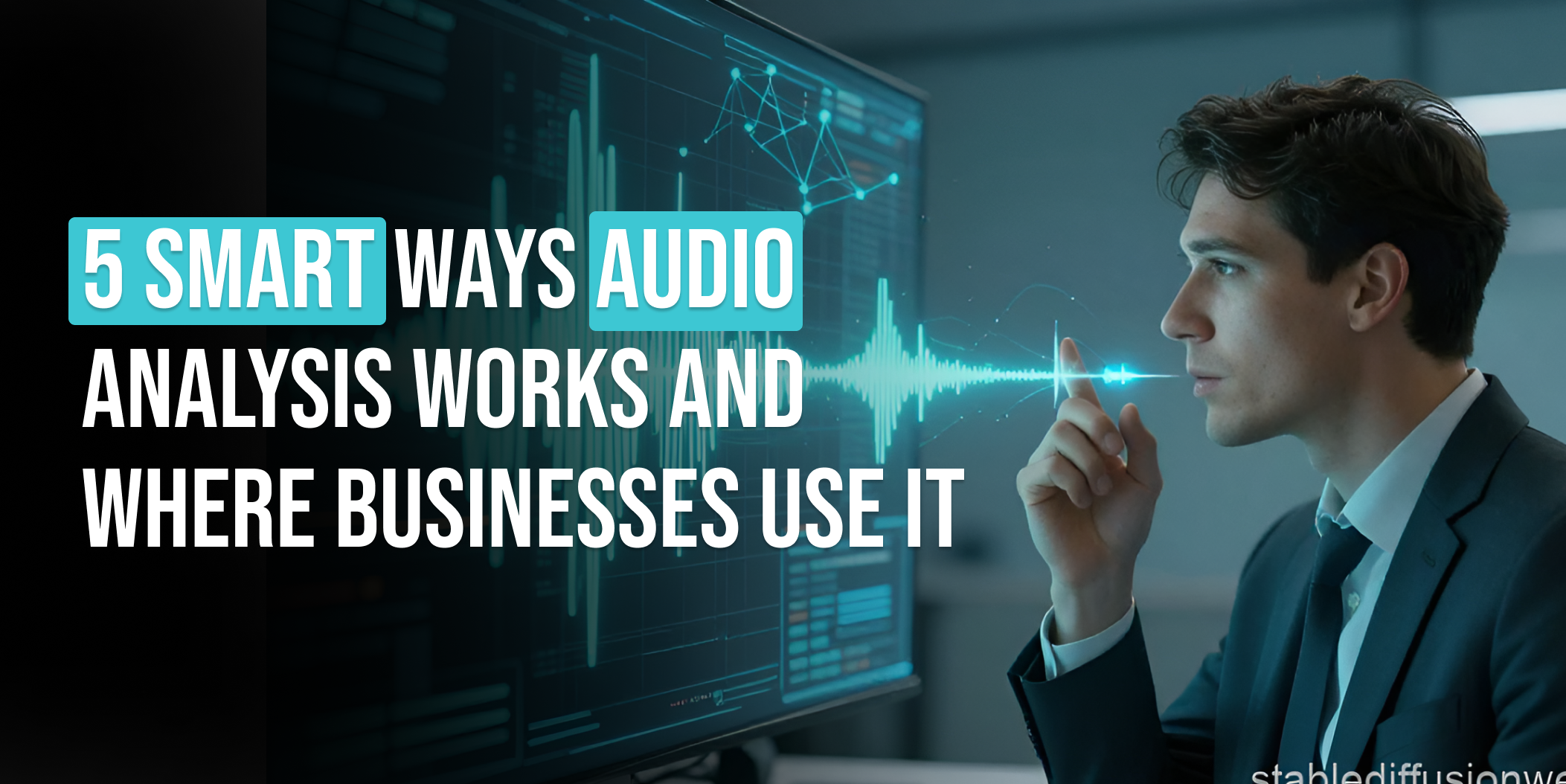
What is audio analysis? Simply put, it’s the process of extracting meaningful information from sound waves using computational methods. Think of it as teaching computers to “listen” and understand audio the way humans do, but with superhuman precision and speed.
At Tezeract, we’ve witnessed firsthand how audio analysis tools are transforming industries. From helping doctors detect heart murmurs through signal analysis to enabling voice assistants to understand natural speech, this technology is becoming as essential as visual recognition in our AI-driven world.
But here’s what makes audio analysis truly exciting: it’s not just about processing sound it’s about unlocking insights hidden in every frequency, every pause, and every subtle variation that human ears might miss. Whether you’re a developer, business owner, or simply curious about emerging technologies, understanding audio analysis will give you a competitive edge in today’s data-driven landscape.
What Is Audio Analysis
Have you ever wondered how Spotify seems to know exactly what song matches your current mood? Or how your smart home security system can distinguish between the sound of breaking glass and your cat knocking over a plant? The answer lies in audio analysis a fascinating field that’s quietly revolutionizing how we interact with sound.
What is audio analysis? Simply put, it’s the process of extracting meaningful information from sound waves using advanced computational techniques. Think of it as teaching computers to “listen” and understand audio the same way humans do, but with far greater precision and consistency.
At Tezeract, we’ve witnessed firsthand how audio analysis tools are transforming industries across the board. From healthcare professionals using signal analysis to detect heart murmurs that might escape the human ear, to voice assistants becoming incredibly sophisticated at speech recognition and understanding natural conversation patterns using natural language processing.
The beauty of audio analysis lies in its ability to uncover insights hidden in every frequency, pause, and tone. Whether it’s audio data processing for entertainment platforms or machine learning algorithms powering the next generation of audio analysis software, this technology is providing businesses with a competitive edge in our increasingly AI-driven world.
But here’s what makes it truly exciting: we’re just scratching the surface of what’s possible when we combine human creativity with intelligent audio processing capabilities.
How Does Audio Analysis Work
1. Audio Signals And Audio Processing
Think of audio signals as the raw material that makes audio analysis possible. Every sound you hear whether it’s your voice, music, or even the hum of your refrigerator creates vibrations in the air that can be captured and converted into digital data.
Here’s how audio processing begins: When sound waves hit a microphone, they’re transformed into electrical signals, then digitized into a series of numbers that computers can understand. This process, called sampling, captures thousands of data points per second. The quality depends on the sampling rate higher rates capture more detail, just like how a high-resolution camera captures finer details in photos.
Audio processing then cleans and prepares this raw data. It removes background noise, adjusts volume levels, and applies filters to enhance specific frequencies. Think of it as preparing ingredients before cooking you want the cleanest, most usable data possible before diving into deeper analysis.
2. Extracting Audio Features
Once we have clean audio signals, the real magic of how audio analysis works begins with feature extraction. This step identifies the unique characteristics that make each sound distinctive like a fingerprint for audio.
Audio features include frequency analysis (which notes are present), amplitude patterns (how loud different parts are), and temporal characteristics (how sounds change over time). Advanced techniques like mel spectrogram analysis help identify specific audio features that human ears naturally focus on, making the data more meaningful for machine learning algorithms.
For example, when Tezeract develops speech recognition systems, we extract features like pitch variations, speaking pace, and vocal tone patterns. These audio features become the building blocks that help AI systems distinguish between different speakers, emotions, or even detect health conditions through voice analysis. The key is knowing which features matter most for your specific use case.
3. Machine Learning And AI Sound Analysis
This is where audio data processing gets truly intelligent. Machine learning algorithms take those extracted audio features and learn to recognize patterns, make predictions, and classify sounds with remarkable accuracy.
The process works like teaching a child to recognize different animals. You show the algorithm thousands of examples dog barks, cat meows, bird songs along with their labels. Over time, it learns the subtle differences and can identify new sounds it’s never heard before. Modern audio analysis software uses deep learning networks that can process complex audio patterns simultaneously.
At Tezeract, we’ve seen how machine learning transforms sound recognition capabilities. Our AI models can distinguish between normal conversation and distress calls in security systems, or identify equipment malfunctions through subtle changes in machinery sounds. The beauty of machine learning in audio analysis is its ability to discover patterns that humans might miss, making it invaluable for applications ranging from healthcare diagnostics to entertainment platforms.
Key Benefits Of Audio Analysis
1. Enhanced Decision-Making Through Audio Data Analysis
Think about it every sound carries valuable information that can transform how businesses operate. Audio data processing enables organizations to make smarter decisions by uncovering patterns hidden in everyday sounds. For instance, manufacturing companies use frequency analysis to predict equipment failures before they happen, saving thousands in downtime costs.
Tezeract’s audio analysis tools help clients identify these critical audio signals early. When you can analyze machine vibrations, customer conversations, or environmental sounds systematically, you’re not just collecting data you’re gaining actionable insights. This approach to signal analysis turns raw audio into strategic intelligence, helping teams respond faster and more accurately to emerging situations.
2. Improved Sentiment Detection And Audio Sentiment Analysis
Here’s something fascinating: your voice reveals more about your emotions than your words do. Audio analysis software can detect subtle changes in tone, pace, and vocal stress that humans might miss entirely. This capability revolutionizes customer service, mental health monitoring, and market research.
Consider how speech recognition combined with sentiment analysis works in call centers. Tezeract’s solutions can identify frustrated customers within seconds of a call starting, allowing agents to adjust their approach immediately. The benefits of audio analysis extend beyond simple emotion detection it’s about understanding the complete communication picture. When you analyze both what people say and how they say it, you unlock deeper insights into human behavior and preferences.
3. Increased Efficiency With Automated Audio Analysis AI
Manual audio processing is like trying to read every book in a library by yourself technically possible, but incredibly inefficient. Machine learning algorithms can process hours of audio content in minutes, identifying patterns and extracting insights at superhuman speed.
Tezeract’s automated systems demonstrate how audio analysis applications in security systems work seamlessly. Instead of security personnel monitoring every audio feed manually, AI handles the heavy lifting, flagging unusual sounds or conversations that need human attention. This automation doesn’t replace human judgment it amplifies it. You get faster processing, consistent analysis, and the ability to scale your audio monitoring capabilities without proportionally increasing your workforce.
4. Customization And Personalization Capabilities
One size fits all? Not in audio analysis. The best audio analysis tools for professionals offer remarkable customization options, adapting to specific industry needs and unique audio environments. Whether you’re analyzing medical equipment sounds or optimizing audio enhancement for entertainment platforms, flexibility matters.
Tezeract specializes in creating tailored audio features that match exact client requirements. For example, use cases of audio analysis in healthcare demand different sensitivity levels than retail applications. Custom algorithms can focus on specific frequency ranges, adjust for background noise levels, or prioritize certain types of sound recognition. This personalization ensures you’re not just getting generic insights you’re receiving analysis perfectly tuned to your specific challenges and goals.
Major Use Cases Of Audio Analysis
1. Speech Recognition And Sound Recognition
Let’s start with the most familiar application speech recognition. You’ve probably used Siri or Alexa, right? That’s audio analysis in action. These systems convert your spoken words into digital commands through sophisticated audio data processing.
But here’s where it gets interesting: sound recognition goes far beyond voice commands. Modern audio analysis software can identify specific sounds like breaking glass, gunshots, or even unusual machinery vibrations. Think about it a smart home system that recognizes the sound of a smoke alarm and automatically alerts emergency services.
At Tezeract, we’ve developed speech recognition solutions that understand context and emotion, not just words. Our machine learning algorithms analyze audio signals to detect subtle vocal patterns, making interactions more natural and effective than traditional keyword-based systems.
2. Audio Analysis For Security And Threat Detection
Security applications showcase some of the most impressive audio analysis applications in security systems. Imagine a surveillance system that doesn’t just watch it listens intelligently.
Modern security systems use frequency analysis to detect unusual sounds like forced entry, aggressive voices, or weapons being loaded. The beauty lies in real-time audio processing that can distinguish between normal environmental noise and potential threats. This isn’t science fiction it’s happening now.
What makes this powerful? The system learns your environment’s acoustic fingerprint. A sudden change in the signal to noise ratio or unexpected audio features triggers immediate alerts. Tezeract’s security solutions combine visual and audio analysis to create comprehensive threat detection systems that significantly reduce false alarms while catching genuine security breaches.
3. Use Cases Of Audio Analysis In Healthcare
Healthcare represents one of the most promising frontiers for audio analysis. Ever wondered how doctors might diagnose conditions just by listening more carefully?
Respiratory analysis through audio processing can detect early signs of conditions like asthma, pneumonia, or sleep apnea. Heart murmurs, irregular breathing patterns, and even vocal biomarkers for neurological conditions become detectable through sophisticated signal analysis.
Here’s what’s fascinating: machine learning algorithms can identify patterns in audio signals that human ears might miss. Tezeract’s healthcare audio analysis tools help medical professionals make faster, more accurate diagnoses. We’re essentially giving doctors superhuman hearing capabilities, turning subtle audio cues into actionable medical insights that can save lives.
4. Customer Sentiment And Experience Analytics
Want to truly understand how your customers feel? Their voice tells a story that surveys never capture.
Customer sentiment analysis through audio processing reveals emotional states, stress levels, and satisfaction in real-time. Call centers use this technology to identify frustrated customers before situations escalate, while sales teams gauge prospect interest through vocal cues.
The magic happens in the details slight changes in pitch, speaking pace, and vocal tension reveal genuine emotions. Traditional text-based sentiment analysis misses these crucial audio features. Tezeract’s sentiment analysis solutions help businesses improve customer experiences by understanding not just what customers say, but how they feel when saying it. This leads to more empathetic customer service and better business outcomes.
5. Media And Broadcasting Applications
The media industry has embraced audio analysis to revolutionize content creation and distribution. Think about automatic subtitle generation, content moderation, and even music recommendation systems.
Broadcasters use audio analysis software to automatically detect inappropriate content, monitor audio quality, and even identify copyrighted music. Streaming platforms analyze listening patterns to suggest new content, while podcast platforms use speech recognition to create searchable transcripts.
But here’s where innovation shines: advanced audio enhancement techniques improve sound quality in real-time, while spectrogram analysis helps identify and remove unwanted noise. Tezeract’s media solutions help content creators focus on creativity while our AI handles the technical complexities of audio processing, ensuring professional-quality output every time.
Popular Audio Analysis Software And Tools
1. Leading Audio Analysis Software
When it comes to choosing the right audio analysis software, you’ll find several powerful options that cater to different needs and expertise levels. Professional-grade tools like Audacity offer comprehensive frequency analysis capabilities, while MATLAB provides advanced signal processing functions for researchers and engineers. For those seeking enterprise-level solutions, platforms like Adobe Audition deliver sophisticated audio processing features with intuitive interfaces.
What makes these tools stand out? They combine robust audio data processing capabilities with user-friendly designs that don’t require a PhD in acoustics to operate. However, if you’re looking for AI-powered audio analysis that goes beyond traditional software limitations, Tezeract’s custom solutions integrate seamlessly with existing workflows while providing advanced machine learning capabilities that adapt to your specific requirements.
2. Deep Learning Platforms For Audio Data Analysis
The landscape of deep learning platforms has revolutionized how we approach audio signals analysis. TensorFlow and PyTorch lead the pack, offering extensive libraries for building custom audio processing models that can handle everything from speech recognition to complex sound pattern identification. These platforms excel at processing spectrograms and implementing advanced algorithms like FFT for detailed frequency analysis.
But here’s the thing while these platforms are incredibly powerful, they often require significant technical expertise and development time. That’s where specialized solutions like Tezeract’s AI-driven audio analysis platform shine. We’ve streamlined the complexity of deep learning implementation, allowing businesses to harness advanced audio features extraction and signal analysis without the steep learning curve typically associated with building custom models from scratch.
3. Audio Analytics Solutions With AI Capabilities
Modern AI-powered audio analytics solutions are transforming how businesses extract insights from audio data. These platforms combine traditional signal processing with cutting-edge machine learning algorithms to deliver real-time analysis capabilities. Features like automatic audio enhancement, noise reduction, and intelligent pattern recognition are becoming standard offerings.
The best audio analysis tools for professionals now include capabilities for measuring total harmonic distortion, optimizing signal to noise ratio, and generating detailed mel spectrogram visualizations. At Tezeract, we’ve developed comprehensive audio analytics solutions that integrate these advanced features with custom AI models tailored to specific industry needs. Our platform doesn’t just analyze audio it transforms raw audio signals into actionable business intelligence that drives informed decision-making across healthcare, security, and media applications.
Conclusion
Wrapping Up
Audio analysis has evolved from a niche technical field into a powerful business tool that’s reshaping industries. Whether you’re looking at speech recognition systems, healthcare diagnostics, or security applications, the benefits of audio analysis are clear: better insights, automated processes, and smarter decision-making.
Think about it every audio signal around us contains valuable information. From detecting equipment failures through frequency analysis to understanding customer sentiment through voice patterns, audio data processing opens doors we didn’t even know existed.
The tools we’ve discussed, from professional audio analysis software like Audacity to advanced machine learning platforms, each serve different needs. But here’s what matters most: choosing the right solution for your specific use case. You don’t need the most complex tool you need the most effective one.
At Tezeract, we’ve seen businesses transform their operations by implementing smart audio processing solutions. The key isn’t just having access to audio analysis tools; it’s knowing how to apply them strategically to solve real problems and create measurable value.
Ready to explore what audio analysis can do for your business? The technology is here, the tools are available, and the opportunities are waiting.