Introduction
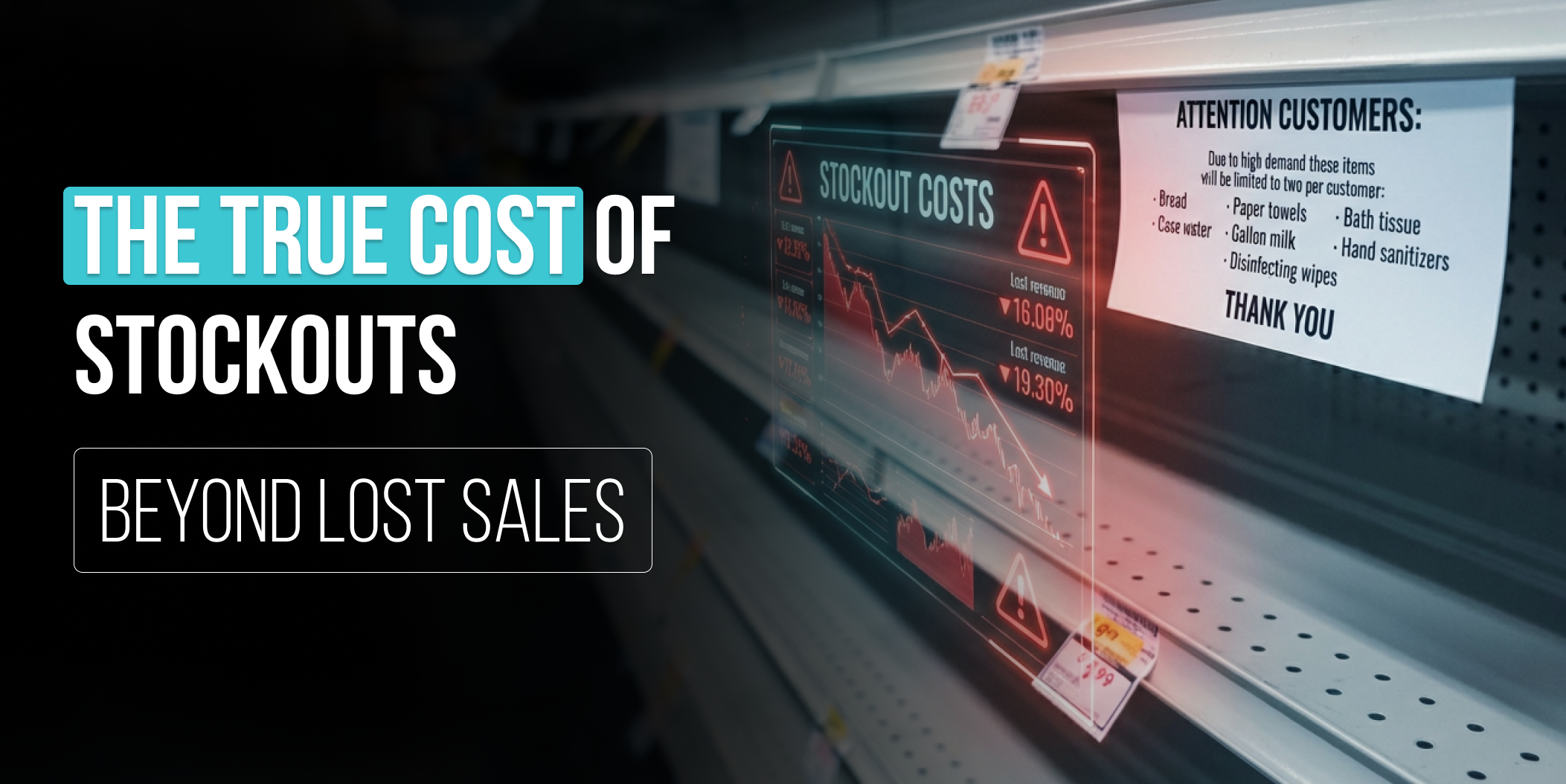
Picture this: It’s Black Friday 2026, and your best-selling product just went out of stock. Your customers are frustrated, your competitors are celebrating, and you’re scrambling to understand the real damage. But here’s what most business owners miss the visible lost sales from stockouts are just the tip of the iceberg.
As someone who’s helped countless businesses navigate supply chain disruptions, I’ve seen firsthand how stockout costs extend far beyond that immediate revenue hit. We’re talking about hidden operational costs caused by inventory stockouts that can quietly drain your profits for months. From overtime labor due to stockouts to the long-term impact on customer retention, these inventory stockouts create a ripple effect that touches every corner of your business.
The reality? Most companies are flying blind when it comes to understanding their true stockout costs. They see the obvious a customer walks away because the product isn’t available. But they miss the expedited shipping costs, the damaged brand reputation, and the operational inefficiencies that follow. In 2026’s competitive landscape, this blind spot could be the difference between thriving and merely surviving.
The True Cost Of Stockouts: Beyond Lost Sales In 2026
1. Direct Financial Impact And Lost Revenue
Let’s start with the obvious hit to your wallet. When you run out of stock, every potential customer who walks away represents immediate lost sales from stockouts. But here’s what most business owners miss the direct financial impact goes way beyond that single transaction.
Think about it this way: if your best-selling product generates $500 per day in revenue and you’re out of stock for three days, you’ve lost $1,500 in direct sales. Simple math, right? But that’s just the tip of the iceberg.
The real sting comes from what economists call opportunity cost. While you’re scrambling to restock, your competitors are capturing those customers and potentially keeping them for good. Research shows that 70% of customers will switch to a competitor when faced with stockouts, and 40% won’t return to the original retailer.
Here’s where it gets tricky: calculating these operational costs requires looking at your average order value, customer lifetime value, and conversion rates. At Tezeract, we’ve helped businesses discover that their actual stockout costs were 3-4 times higher than their initial estimates once they factored in these hidden elements.
2. Hidden Operational Costs Caused By Inventory Stockouts
Now let’s talk about the costs that don’t show up on your sales reports but quietly drain your profits. These hidden operational costs caused by inventory stockouts can be absolute budget killers if you’re not paying attention.
First up: overtime labor due to stockouts. When inventory runs dry, your team works extra hours coordinating emergency restocks, handling frustrated customer calls, and managing the chaos. That’s time-and-a-half wages that weren’t in your budget.
Then there’s expedited shipping and rush orders. Need that inventory fast? You’ll pay premium rates sometimes 200-300% more than standard shipping. Your suppliers know you’re desperate, and they price accordingly.
Don’t forget about the administrative burden. Your customer service team spends hours explaining delays, processing refunds, and managing complaints. Your procurement team scrambles to find alternative suppliers. Your warehouse staff deals with rushed deliveries and disrupted workflows.
These operational inefficiencies create a domino effect throughout your entire operation, turning a simple inventory shortage into a company-wide productivity drain.
3. How Stockouts Affect Customer Loyalty And Brand Reputation
Here’s where stockouts really hurt: they damage the one thing that’s hardest to rebuild trust. Understanding how stockouts affect customer loyalty and brand reputation is crucial because this impact extends far beyond the immediate sale.
When customers can’t find what they need, they don’t just leave empty-handed. They leave with a negative impression that sticks. Studies show that 89% of customers share bad experiences with others, while only 11% share positive ones. That’s a lot of word-of-mouth damage from a single stockout.
Customer retention takes the biggest hit. It costs 5-25 times more to acquire a new customer than to keep an existing one, so every lost customer due to stockouts represents a massive hidden cost. These customers often don’t just buy once they represent years of potential revenue.
Social media amplifies the damage. One frustrated customer’s tweet about your empty shelves can reach thousands of potential buyers. In 2026’s hyper-connected world, brand reputation spreads faster than ever.
The solution? Proactive communication and reliable inventory management systems that prevent these situations before they damage your brand’s credibility.
4. Operational Inefficiencies And Supply Chain Disruptions
Supply chain disruptions caused by stockouts create a ripple effect that touches every part of your business. These aren’t just minor hiccups they’re major operational inefficiencies that can paralyze your entire operation.
When you’re out of stock, your supply chain goes into crisis mode. Suppliers get bombarded with urgent requests, logistics teams scramble to reroute shipments, and warehouse operations get thrown into chaos. This reactive approach costs significantly more than proactive planning.
Your demand forecasting becomes unreliable because stockouts mask true customer demand. How can you plan for next month when you don’t know how many sales you lost this month? This creates a vicious cycle where poor inventory management leads to worse inventory management.
Supply chain issues compound quickly. One stockout can trigger emergency orders that strain supplier relationships, disrupt delivery schedules, and create bottlenecks throughout your network. At Tezeract, we’ve seen companies spend 40% more on procurement during stockout recovery periods.
The key is building resilient systems that anticipate problems rather than react to them. Smart inventory optimization and real-time monitoring can prevent these costly disruptions before they spiral out of control.
5. Methods To Calculate Cost Of Lost Sales Due To Stockouts
Ready to put real numbers on your stockout problem? Learning how to calculate total stockout costs including indirect impacts gives you the data you need to make smarter inventory decisions and improve business profitability.
Start with the basic formula: Lost Revenue = (Average Daily Sales × Days Out of Stock) × Gross Margin. But don’t stop there this only captures direct losses.
Next, factor in customer lifetime value. Multiply your average customer value by the percentage of customers who don’t return after a stockout. This reveals the long-term revenue impact that most businesses completely miss.
Don’t forget operational costs: overtime wages, expedited shipping fees, administrative time, and supplier relationship strain. Track these for a few stockout incidents to establish your average operational cost per stockout event.
For the complete picture, add reputation costs. While harder to quantify, you can estimate this by tracking customer acquisition costs before and after stockout periods, monitoring social media sentiment, and measuring changes in your stockout rate and service level.
The goal isn’t perfect precision it’s getting close enough to make informed decisions about inventory investment and strategies to mitigate stockout costs in 2026.
Strategies To Mitigate Stockout Costs In 2026
1. Advanced Demand Forecasting And AI Solutions
Here’s the thing about supply chain disruptions in 2026 they’re not going away. But what if I told you that the right demand forecasting strategy could cut your stockout costs by up to 60%?
Traditional forecasting methods are like trying to predict tomorrow’s weather by looking at last month’s forecast. They miss the nuances, the seasonal shifts, and those unexpected demand spikes that can make or break your inventory management strategy.
This is where AI-powered demand forecasting becomes your secret weapon. At Tezeract, we’ve seen businesses transform their approach by implementing machine learning algorithms that analyze historical data, market trends, and even external factors like economic indicators or social media sentiment.
Think about it this way: instead of guessing how much inventory you’ll need, you’re making data-driven decisions. These AI solutions can identify patterns that human analysts might miss like how a viral TikTok trend affects product demand or how weather patterns influence purchasing behavior.
The beauty of advanced forecasting lies in its ability to prevent stockouts before they happen. When you can predict demand with 85-90% accuracy (compared to 60-70% with traditional methods), you’re not just avoiding lost sales you’re eliminating those costly operational inefficiencies that cascade through your entire business.
But here’s what most companies get wrong: they implement AI forecasting as a standalone solution. The real magic happens when you integrate it with your existing supply chain infrastructure, creating a seamless flow of information that keeps your inventory levels optimized without overstocking.
2. Inventory Optimization To Prevent Stockouts
Let’s talk about inventory optimization because having the right product at the right time isn’t luck, it’s strategy.
Most businesses approach inventory like they’re playing defense. They stock up, hope for the best, and react when problems arise. But what if you could play offense instead?
Effective inventory optimization starts with understanding your ABC analysis. Your A-items (high-value, high-turnover products) need different treatment than your C-items (low-value, slow-moving inventory). This isn’t just about how to calculate total stockout costs including indirect impacts it’s about preventing them entirely.
Safety stock calculations become crucial here. The old rule of thumb keeping 30 days of inventory doesn’t work in today’s volatile market. You need dynamic safety stock levels that adjust based on demand variability, supplier reliability, and lead times.
Here’s a practical approach: implement automated reorder points that trigger when inventory hits predetermined levels. But don’t stop there. Set up multiple trigger points one for normal reordering and another for emergency procurement when supply chain issues threaten your stock levels.
The goal isn’t just to avoid inventory stockouts. It’s to maintain optimal service level while minimizing carrying costs. When you get this balance right, you’re not just protecting your business profitability you’re creating a competitive advantage that compounds over time.
Remember, every day you avoid a stockout is a day you maintain customer retention and protect your brand reputation.
3. Streamlining Supply Chain Processes
Your supply chain is only as strong as its weakest link. And in 2026, that weak link is often the lack of real-time visibility and communication between partners.
Streamlining starts with mapping your entire supply chain from raw material suppliers to your end customers. You need to identify bottlenecks, redundancies, and single points of failure that could trigger supply chain disruptions and their costs.
One of the most effective strategies to mitigate stockout costs in 2026 is implementing collaborative planning with your suppliers. This means sharing demand forecasts, inventory levels, and production schedules in real-time. When your suppliers know what’s coming, they can prepare accordingly.
But here’s where most companies stumble: they focus on cost reduction instead of risk mitigation. Yes, finding cheaper suppliers might improve your margins short-term. But if those suppliers can’t deliver consistently, you’ll face hidden operational costs caused by inventory stockouts that far exceed any savings.
Consider diversifying your supplier base. Having 2-3 reliable suppliers for critical components might seem expensive, but it’s insurance against supply chain disruptions. When one supplier faces issues, you have alternatives ready.
Technology integration becomes essential here. IoT sensors can track shipments in real-time, alerting you to delays before they impact your inventory. Blockchain technology can provide transparency and traceability throughout your supply chain.
The ultimate goal is creating a responsive, resilient supply chain that adapts to disruptions rather than breaking under pressure. When you achieve this, you’re not just avoiding operational costs you’re building a foundation for sustainable growth that protects both your bottom line and customer loyalty.
Conclusion
The true cost of stockouts in 2026 goes far beyond the obvious lost sales from stockouts. As we’ve explored, these hidden operational costs caused by inventory stockouts can multiply your actual losses by 3-4 times what you initially calculate.
Think about it: when you factor in overtime labor due to stockouts, expedited shipping and rush orders, damaged customer loyalty, and the ripple effects on your brand reputation, the economic impact becomes staggering. But here’s the encouraging part you now have the roadmap to prevent stockouts before they devastate your business profitability.
The strategies we’ve discussed aren’t just theoretical. AI-powered demand forecasting, inventory optimization, and streamlined supply chain processes are already helping businesses reduce stockout costs by up to 60%. Companies that implement these approaches don’t just survive supply chain disruptions they thrive despite them.
Remember, every day you delay addressing inventory management inefficiencies, you’re essentially choosing to accept higher operational costs and lower customer retention rates. The question isn’t whether you can afford to invest in better systems it’s whether you can afford not to.
If you’re curious about how AI can enhance your business, you might find it helpful to schedule a session. This session helps businesses uncover high-ROI AI opportunities using Business Impact Framework. It’s ideal for business owners or operators looking to improve automation, accuracy, or growth with AI especially in industries like retail, healthcare, or marketing.