Bestprover, An AI-Powered Review Aggregation Platform That Turned Fragmented Ratings Into One Trusted Score

Impact

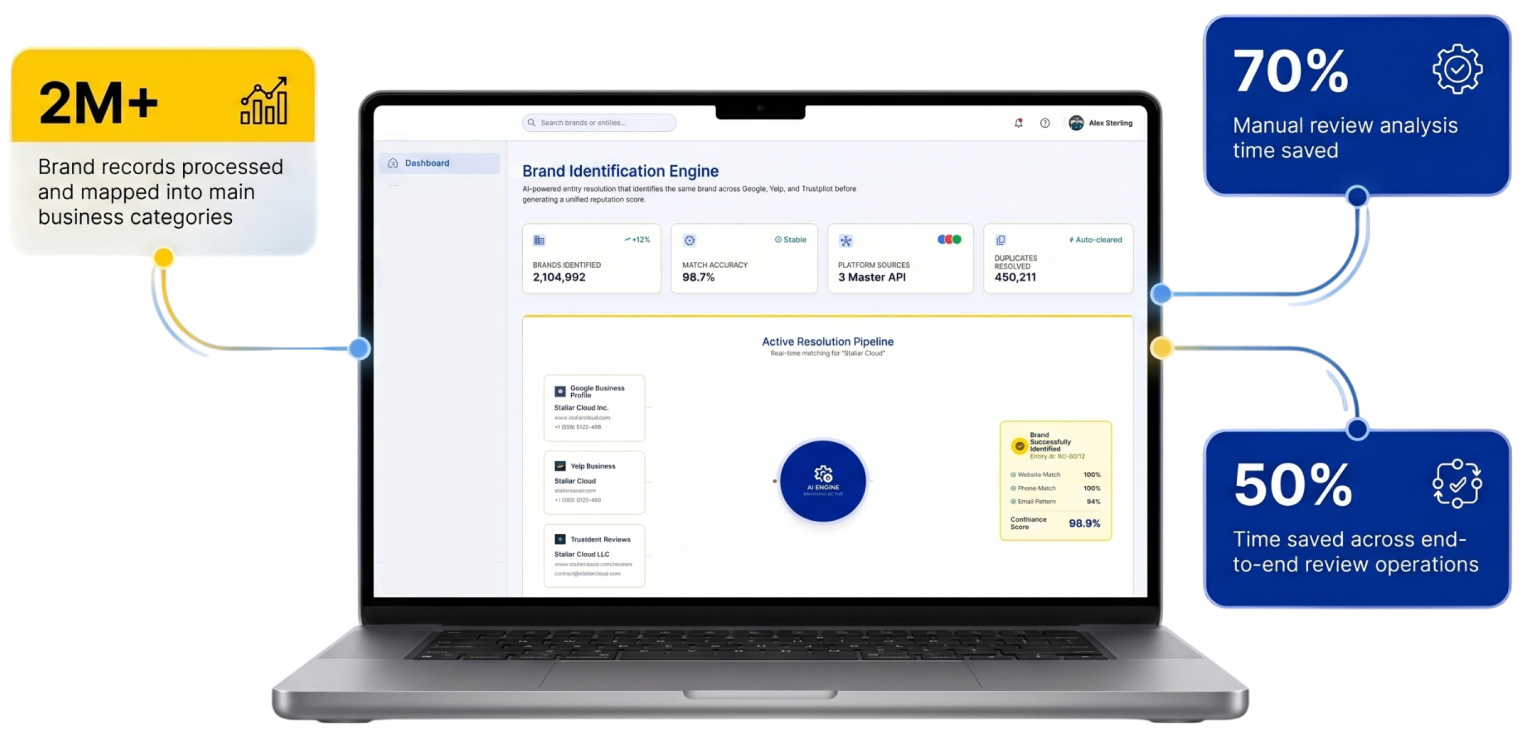
2M

Brand records processed and mapped into main business categories

70%

Manual review analysis time saved

50%

Time saved across end-to-end review operations

Project Overview

Every brand on the internet has a reputation problem it doesn’t know about. Ratings live on Google, Yelp, and Trustpilot simultaneously, often with different scores, different review volumes, and no way to compare them side by side. For consumers trying to make a decision, the fragmentation creates noise. For businesses trying to manage their reputation, it creates blind spots.

Andreas Remy, Founder of Bestprover, set out to fix this. His vision was a neutral platform where users could look up any brand and see one clear, trustworthy score, drawn from every major review source, normalized for bias, and organized by category. The product sat squarely in online reputation management software, a space where trust and data quality are everything.

When Andreas came to Tezeract, Bestprover already had a front end and a multilingual dataset. What it didn’t have was the infrastructure to make any of it reliable. The team needed a custom AI-powered review aggregation platform designed around Bestprover’s taxonomy, data sources, and user promise.

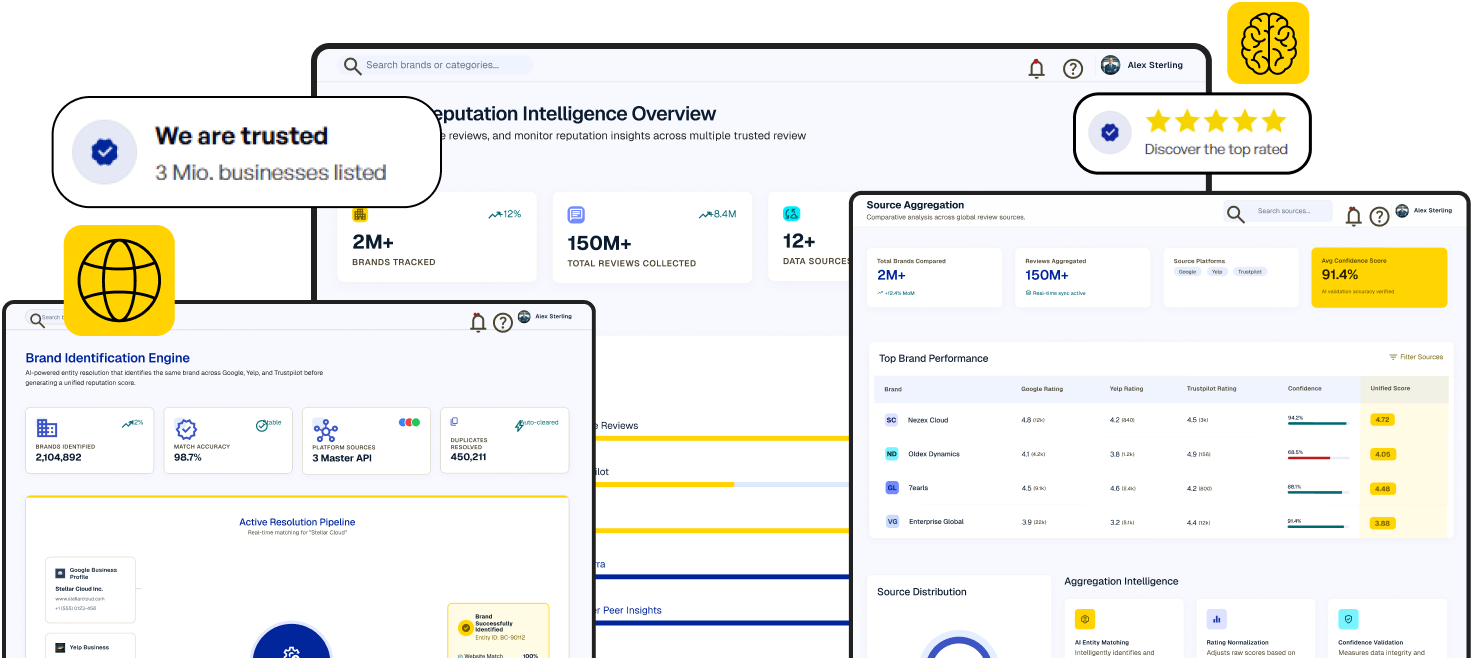
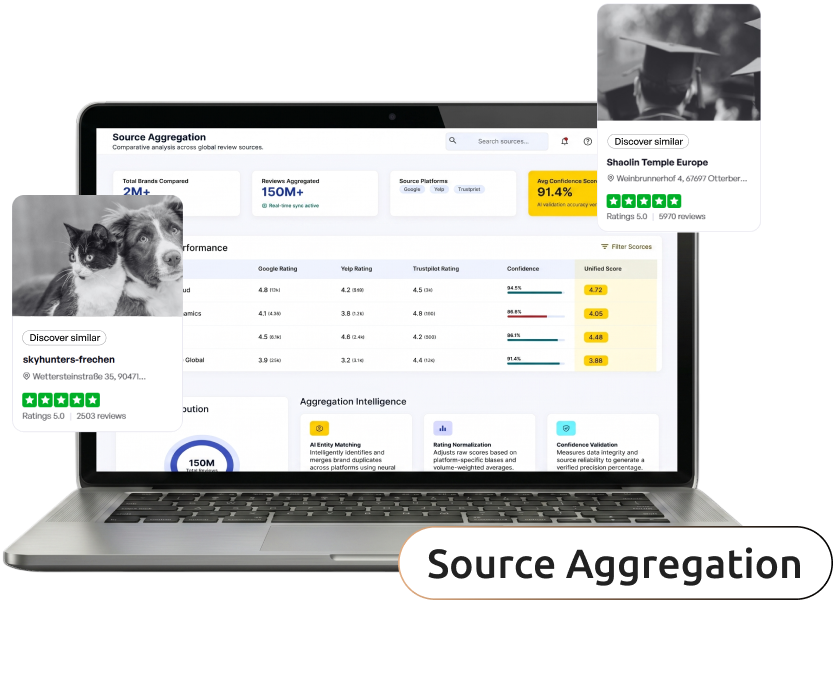
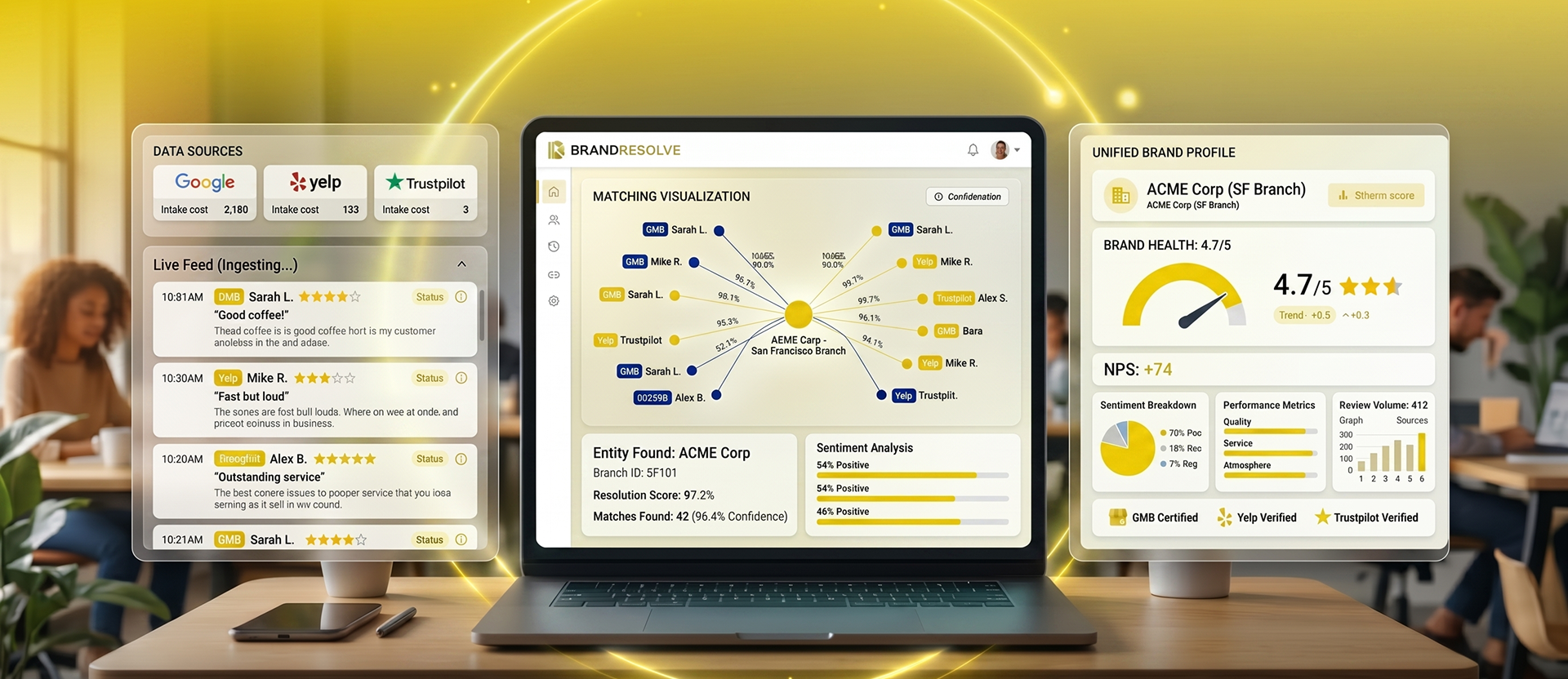
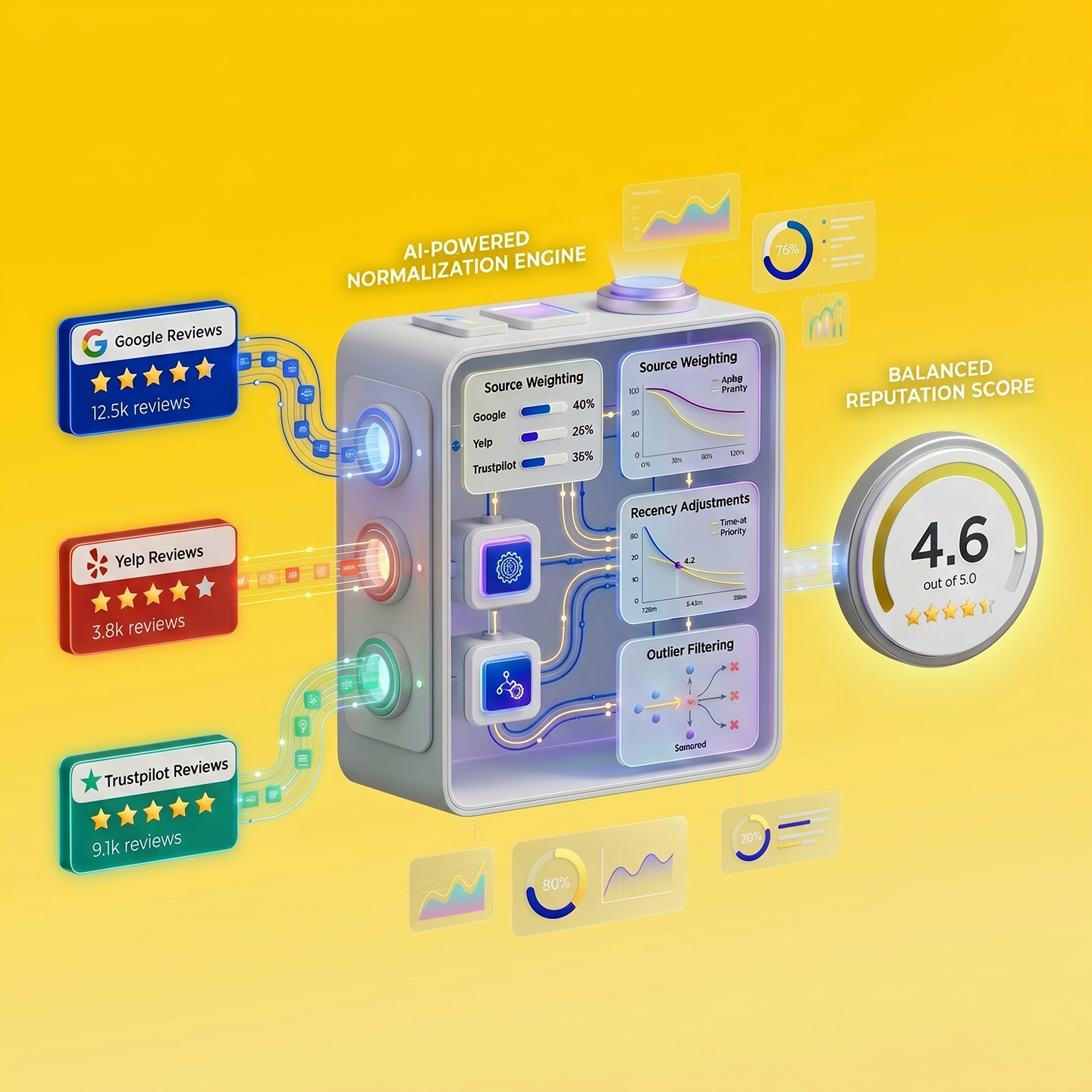
Tezeract built it. The result is a platform that pulls review data from Google, Yelp, and Trustpilot through secure APIs, matches the same brand across all three sources using multi-field entity resolution, normalizes ratings to remove bias, and returns one aggregated score per brand, with full audit trails, confidence indicators, and category placement for 2M+ records.

Bestprover Tezeract
I am extremely impressed with the AI and automation expertise demonstrated by Tezeract in automating our tagging system. Their solution efficiently matched new data with our existing dataset, significantly streamlining our workflow. Their efficient communication and collaboration made the experience exceptional. Highly recommend Tezeract for business process automation.
Andreas Remy, CEO & Founder, NEONMONKI, AI-powered review aggregation platform

Andreas Remy, CEO & Founder

NEONMONKI

Customer Profile

Client Name

Andreas Remy

Industry

Marketing & Online Reputation

Business Model

AI-powered brand directory and review aggregation platform

Location

Canada

Target Audience

Consumers comparing brands; product, marketing, and CX teams needing unified reputation data

Role

Founder

Company

Bestprover / NEONMONKI

Pain Point

Reviews fragmented across Google, Yelp, and Trustpilot with no reliable way to match, normalize, or aggregate them into a single trusted score

Bestprover’s audience spans two distinct groups. On one side are consumers who want a fast, trustworthy answer to the question, “Which brand should I choose?” On the other side are product and marketing teams who need a single source of truth for brand reputation data, without the overhead of manual cross-platform monitoring.

The Challenge

Bestprover Tezeract

01

Primary Problem

Bestprover’s core value proposition, one trusted score per brand, depended entirely on data quality. And the data quality was broken at every layer.

Reviews for the same business appeared across Google, Yelp, and Trustpilot under different names and contact details, with no shared identifier. Matching them manually was slow and error-prone. 

The dataset itself was a further problem. Labels were inconsistent. Records came in multiple languages. Some brands had reviews on one platform but not another, creating gaps that the scoring model couldn’t handle gracefully. And the team had no systematic way to detect or flag suspicious review patterns.

Secondary Challenges

No entity resolution infrastructure

The same business appeared under different names, addresses, and phone numbers across platforms, with no automated way to link them into a single record

02

Rating scale inconsistency

Google, Yelp, and Trustpilot use different scales and weighting conventions; direct comparison without normalization produced misleading aggregates

03

Multilingual data with wrong labels

Brand descriptions and review text arrived in multiple languages, often with incorrect or missing category assignments that couldn’t be fixed at scale manually

04

No fake review detection signals

Suspicious review patterns were passing through undetected, eroding the platform’s core promise of trustworthy scores

05

Fragmented data infrastructure

Listings, tags, and review records were spread across disconnected tools with no unified pipeline for QA, matching, or scoring

06

No path to scale

Every new brand added to the directory required manual intervention somewhere in the process; the team was at capacity before the growth plan had started

05

What Had Been Tried

Spreadsheet-based matching and rule-based subcategory tagging had been the primary tools before this build. Basic averaging handled the scoring. Each approach worked at small volumes and broke down as the dataset grew. The rules couldn’t handle semantic variation in brand names. 

The averages couldn’t account for source weight or review recency. And the spreadsheets couldn’t scale to millions of records without becoming a maintenance burden in their own right.

Fix Your Broken Review Data Before It Costs You Users

If your platform is struggling with mismatched listings, inconsistent ratings, or missing data, you are not alone. We design systems that clean, match, and structure your review data so your product can deliver reliable insights.

Bestprover Tezeract
sub heading

Journey Overview

Why Tezeract

The Evaluation

Andreas and his team ran a structured evaluation before committing to a custom build. Off-the-shelf review aggregation software options were the first stop, tools that promised multi-platform aggregation out of the box. Most handled the easy cases well but fell apart on the hard ones: brands with inconsistent names across platforms and categories that didn’t match the tool’s prebuilt taxonomy. The ones that handled complexity came with enterprise pricing that didn’t fit a startup’s budget or timeline.

An in-house build was also evaluated. The technical risk was manageable, but the delivery timeline wasn’t. The team needed a working system on real data before the next growth phase, and building from scratch internally would have pushed that timeline out by months.

Why the Decision Went to Tezeract

Tezeract proposed a custom build scoped specifically to Bestprover’s data sources, taxonomy, and workflow. The plan was backend-only, no new UI, no workflow disruption, with a phased delivery approach that put a pilot on real Bestprover data before the full investment was committed. 

The proposal included clear answers to the hardest questions:

  1. How brand matching would handle ambiguous records
  2. How rating normalization would account for source weight and recency
  3. How the system would flag suspicious review patterns without deleting data or triggering false positives.


Three things separated Tezeract from the alternatives:

  • Custom fit over generic coverage: The system would be built around Bestprover’s taxonomy and data, not adapted from a generic template
  • Explainability by design: Every score would carry a full audit trail: sources used, match confidence, weights applied, and flags raised
  • Short time to first value: Discovery, pilot on real data, go decision, then full build; no long runway before the team could see results
sub heading component

The Solution

What Tezeract Built

Bestprover Tezeract

Tezeract built Bestprover’s backend as a fully automated fake review detection tool and review aggregation engine, a system that handles the full pipeline from raw API data to a clean, auditable, export-ready brand score without manual intervention for standard records.

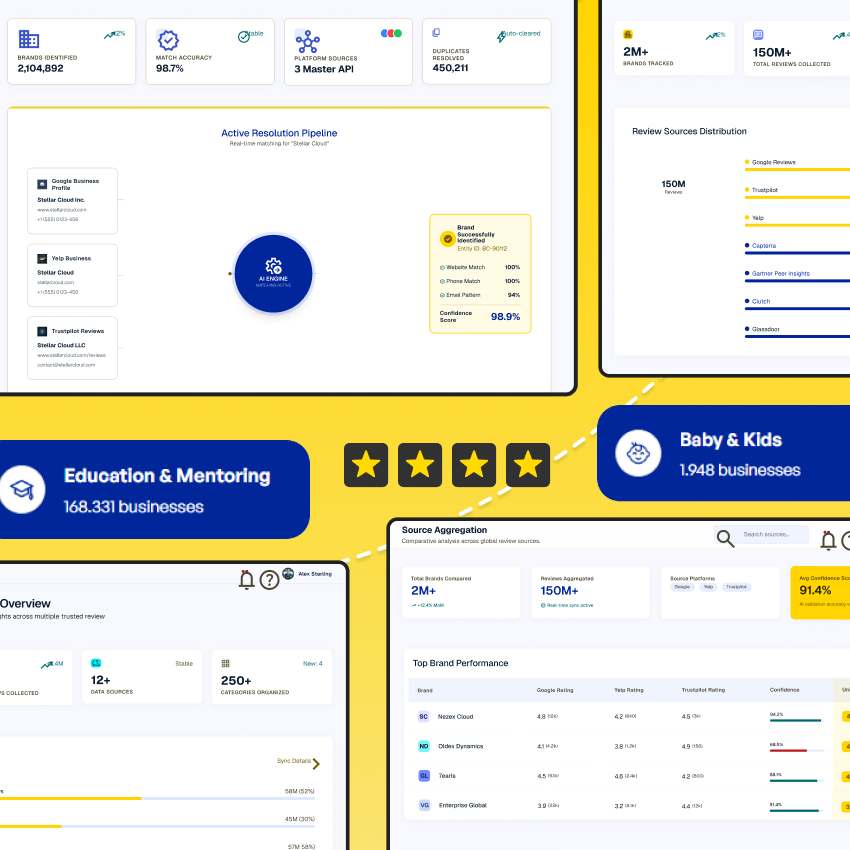
The architecture is built around four core capabilities: multi-field entity resolution that matches the same brand across Google, Yelp, and Trustpilot using name, address, ZIP, phone, and domain; a normalization layer that standardizes rating scales, applies source weights, and accounts for review recency before computing the aggregate score.

Key Capabilities Built

Bestprover Tezeract

Multi-Field Entity Resolution

Matches the same brand across Google, Yelp, and Trustpilot using name, address, ZIP, phone, and domain, with configurable confidence thresholds and a secondary review queue for ambiguous matches.

Bestprover Tezeract

Review Normalization Engine

Standardizes rating scales, applies source weights, accounts for recency, clips outliers, and adds a stability lift for very low review counts to prevent wild score swings.

Bestprover Tezeract

GPT-4o Brand Classification Pipeline

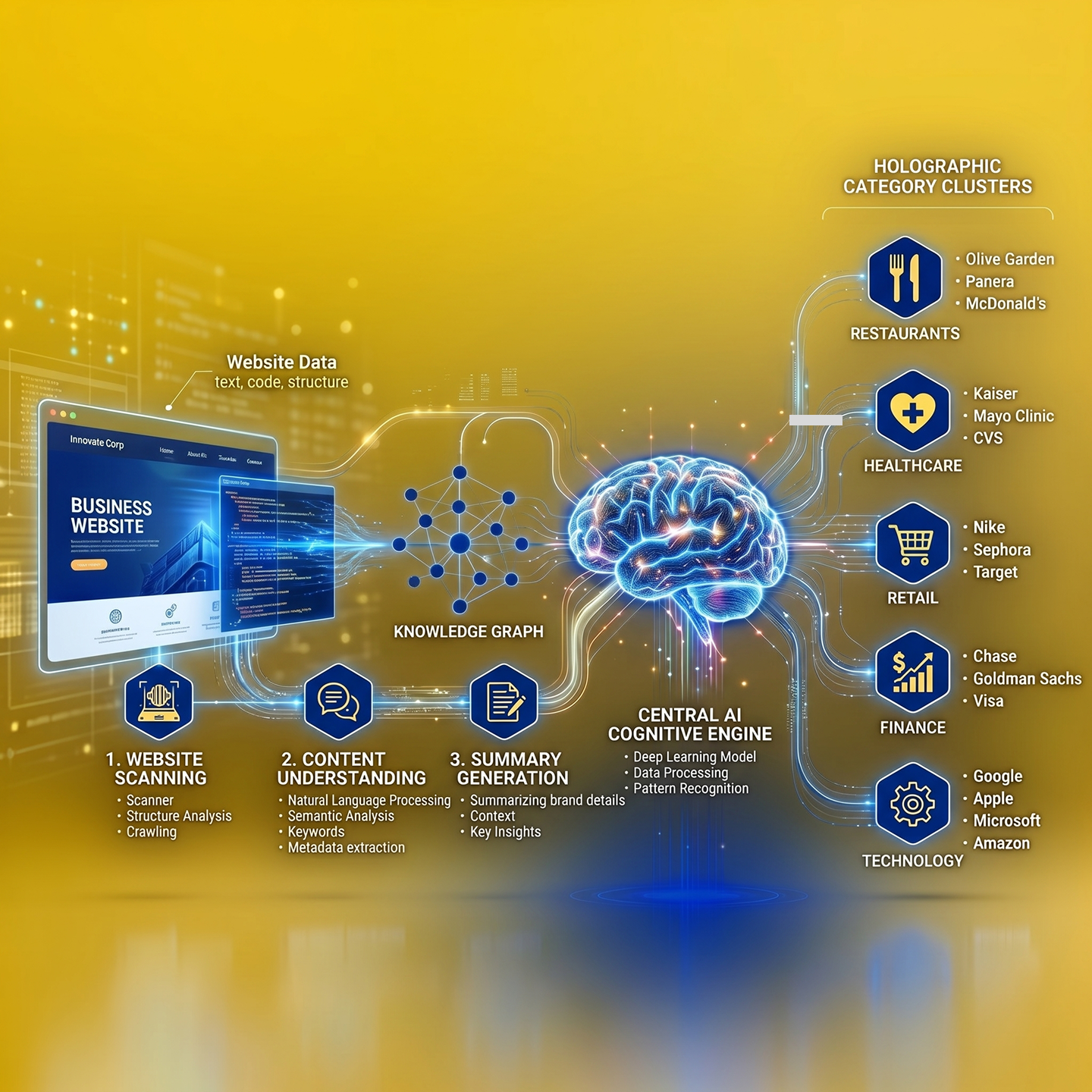
Fetches brand websites, generates summaries, and maps brands to the correct category using prompt engineering, fixing incorrect labels at scale without manual review.

Bestprover Tezeract

Suspicious Pattern Flagging

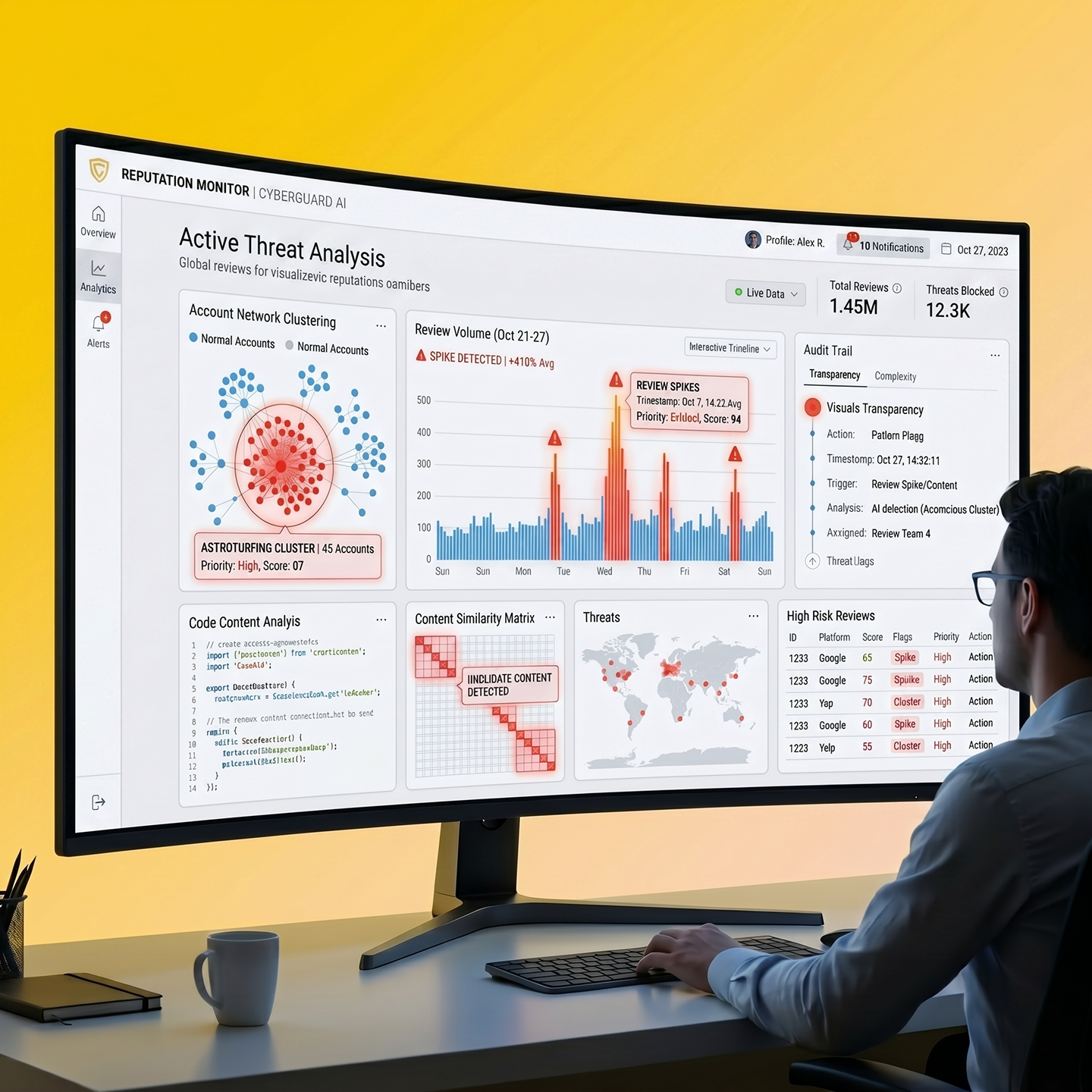
Surfaces risky review signals, volume spikes, repeated text, new-account clusters, with priority scores for human review; no auto-deletion, full audit trail maintained.

Bestprover Tezeract

Multilingual Data Processing

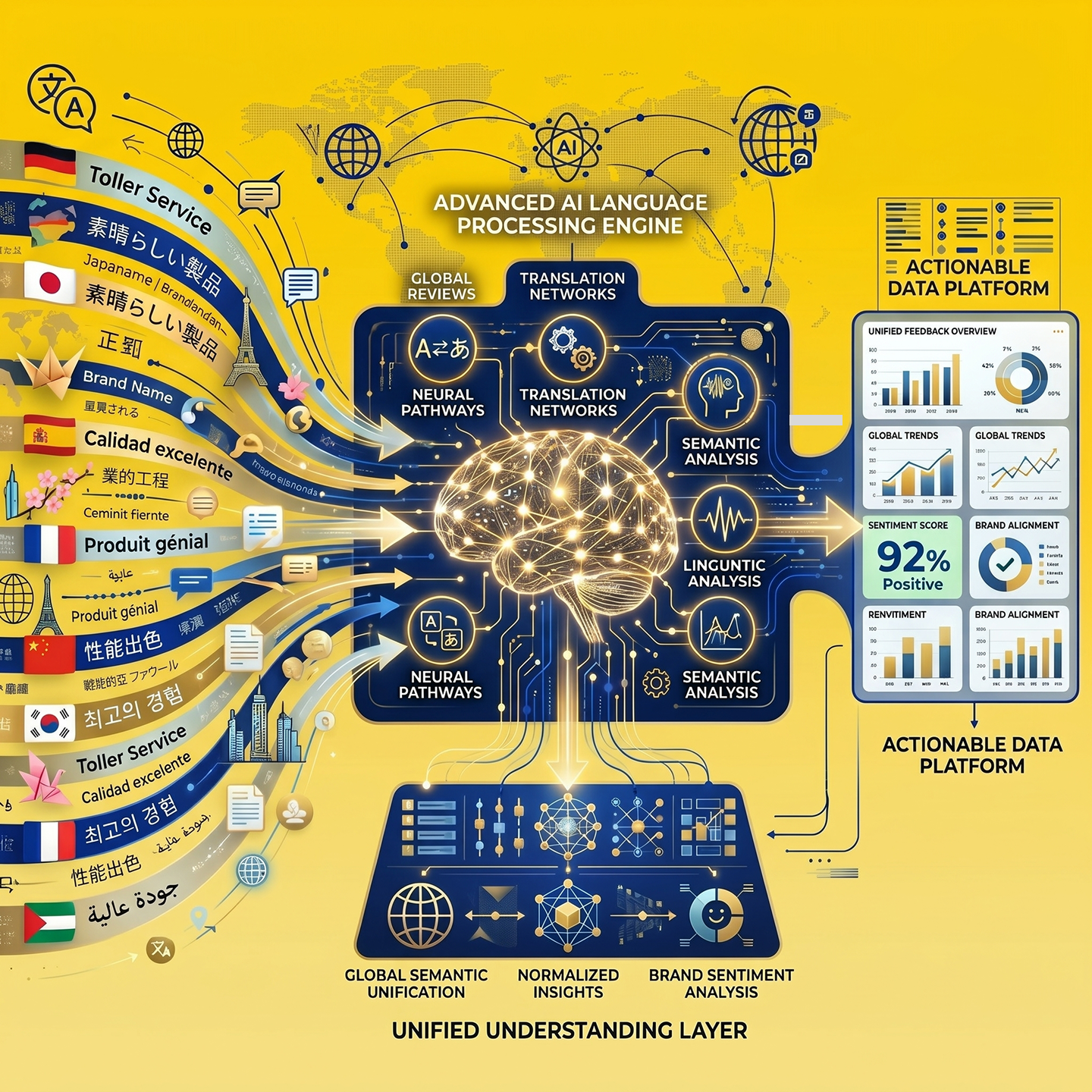
Detects language, normalizes text, and handles brand descriptions and review content across multiple languages without degrading matching or scoring accuracy.

Bestprover Tezeract

Batch Processing and Export

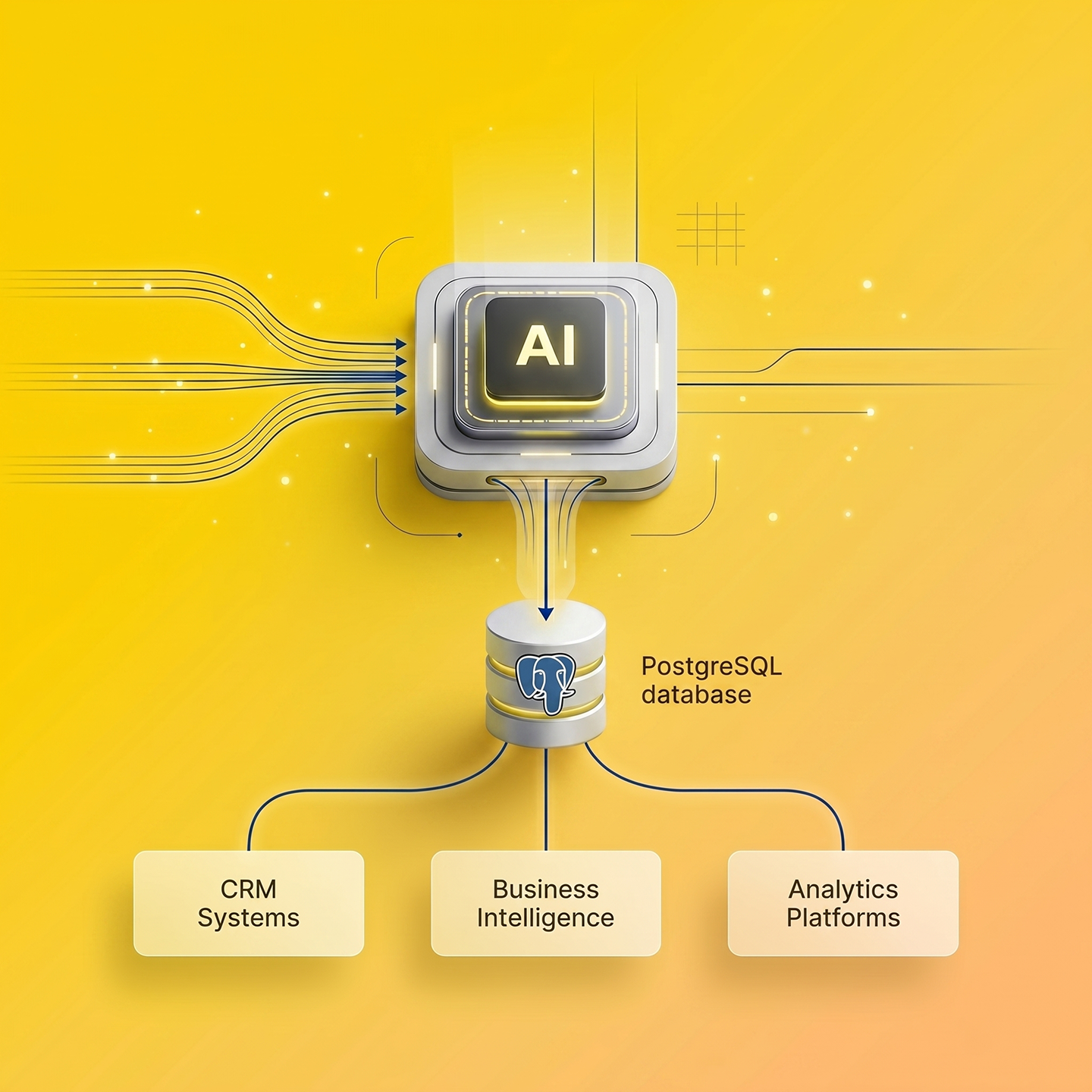
FastAPI-powered batch jobs handle millions of records efficiently; results write to PostgreSQL and export to structured formats for downstream CRM, BI, and analytics integration.

Build a Platform Like Bestprover

From entity resolution to normalized scoring, we design systems that turn raw review data into structured, reliable outputs your users can trust.

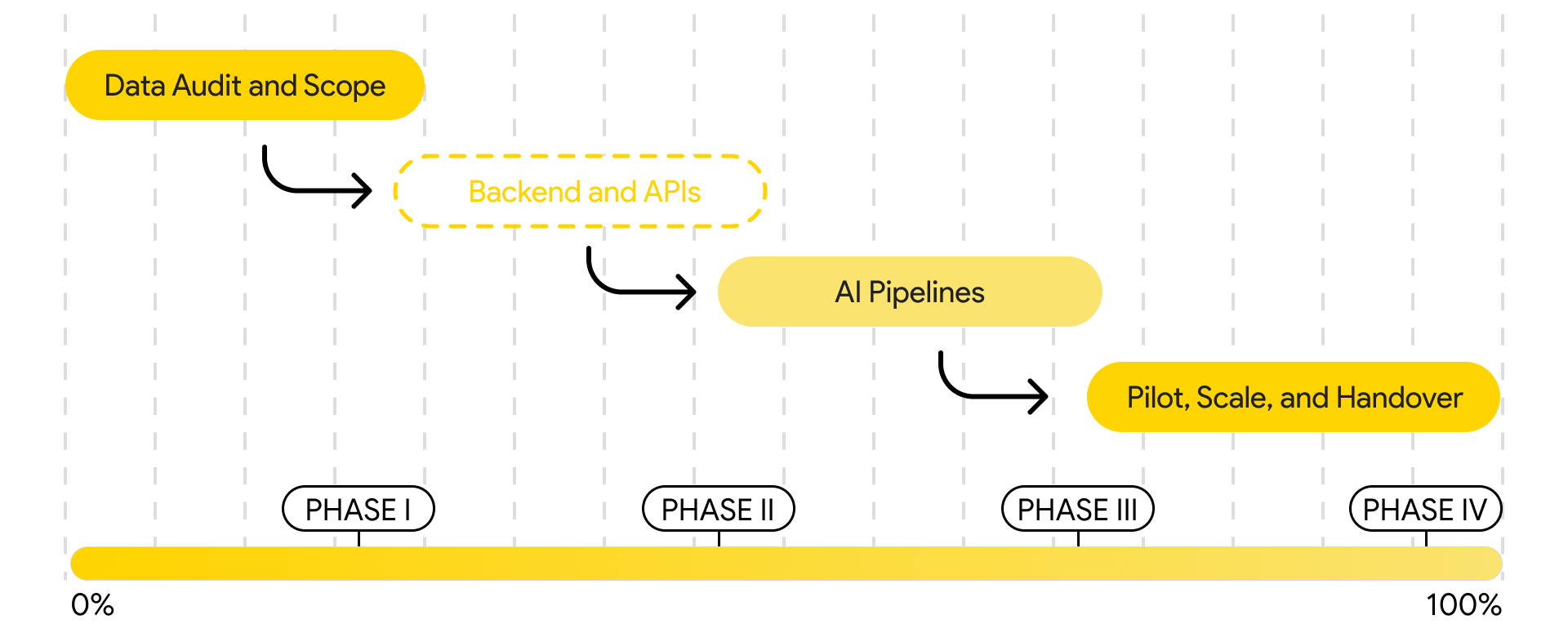
Phases wise Deployment

01

Data Audit and Scope

The team started by mapping every data source Bestprover was pulling from and auditing the existing dataset. API rate limits, field formats, and schema inconsistencies were documented before a single line of production code was written.

Key Milestone: Signed-off data schema, matching rules, and category taxonomy, the foundation every subsequent phase was built on.

Bestprover Tezeract

02

Backend and APIs

FastAPI was stood up on AWS EC2 with Nginx and SSL. PostgreSQL was configured to store brand profiles, category assignments, aggregated scores, and review snapshots. Secure API connectors were built for Google, Yelp, and Trustpilot.

Key Milestone: End-to-end data flow working on real Bestprover records, intake, matching, scoring, and PostgreSQL write, with full audit logging active.

03

AI Pipelines

The GPT-4o brand classification pipeline was built and integrated. Website fetching, summarization, and category mapping using prompt engineering tuned to Bestprover’s taxonomy. The review normalization engine was implemented with configurable source weights, recency decay, outlier clipping, and low-count stability adjustments.

Key Milestone: All AI components passing accuracy validation on the pilot dataset, classification, normalization, and flagging all meeting agreed KPIs before scale-up.

Bestprover Tezeract

04

Pilot, Scale, and Handover

The system ran on a live slice of Bestprover’s brand records. Results were reviewed against the ground truth dataset, thresholds were adjusted based on real-world performance, and queue depth and processing speed were monitored under load. Admin dashboards, playbooks, and a short handover session gave the Bestprover team full visibility into job status, queue depth, and error rates.

Key Milestone: 2M+ brand records processed, categorized, and scored, system handed over with full documentation, admin access, and monitoring dashboards live.

Bestprover Tezeract

Obstacles Countered and Resolved

Obstacles

Same brand appeared under different names across Google, Yelp, and Trustpilot.

Rating scales differed across platforms, direct averaging produced misleading scores.

Suspicious review patterns were passing through undetected and distorting scores.

API rate limits caused pipeline instability.

Data spread across disconnected tools, no unified pipeline for QA or scoring.

Brand descriptions arrived in multiple languages with wrong or missing category labels.

Bestprover Tezeract

Resolution

Multi-field entity resolution using name, address, ZIP, phone, and domain.

Normalization layer with source weights, recency decay, outlier clipping, and low-count stability lift.

Flagging layer surfaced risky signals with priority scores for human review, no auto-deletion.

Backoff, retries, and caching; slow sources paused while others continued

FastAPI + PostgreSQL centralised all brand profiles, scores, and audit logs into one pipeline

GPT-4o pipeline fetched brand websites, generated summaries, and mapped correct categories at scale.

Bestprover Tezeract

The Results

What Changed After Go-Live

Bestprover moved from a platform with the right idea and broken data infrastructure to a fully operational AI powered brand reputation platform processing millions of records with consistent, auditable results.

2M

Brand records processed and mapped into main business categories

70%

Manual review analysis time saved

50%

Time saved across end-to-end review operations

Ready to Scale Your Review Platform?

As your dataset grows, your system needs to keep up. We design architectures that process millions of records without slowing down or losing accuracy.

sub heading component

What technologies power our AI-powered customer review platform?

Empowering Bestprover with Our Cutting-Edge AI Technology Stack for Automation Excellence

Gpt LLM

GPT4.0

Requests - HTTP library in Python

Request

Python programming language for AI development

Python

Gpt LLM

OpenAI

AWS logo - machine learning services

AWS

PostgreSQL relational database icon

PostgreSQL

FastAPI modern Python framework logo

FastAPI

Python programming language for AI development

NLTK

Text Summarization icon

Text Summarization

EC2 Instance logo - AWS services

EC2

Nginx - web server used as a web server, reverse proxy, load balancer, and HTTP cache

Ngnix

SSL -

SSL

Tools & Technologies

Description

Backend Development

AI & NLP

Database Management

Development Tools

Cloud Infrastructure & Analytics

Key Capabilities Built

Bestprover Tezeract

01

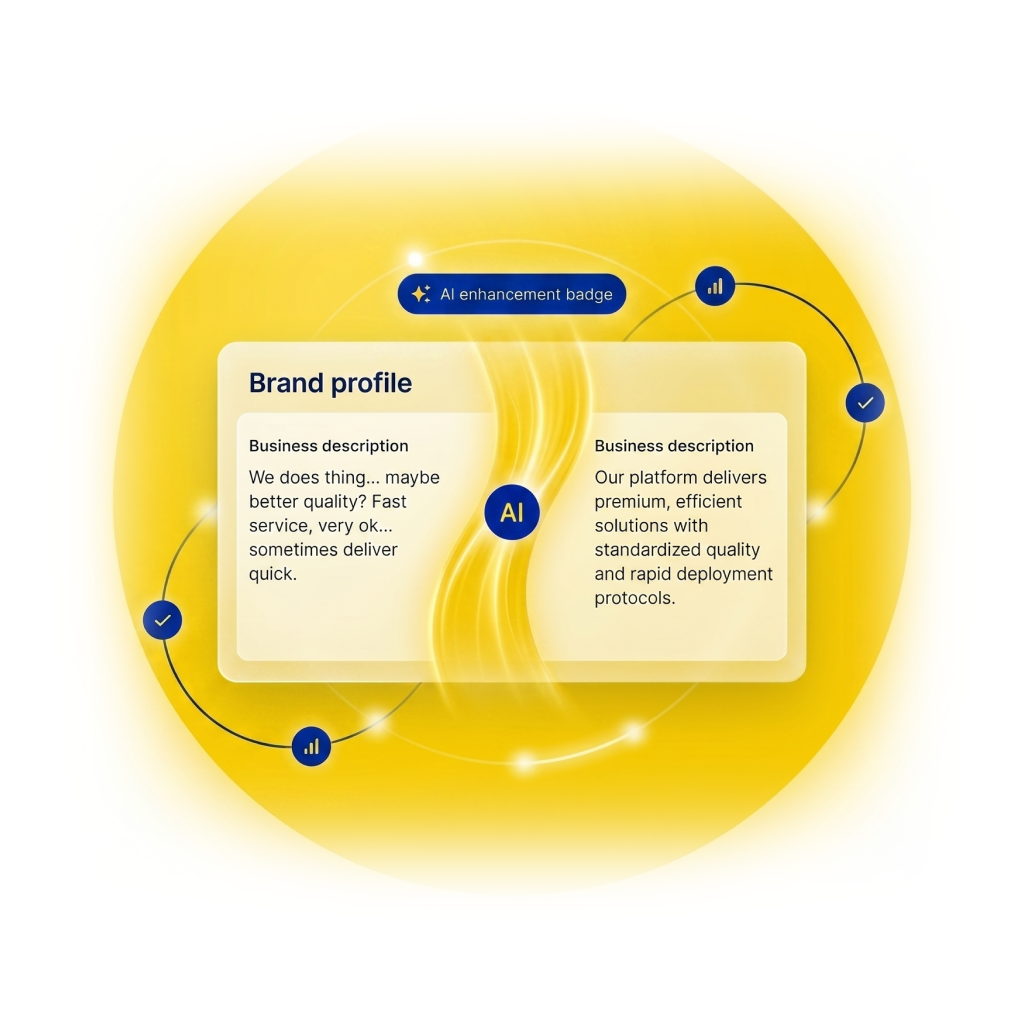
Intelligent Brand Rephrasing for Better Clarity

As an AI-powered review aggregation platform, Bestprover enhances brand presentation by automatically rephrasing and standardizing brand descriptions. This ensures consistency and clarity across listings, helping users understand each business at a glance while improving the overall user experience on our business review platform.

Bestprover Tezeract

02

Category-Based Review Sorting

Bestprover intelligently organizes over two million brands into clear categories like food, education, and pets. Using AI and data preprocessing, it ensures accurate classification even with messy or multilingual data, enabling users to search by sector with ease.

Bestprover Tezeract

03

Multilingual Data Handling for Global Accuracy

Bestprover is designed as a powerful AI-powered customer review platform capable of processing and categorizing brand data in multiple languages. By leveraging AI for customer feedback aggregation, we ensure accurate review analysis and business classification regardless of language, supporting a more inclusive and globally relevant review experience.

sub heading component

What potential use cases AI-powered review aggregator have?

The AI-powered customer review platform helps

Accurate Brand Reputation Insights

Bestprover delivers reliable, AI-powered customer feedback aggregation by consolidating ratings from platforms like Google, Yelp, and Trustpilot into a single, trustworthy score.

01

Efficient Brand Categorization at Scale

With over two million brand entries, Bestprover uses AI to automatically classify businesses into relevant categories, ensuring a structured and searchable experience for users.

02

Unified Rating System Across Platforms

The platform eliminates the hassle of cross-platform review analysis by offering a single, aggregated view of customer sentiment, enhancing trust and decision-making.

03

Multilingual Data Processing

Bestprover handles reviews and brand data in multiple languages, expanding its usability to global audiences and improving review accuracy across regions.

04

Enhanced Customer Decision-Making

Users can easily compare brands across categories and platforms, helping them make informed choices based on verified and aggregated customer reviews.

05

Stronger Brand Visibility and Engagement

By centralizing reviews and presenting clear, categorized brand profiles, Bestprover boosts online visibility for businesses and builds credibility through social proof.

06

sub heading component

Your questions answered here

Frequently Asked Questions

The AI-powered review aggregation platform runs scheduled jobs that pull reviews, ratings, and profile data through approved APIs. Each record is tagged with source IDs and time. We clean names, addresses, phones, and rating scales, then remove duplicates. Matching links the same business across sources using name, address, ZIP, phone, and domain. Weak matches stay in a review queue. Strong matches update the unified score. We aggregate reviews from one or many sources based on what is available, and we store snapshots so changes are easy to trace. Logs, metrics, retries, and backoff keep automated data aggregation stable. If one API is slow, jobs pause that source and continue with others. This flow keeps data aggregation for customer reviews fresh, auditable, and safe.

Yes. The customer review aggregator exposes clean APIs, webhooks, and batch exports. You can send unified scores, brand profiles, and review excerpts to a CRM, CDP, data warehouse, or BI dashboard. We include stable IDs, match status, and category mapping to reduce customer feedback aggregation issues during setup. For push flows, events fire on score changes or low ratings. For batch, we provide CSV or parquet in a secure bucket on your schedule. Keys rotate, IP allowlists are supported, and PII is limited to what sources allow. This makes data aggregation for customer reviews easy to plug into Salesforce, HubSpot, BigQuery, Snowflake, or Power BI.

We detect language, clean text, and normalize common fields. For weak or wrong labels, we fetch the brand website, create a short summary with GPT 4o, and map the brand to a main category. We keep the raw value and the cleaned value for audit. During review aggregation, we standardize rating scales and dates and tag language so teams can filter by region. Incomplete records enter a retry queue. If fields stay missing, we flag them for a light manual pass. These steps reduce review analytics problems and support fair aggregate reviews across languages. The result is a stable AI-powered review aggregation platform that handles noisy inputs with simple and traceable rules.

We standardize all rating scales to a single range, remove duplicates, and apply clear weights per source. We use recency so fresh reviews count more than very old ones, clip extreme outliers that look like noise, and add a small lift for very low counts to avoid wild swings. Rules are visible and can be tuned. We also support category tweaks, since review patterns differ by sector. Together, these steps lower bias, reduce review analytics problems, and create an authentic review aggregation software model that teams can explain in plain terms.

New brands enter intake at once. We build a profile, then try to match across Google, Yelp, and Trustpilot. Strong matches get a score in the next cycle. Weak matches go to a second pass that checks domain, place IDs, and phone. Most brands reach a first score quickly, based on API limits and source speed. You can speed onboarding by sharing known IDs or a clean source list. Dashboards show how many brands sit in each step. This keeps automated data aggregation quick without risky shortcuts.

It is open and traceable. For each score, you can see the sources used, fetch times, match strength, and weights that shaped the result. We show which records were removed and why. We flag risky patterns like sudden bursts from new accounts or repeated text. Flags request review and do not delete data by default. You can tune weights, thresholds, and rules to fit policy. This builds trust for users and leaders and reduces customer feedback aggregation issues. It is an authentic review aggregation software approach that is simple to explain.

We split work into small batches, run queues, and cache common lookups. We store checkpoints so long jobs resume without loss. Work can shard by region or brand range, so spikes stay isolated. We cap calls per source and use backoff when limits appear. Metrics and dashboards show step time, error counts, and queue depth. Private links, separate storage, and custom schedules fit strict teams. This setup supports enterprise review management challenges while keeping review aggregation stable during peaks.

We compute a priority score using rating, recency, user reach, and keywords tied to risk. We check repeat themes such as billing or safety. New low ratings rank high. Older items fall over time. Rules can vary by category. High priority items move into a queue for support or CX. Teams can set alerts for spikes. This cuts review response delays and guides the right person to the right item. Clean data aggregation for customer reviews also helps, since duplicates and stale items are removed before work begins.

We run source checks, schema checks, and data checks on each run. If an API slows or a field changes, we raise an alert and retry. We sample records and store snapshots to compare today with last week. If a score shifts, we can see if new reviews or mapping changes caused it. An admin page shows jobs, queues, and errors. You can re-run a step or hold a job. Clear logs with IDs let you trace a single record end to end. These controls reduce customer feedback aggregation issues and speed root cause work.

Yes. You can change weights per source, set minimum review counts, tune recency, and add category rules. You can also set flags for topics you care about, like safety or refunds. We provide safe defaults, and each change creates a version so you can track impact. For display, you can show only the final score or a source breakdown. These options keep the AI-powered review aggregation platform flexible while keeping the math simple and open.

We start with a short discovery to confirm sources, scale, and rules. Then we set up core data aggregation, matching, and scoring. A pilot can run soon after on a slice of brands. From there, we scale volume and add exports, webhooks, and dashboards. On your side, a product owner decides scope and rules, and a technical contact handles keys and links to CRM or BI. Early weeks include frequent check ins, then a steady rhythm. This plan fits enterprise review management challenges without heavy change on your team.

Yes. The platform uses connectors. Each new source has a small module that fetches data, maps fields, and feeds the same pipeline. We test rate limits and data shape, then release to a small brand set and watch scores. You can choose when to show the new source in the UI and set a lower initial weight to avoid big swings. This keeps review aggregation stable while you expand.

We validate fields on ingest, enforce formats, and block bad values for retry. We check for duplicates and odd volume spikes. Matching uses a score with clear cutoffs for link, review, or reject. We store score snapshots and inputs, so changes are easy to explain. If a source removes a review, the next run updates the view. These steps reduce review analytics problems and keep data clean for reporting.

Ready to Build Your AI-Powered Review Aggregation Platform?

Fragmented ratings across Google, Yelp, and Trustpilot don’t have to mean fragmented decisions. Tezeract builds custom AI backends that match, normalize, and score multi-source review data, so your platform delivers one score users can actually trust.

Whether you’re starting from a dataset with messy labels or scaling a reputation platform that’s outgrown its current infrastructure, Tezeract has the AI and data engineering expertise to get you there. Get in touch with our team and let’s scope your build.

WhatsApp