MapApp: AI Wildfire Risk Assessment App That Cuts Emergency Response Time by 40% Across Canada

Impact

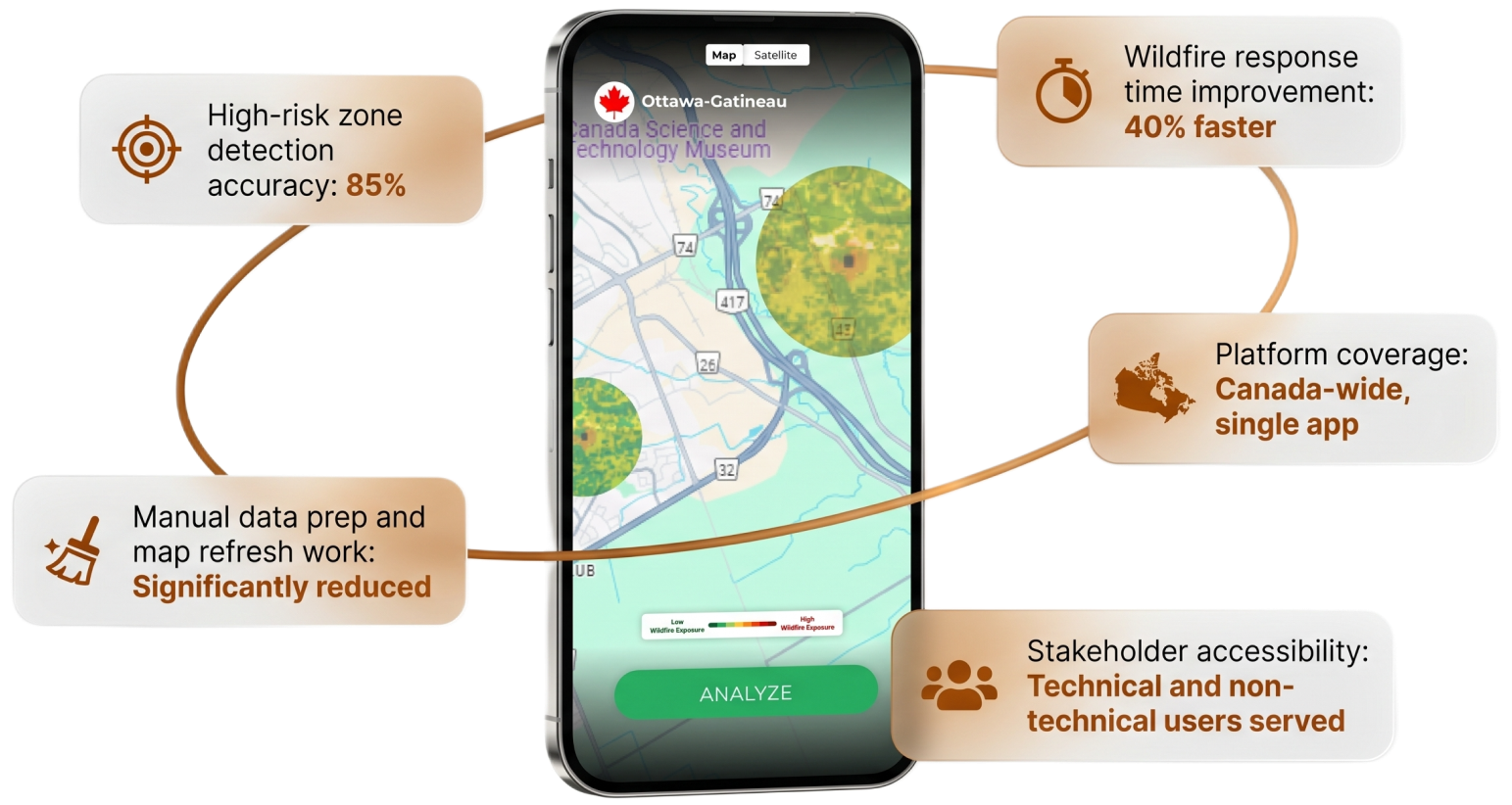
85%

High risk zones identified

40%

Faster wildfire response time

1

App Canada-wide Fire risk view

Project Overview

Every fire season, Canadian communities, utilities, and asset owners face the same problem: their wildfire risk maps are already outdated before the season begins. Static maps built from last year’s vegetation data, last season’s weather patterns, and manually stitched GIS layers cannot keep pace with the dynamic, fast-moving nature of wildfire risk.

Kevin Robb, a seasoned firefighter and founder of Mapapp, came to Tezeract with a clear mandate: replace the static map workflow with a real-time, AI-powered wildfire risk assessment platform that could profile risk at property level – across all of Canada – without adding more manual work to an already stretched team.

Tezeract designed and built a fully custom AI wildfire risk assessment platform that ingests satellite feeds, vegetation data, terrain layers, and weather inputs, runs them through a machine learning risk engine, and surfaces dynamic, property-level risk scores on an interactive map. The result: 85% accuracy in high-risk zone detection, 40% faster response times, and a single Canada-wide view of wildfire exposure for field teams, planners, and asset owners.

What Changed

Field teams and emergency planners who previously spent hours manually stitching together weather dashboards, satellite feeds, and GIS layers now have a single, real-time view of wildfire exposure at property level – updated continuously, accurate to 85% for high-risk zone detection, and accessible to both technical and non-technical users.

Mapapp Tezeract

Customer Profile

Client Name

Kevin Robb

Industry

Agriculture & Environment / Geospatial Technology

Business Model

B2B (school group operations) + B2C (parent-facing mobile app)

Location

Canada

Target Audience

Fire agencies, local governments, utilities, insurers, asset owners

Decision Maker

Founder / Firefighter Lead

Product

Mapapp

Pain Point

Static wildfire risk maps that aged quickly, fragmented data sources, no real-time property-level risk monitoring, and manual GIS workflows that consumed analyst hours every week

Project Duration

5 months

Project Status

Delivered - active use across Canada

Why This Matters for Buyers Like You

If you work in emergency management, utilities, insurance, or any sector where wildfire exposure creates operational or financial risk, Mapapp is a direct proof of concept. The challenge of turning fragmented satellite feeds, vegetation data, and weather inputs into a single, actionable risk view is not unique to Canada – it is a universal problem for any organization managing assets near fire-prone land. What Tezeract built here – a multi-source AI risk engine with property-level scoring and real-time monitoring – is a replicable architecture for any geography, any asset class, and any team that needs to move from static maps to dynamic, AI-driven risk intelligence.

sub heading component

The Challenge

When Static Wildfire Maps Can No Longer Keep Pace With a Changing Climate

Mapapp Tezeract

01

Primary Problem

The core problem was data fragmentation and temporal staleness. Mapapp’s team was working with static wildfire risk maps that were updated once per season at best. By the time a fire season began, the maps already reflected last year’s vegetation growth, last season’s burn scars, and outdated weather baselines. Field teams could not trust the maps to reflect current conditions – and in wildfire response, outdated information is not just inconvenient, it is dangerous.

The team needed a system that could continuously ingest live data – satellite feeds, weather, vegetation, terrain – and produce a dynamic, property-level risk score that updated in near real-time. No off-the-shelf tool could do this at the scale and resolution Mapapp required.

Secondary Challenges

Fragmented data sources

Weather feeds, satellite detection data, vegetation layers, and asset inventories all lived in separate tools with incompatible formats – making unified analysis impossible without heavy manual work.

02

Limited spatial resolution

Remote regions of Canada had significant gaps in high-resolution vegetation data, leaving large areas with unreliable risk scores.

03

Real-time alert delays

Existing satellite wildfire detection tools had latency issues and high false-positive rates, eroding field team trust in automated alerts.

04

Non-technical user barrier

Risk data needed to be interpretable by local government officials and asset owners – not just GIS specialists and fire scientists.

05

Wildfire mitigation budget justification

Without clear, quantified exposure data at property level, it was difficult to justify investment in fuel treatments, hardening projects, or new infrastructure.

06

Turn Fragmented Fire Data Into Actionable Risk Intelligence

If your teams are switching between weather dashboards, GIS layers, and satellite tools just to understand wildfire exposure, it is time for a unified AI-driven solution. We help organizations monitor wildfire risk at property level with near real-time visibility.

What Slowed Down Operations and Triggered the Need for Immediate Change

Previous Solutions Tried

The Mapapp team had explored off-the-shelf satellite wildfire detection platforms, subscription-based GIS risk tools, and manual in-house workflows that combined government hazard maps with weather dashboards. Each approach had the same fundamental limitation: none could deliver dynamic, property-level risk scoring from a unified data pipeline. Satellite tools produced coarse alerts with high false-positive rates. GIS platforms required constant manual updates. No existing solution could bridge the gap between raw multi-source data and actionable, real-time risk intelligence for non-technical stakeholders.

Business Impact

Every hour of delayed wildfire detection is an hour of unchecked fire spread. For utilities with lines running through fire-prone corridors, that translates directly into infrastructure damage and liability. For local governments, it means slower evacuations and higher community risk. For the Mapapp team specifically, the manual data workflow consumed significant analyst hours every week during peak fire season – time that should have been spent on response planning, not file handling. The inability to deliver real-time risk views also limited Mapapp’s ability to grow its client base among insurers and asset owners who needed quantified exposure data.

Urgency Factors

Mapapp Tezeract
sub heading

Journey Overview

Why Tezeract

Kevin Robb needed a development partner who could do more than build a web app. He needed a team that understood geospatial data pipelines, machine learning model training for environmental risk, and the practical constraints of field deployment – all within a timeline that matched the Canadian fire season.

Why Tezeract Won the Evaluation

Mapapp evaluated satellite detection vendors, GIS platform providers, and custom development teams. Tezeract stood out for a specific combination of capabilities:

  • Custom AI model development – the ability to train wildfire risk models on Canada-specific vegetation, terrain, and ignition data rather than adapting a generic global model.

  • Multi-source data pipeline engineering – experience integrating satellite feeds, weather APIs, vegetation datasets, and asset inventories into a single, clean data pipeline.

  • Computer vision for environmental detection – proven capability in building visual detection systems that could process aerial and satellite imagery for smoke and fire signal identification.

  • Full-stack delivery – the ability to build both the AI engine and the user-facing web application in a single engagement, without handoffs between separate vendors.

Phased delivery methodology – a structured approach that would have a working core platform ready before the fire season, with enhancements delivered in subsequent phases.

sub heading component

The Solution

How Tezeract Built a Real-Time AI Wildfire Risk Assessment Platform That Turns Multi-Source Data Into Property-Level Risk Intelligence

Mapapp Tezeract

How MapApp Works

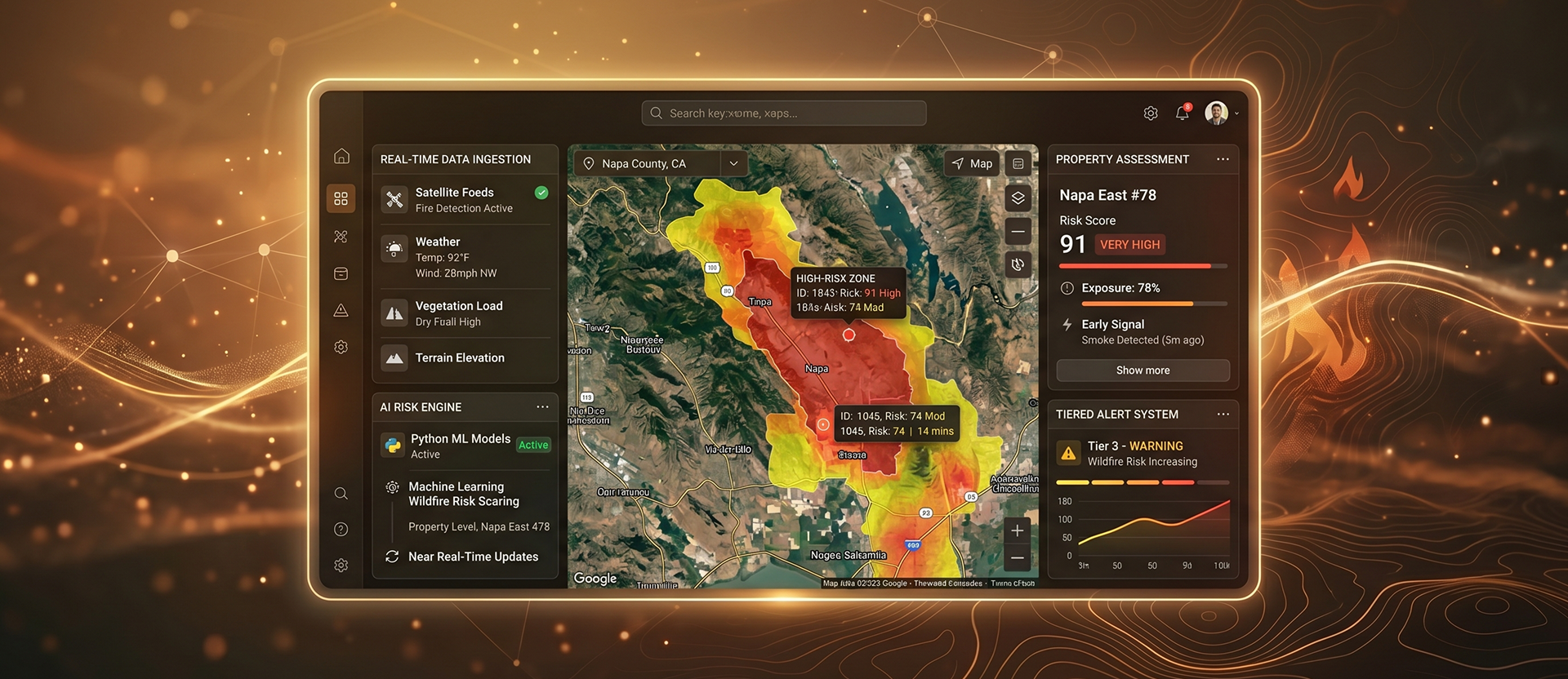
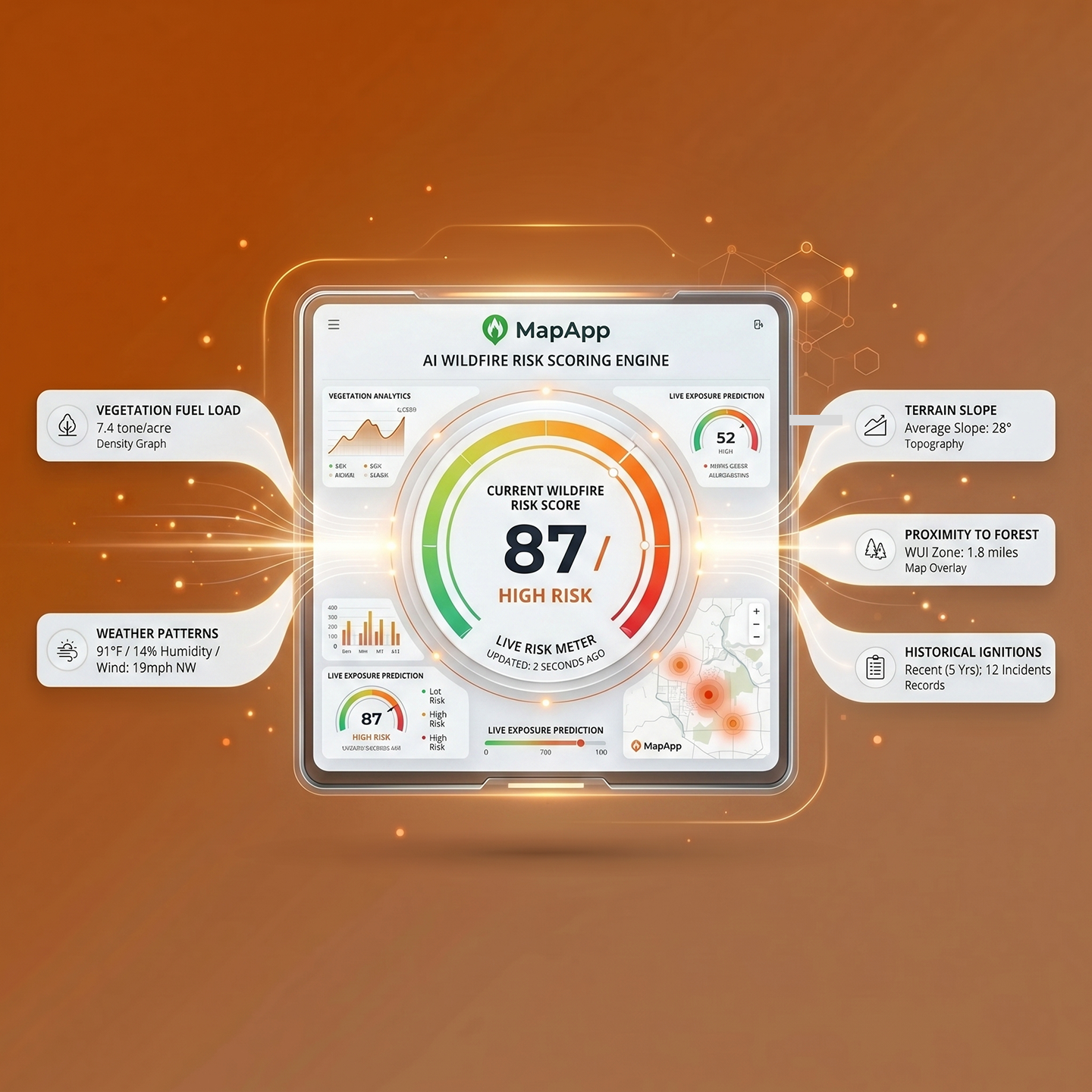
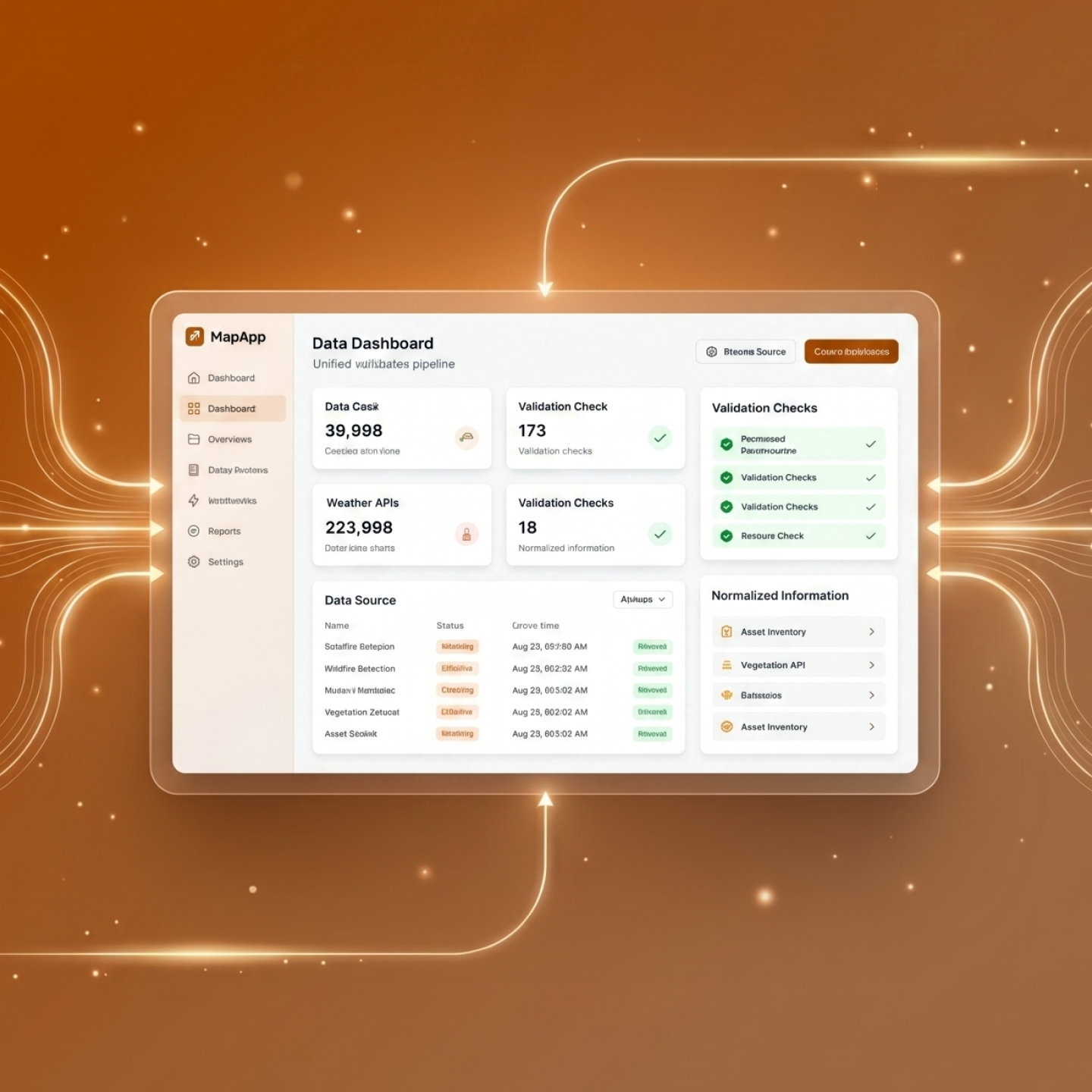
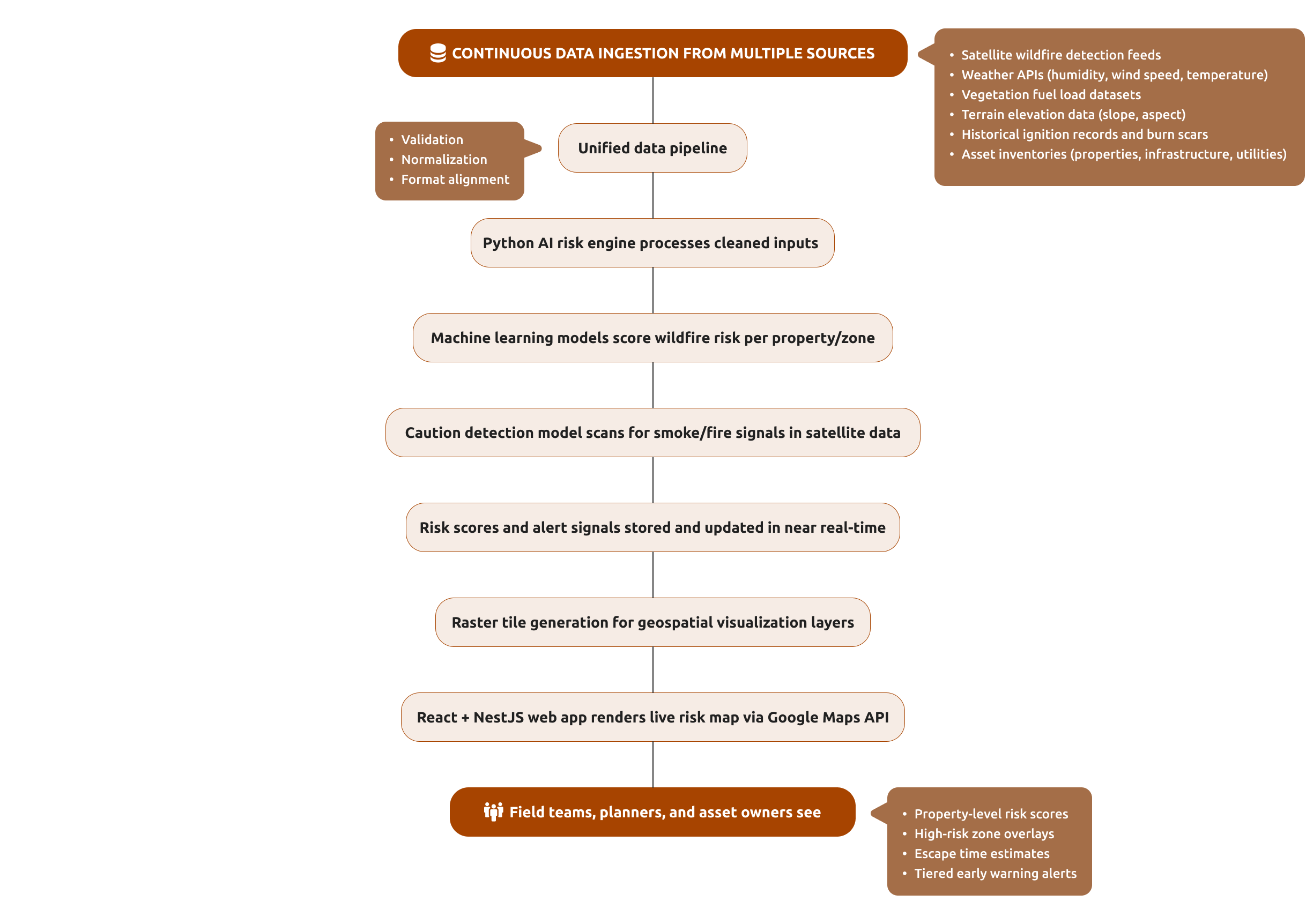
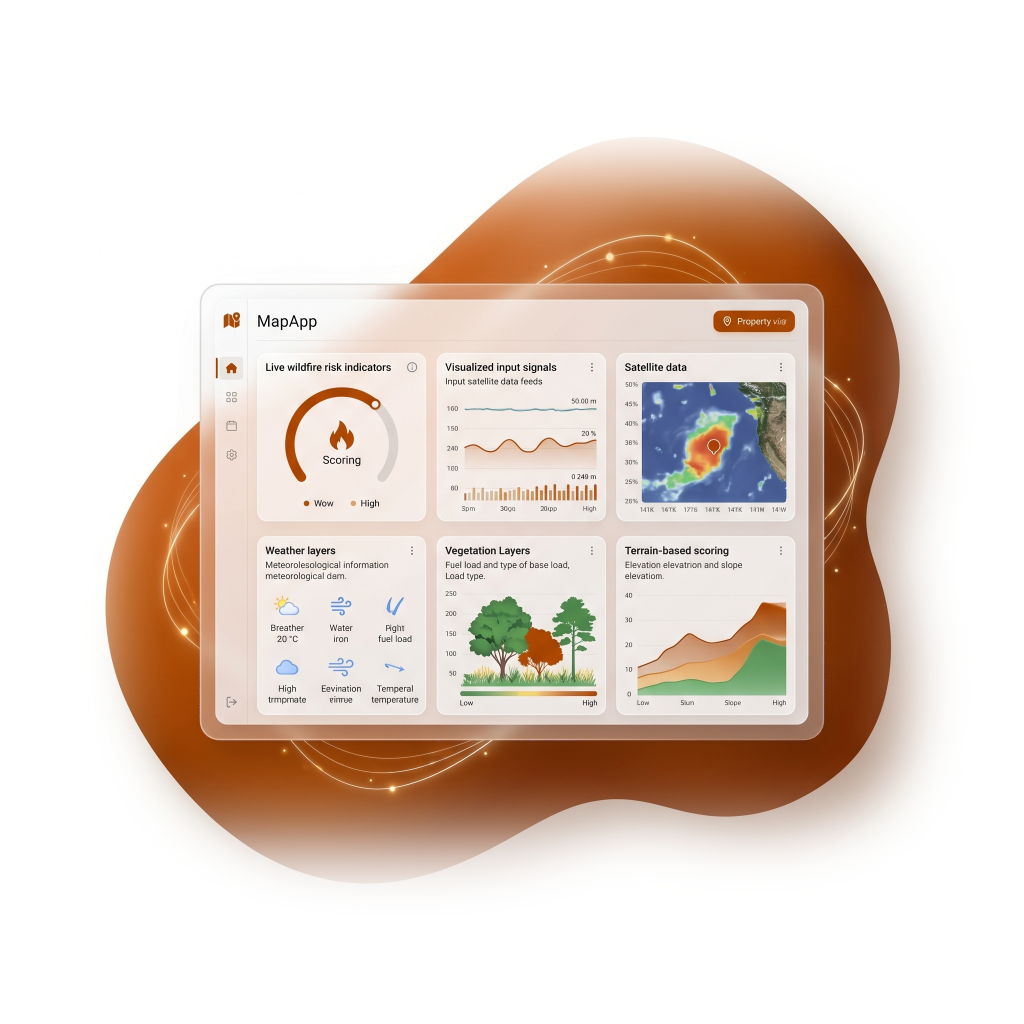
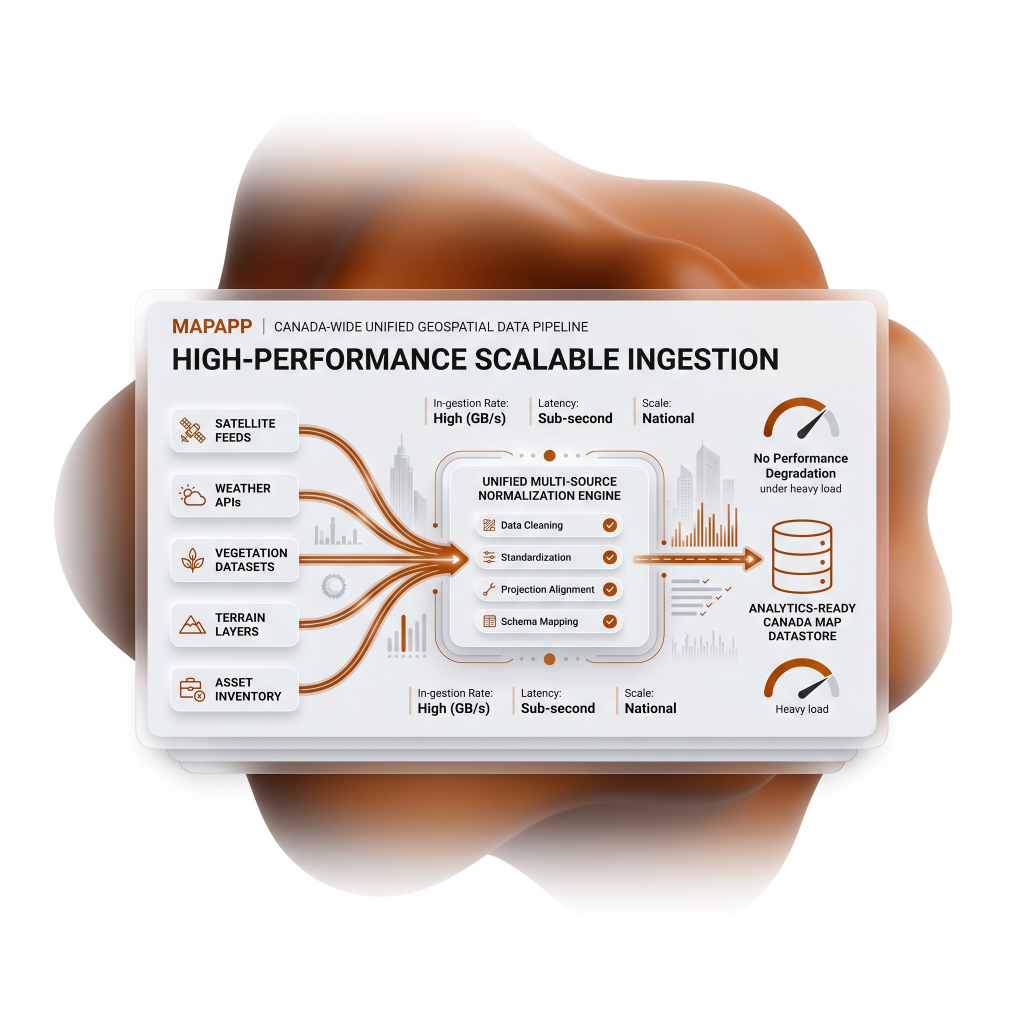
MapApp starts with data – lots of it. The platform continuously ingests satellite wildfire detection feeds, weather data, vegetation fuel load layers, terrain elevation data, and historical ignition records through a unified data pipeline. This raw data is passed to a Python-based AI risk engine that uses machine learning models to score wildfire risk at property level, producing dynamic risk scores that update in near real-time as conditions change.

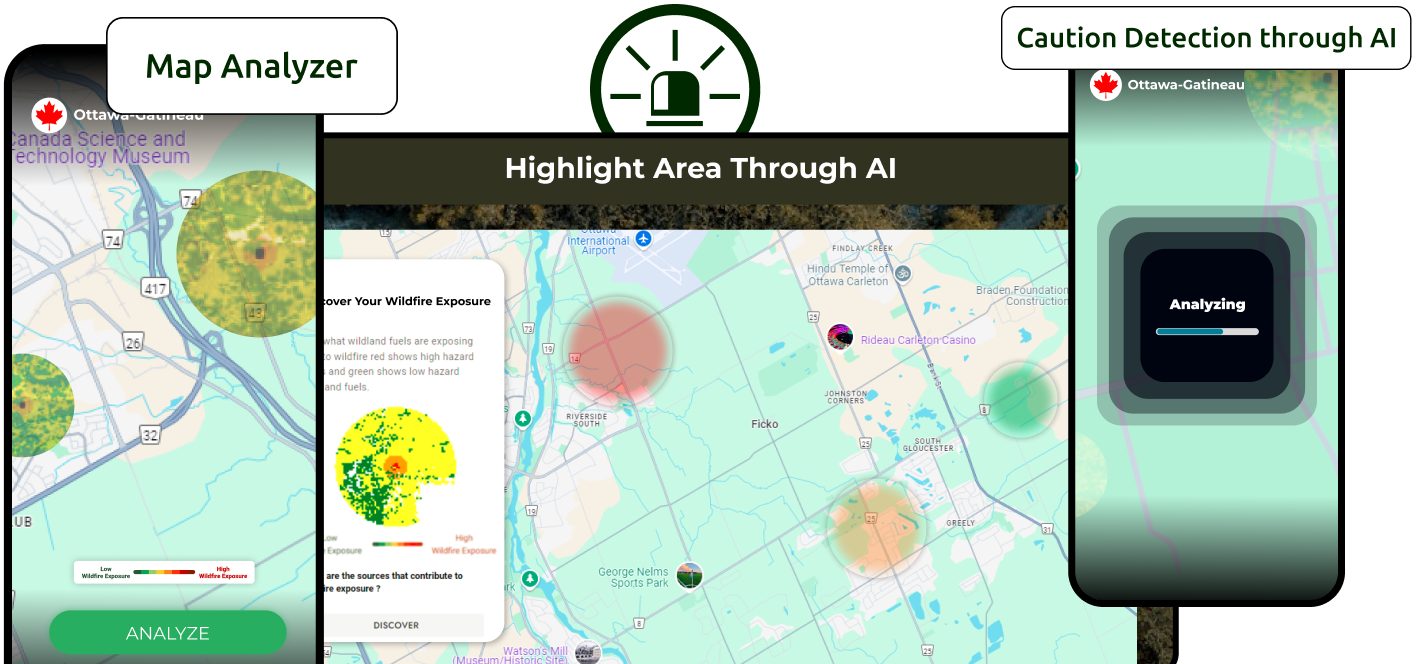
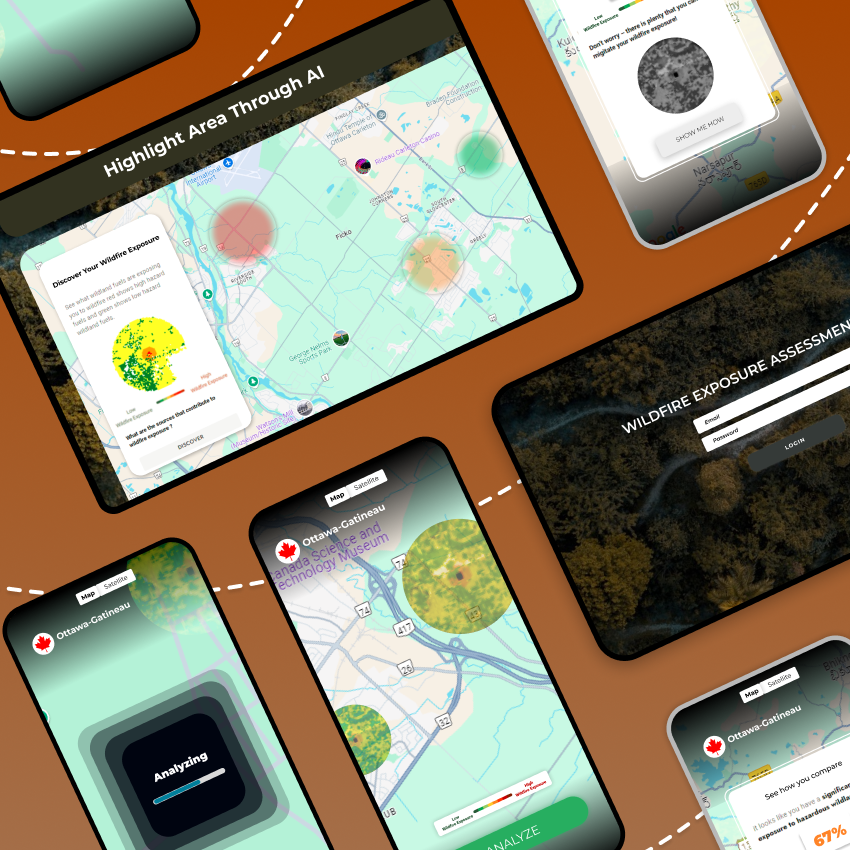
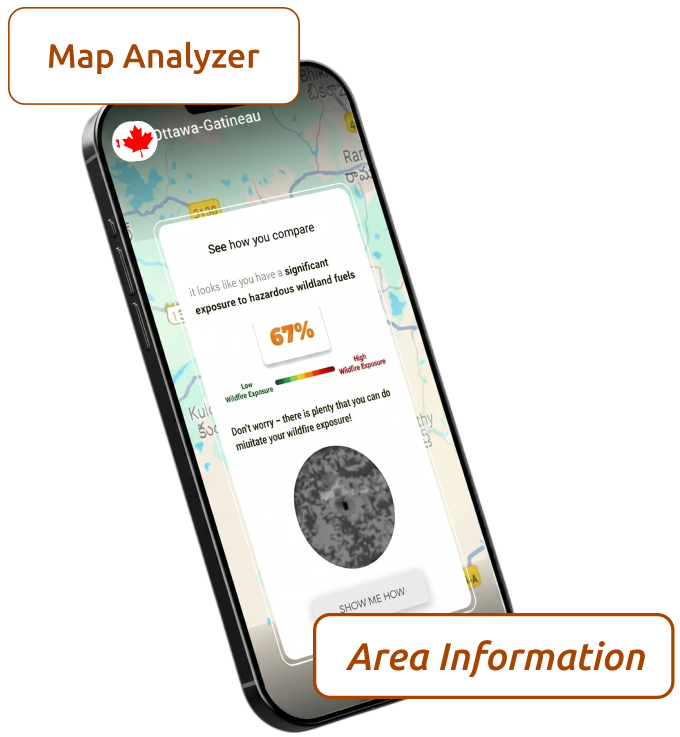
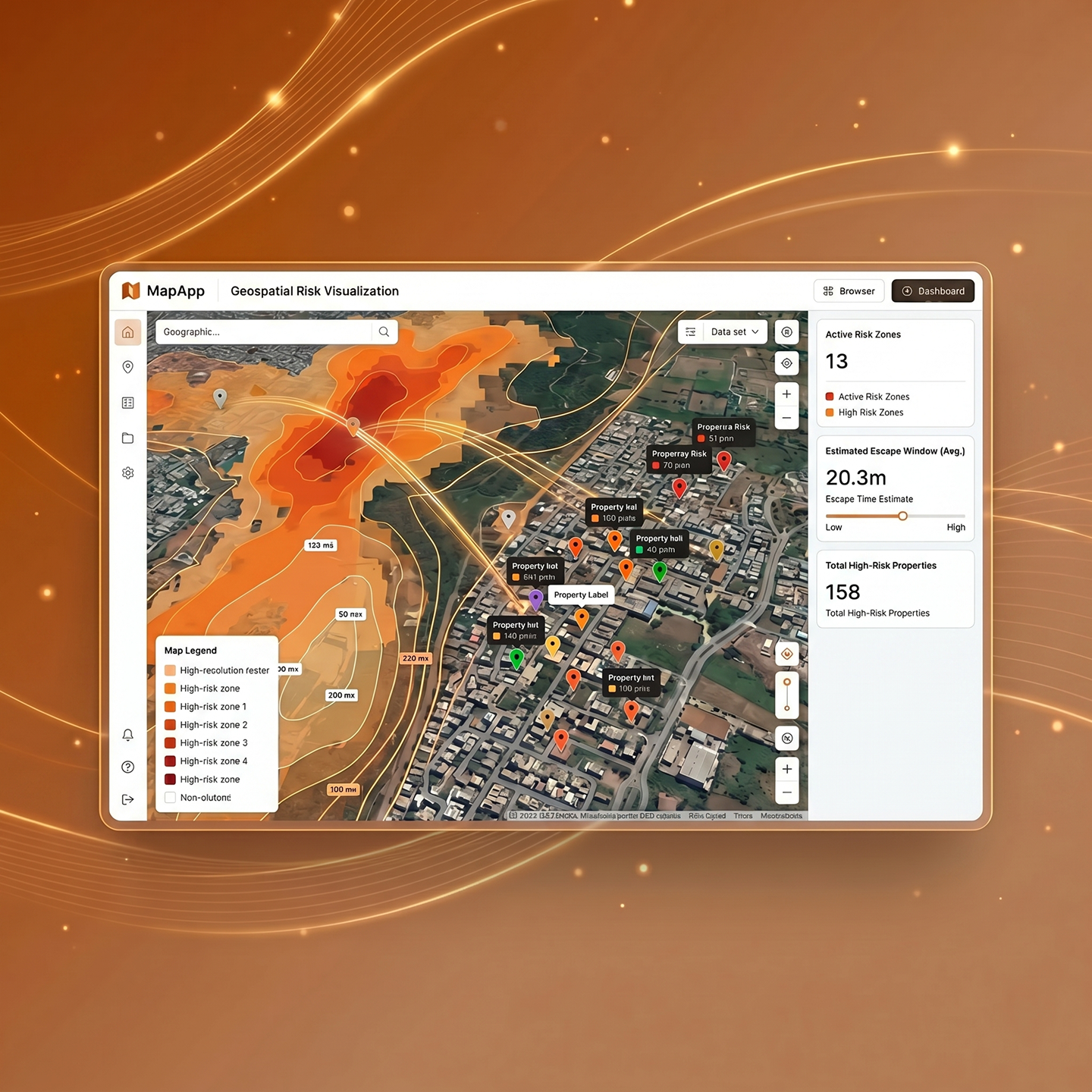
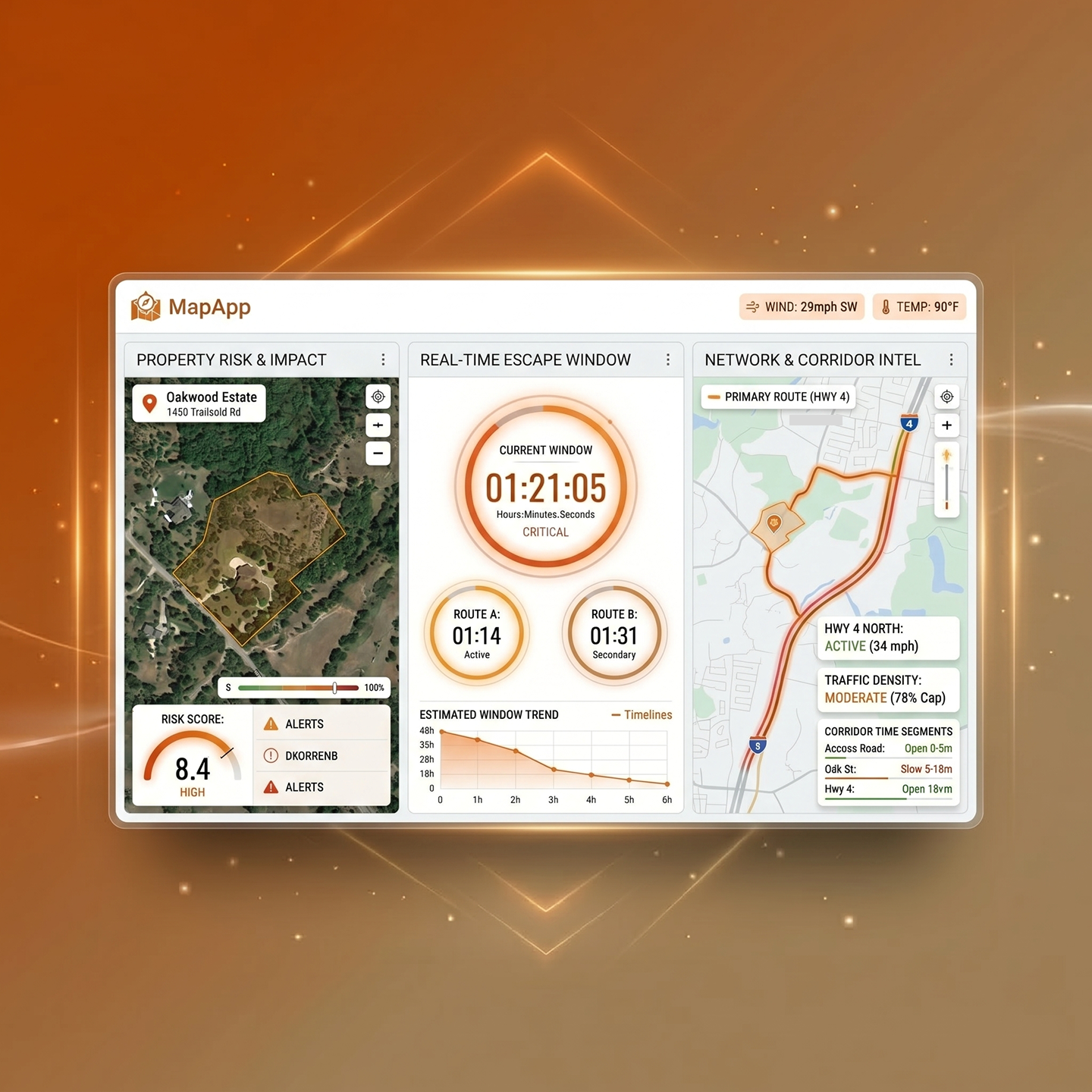
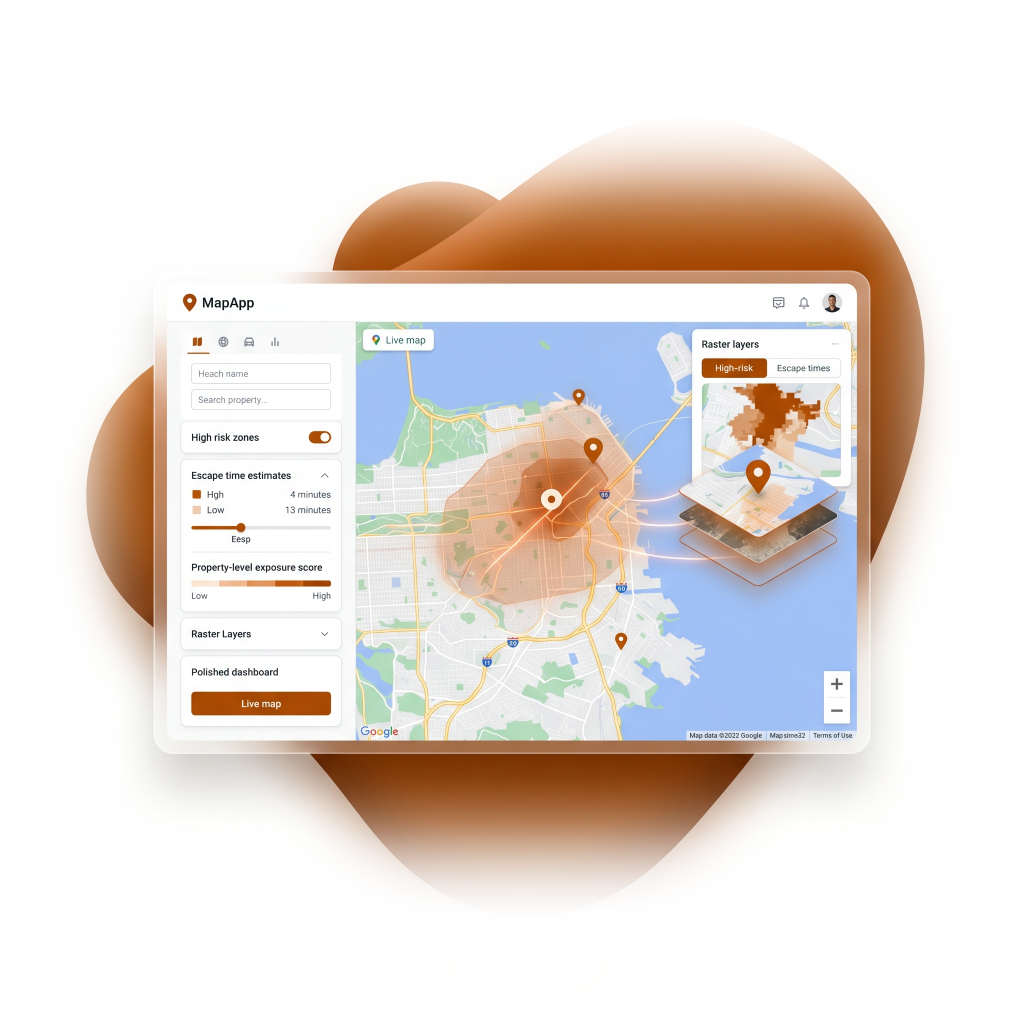
The risk scores are surfaced through an interactive React and NestJS web application built on top of the Google Maps API. Field teams, planners, and asset owners see a live map with raster layers showing high-risk zones, estimated escape times, and property-level exposure scores – all in a clean interface designed for both technical and non-technical users.

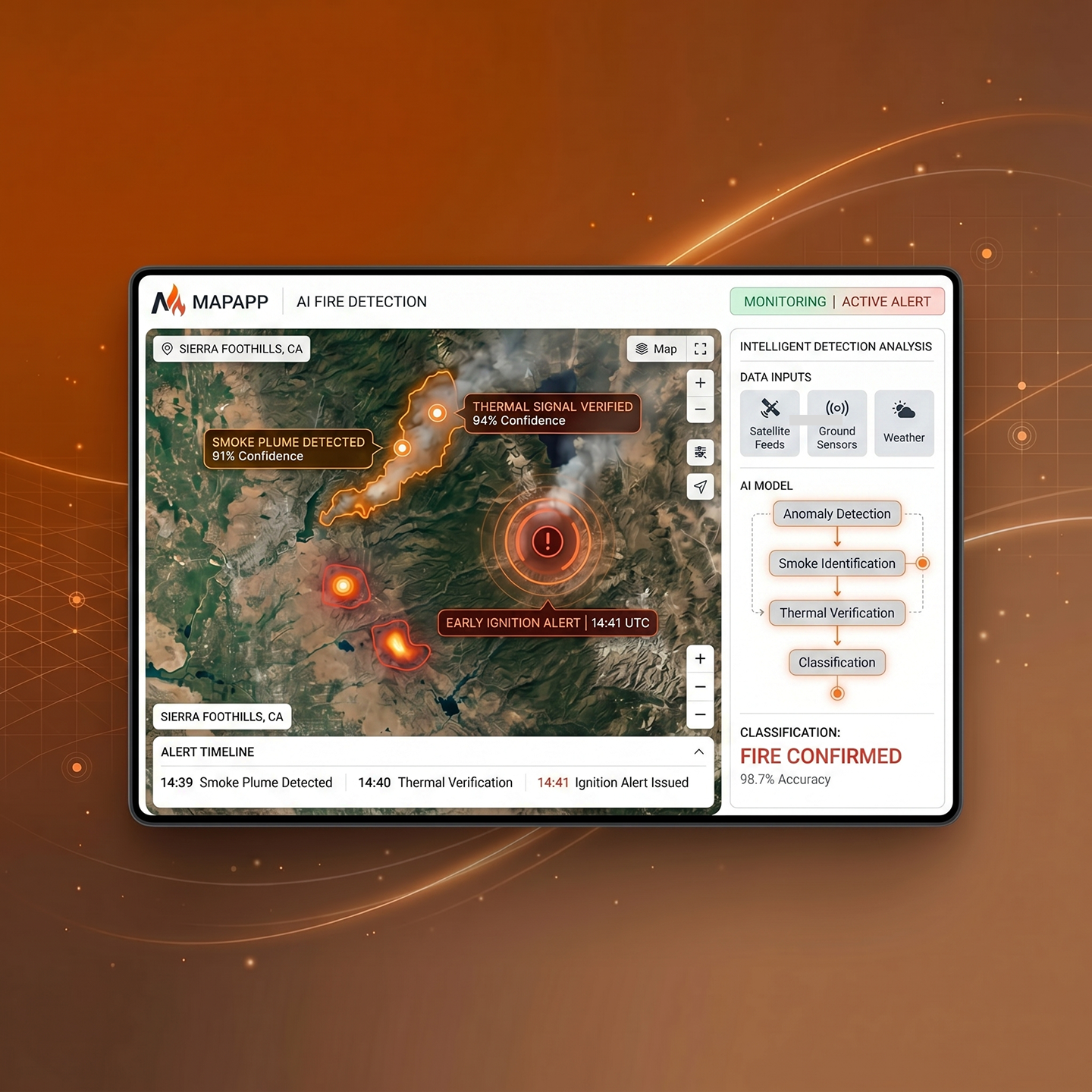
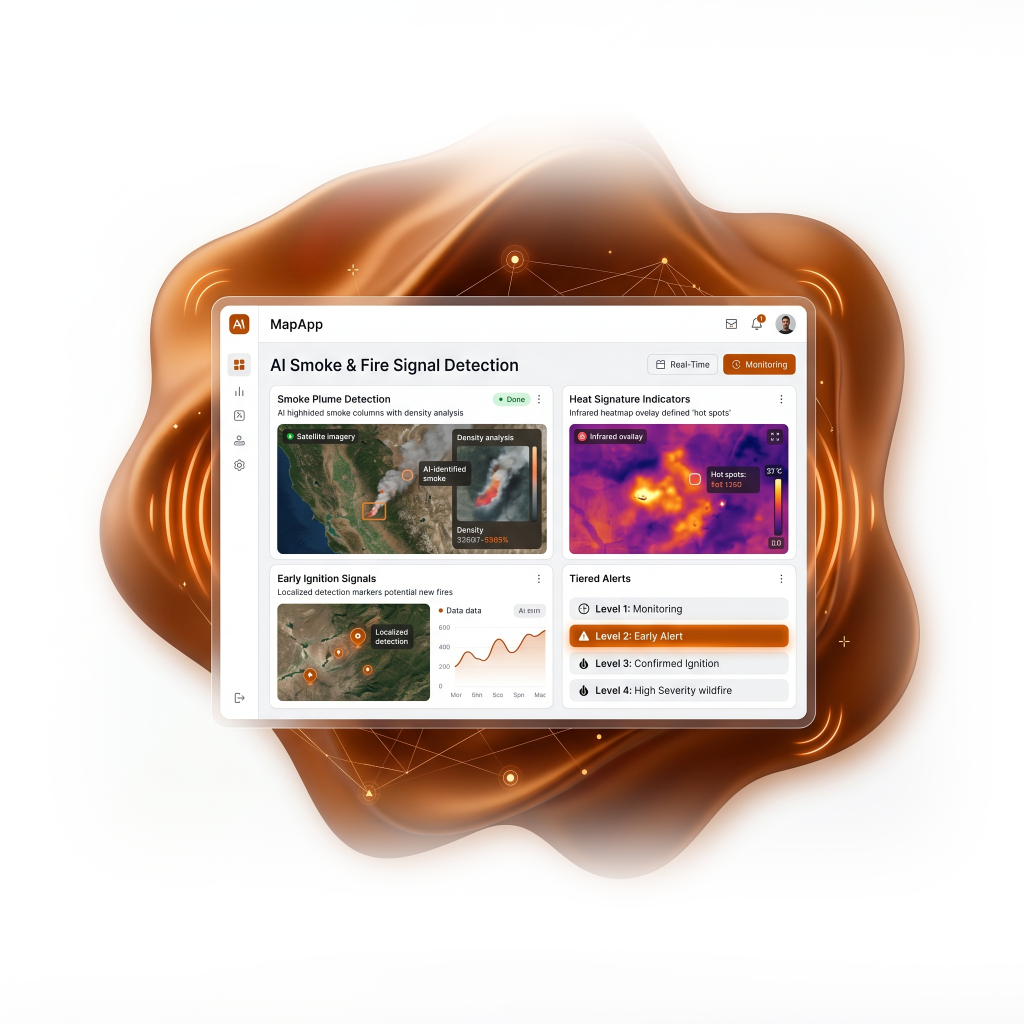
The platform also includes a caution detection model – a dedicated AI smoke detection and fire signal identification layer that monitors incoming satellite and sensor data for early ignition indicators. When the model detects a rising risk signal, it triggers tiered alerts that give field teams early warning before a fire grows beyond manageable size.

Key Capabilities Built

Mapapp Tezeract

AI Wildfire Risk Scoring Engine

The core of MapApp is a machine learning risk engine that scores wildfire exposure at property level using vegetation fuel load data, terrain slope, proximity to forest, weather patterns, and historical ignition records. The engine produces dynamic risk scores that update continuously – replacing static seasonal maps with a live risk view that reflects current conditions. This is the capability that drove the 85% accuracy result in high-risk zone detection.

Mapapp Tezeract

Real-Time Multi-Source Data Pipeline

MapApp ingests data from satellite wildfire detection feeds, weather APIs, vegetation datasets, and asset inventories through a single, validated data pipeline. Tezeract built custom connectors and validation rules to normalize data from incompatible formats, ensuring the AI engine always receives clean, consistent inputs regardless of source. This eliminated the fragmented data workflow that had previously consumed analyst hours every week.

Mapapp Tezeract

AI Smoke and Fire Signal Detection

A dedicated detection model monitors incoming satellite and sensor data for smoke plumes, heat signatures, and early ignition indicators. The model is trained to distinguish true fire signals from non-fire heat sources, reducing false positives that had eroded field team trust in previous alert systems. This wildfire early warning system capability gives teams actionable alerts, not noise.

Mapapp Tezeract

Interactive Geospatial Risk Visualization

The platform’s front end is built on React and the Google Maps API, with raster layers that display high-risk zones, escape time estimates, and property-level exposure scores on an interactive map. The interface was designed for both GIS specialists and non-technical local government officials – making risk data accessible to every stakeholder who needs to act on it, not just the analysts who produce it.

Mapapp Tezeract

Property-Level Escape Time Estimation

Beyond identifying where risk is high, MapApp calculates estimated escape times for properties and corridors based on current risk scores, terrain, and road network data. This gives evacuation planners and field commanders a quantified, location-specific time window to work with – turning abstract risk scores into concrete operational intelligence.

Mapapp Tezeract

Scalable Canada-Wide Coverage Architecture

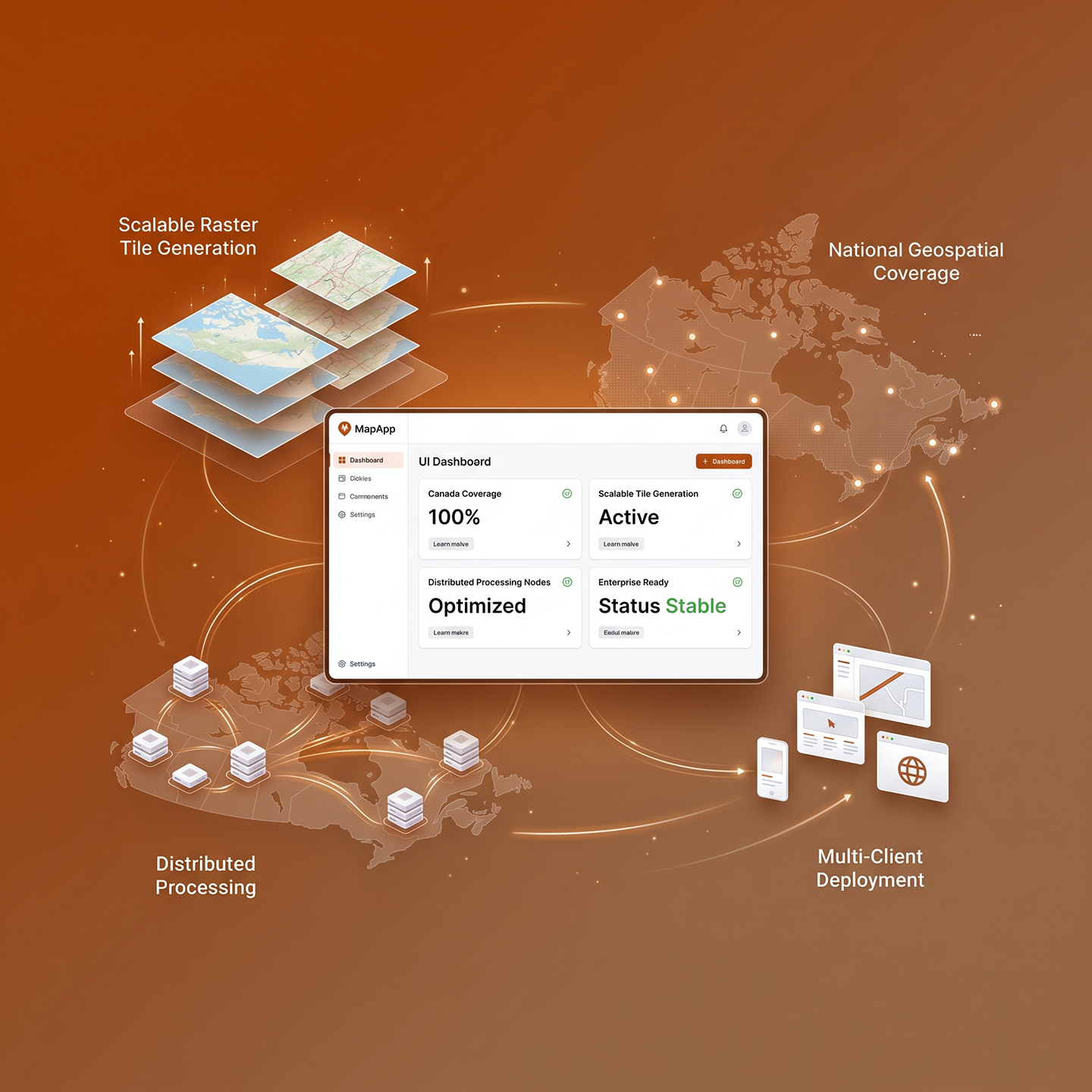
MapApp was built to cover all of Canada from a single platform instance. The architecture uses a scalable raster tile generation pipeline that can process geospatial data across vast geographic areas without performance degradation. This makes the platform viable for national-scale deployment across multiple client types – governments, utilities, insurers, and asset owners – from a single shared infrastructure.

The Data Flow

Mapapp Tezeract

Build a Wildfire Early Warning System Designed for Your Region

Every geography has different terrain, vegetation, and fire behavior patterns. Tezeract develops custom AI wildfire detection systems trained on your local environmental data and operational requirements.

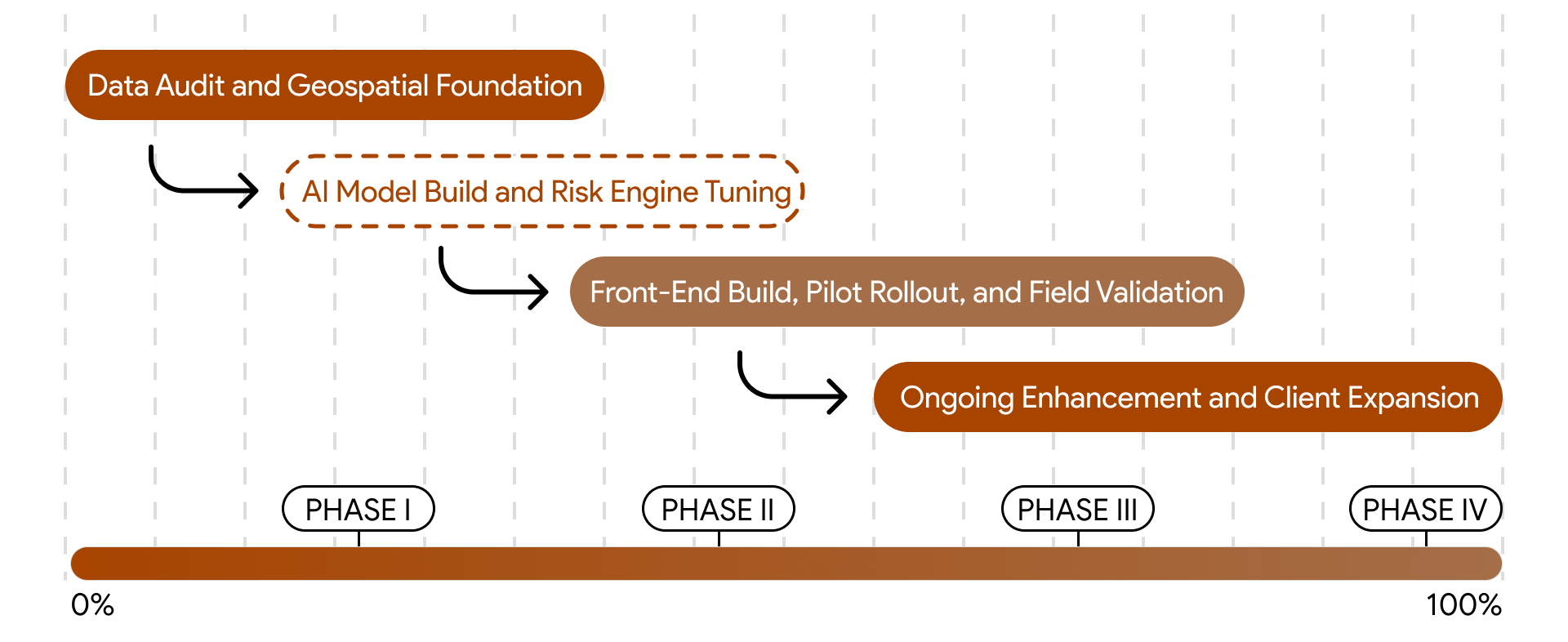
Phases wise Deployment

Tezeract delivered MapApp in three structured phases aligned to the Canadian fire season timeline, with a fourth phase of ongoing enhancement.

01

Data Audit and Geospatial Foundation

Conducted a full audit of available data sources across Canada – satellite feeds, vegetation datasets, terrain layers, and asset inventories. Cleaned and aligned geospatial layers, set up the Google Maps API integration, and prepared base raster grids for aerial wildfire visualization. Established the data pipeline architecture with validation rules for multi-source data normalization.

Key Milestone: Unified data pipeline live with clean, validated inputs from all primary data sources. Base geospatial map layers rendered correctly across Canada-wide coverage area.

Mapapp Tezeract

02

Student AI Model Build and Risk Engine Tuning& Data Architecture

Trained the core wildfire risk scoring models on Canada-specific vegetation, terrain, weather, and historical ignition data. Built and integrated the caution detection model for smoke and fire signal identification. Ran iterative accuracy optimization cycles, tuning risk scores at both property and community level. Validated model outputs against known historical fire events.

Key Milestone: AI risk engine achieving 85% accuracy in high-risk zone detection. Caution detection model live with tiered alert logic validated by the firefighter lead.

03

Front-End Build, Pilot Rollout, and Field Validation

Built the React and NestJS web application with interactive geospatial risk visualization, escape time estimation, and tiered alert displays. Released the platform to a pilot group of field teams and planners. Collected structured feedback on risk score usability, alert relevance, and interface clarity. Refined visualization layers and alert thresholds based on real-world field input.

Key Milestone: Platform live for field use before the Canadian fire season. 40% improvement in wildfire response time validated by pilot users. Canada-wide coverage confirmed across all target regions.

Mapapp Tezeract

04

Ongoing Enhancement and Client Expansion

Continuous platform improvement based on field feedback and new data source integrations. Expanding coverage to additional client types including insurers and utilities. Refining AI models with new seasonal data to improve accuracy over time.

Key Milestone: Ongoing – platform being extended to support insurers, utilities, and local governments across new Canadian regions.

Mapapp Tezeract

Obstacles Countered and Resolved

Obstacles

Large vegetation data gaps in remote Canadian regions

Incompatible data formats across satellite feeds, weather APIs, and asset inventories

Insufficient temporal data refresh frequency

Making risk data interpretable for non-technical local government users
Delivering a working platform before the Canadian fire season deadline

High false-positive rates from satellite wildfire detection feeds

Mapapp Tezeract

Resolution

Merged multiple public and commercial datasets; added expert validation with the firefighter lead to maintain realistic risk scores in data-sparse areas

Built a unified data pipeline with custom connectors and validation rules that normalize all inputs before they reach the AI engine

Implemented near real-time refresh cycles that balance update speed against the cost of frequent high-resolution satellite data pulls

Designed the front-end interface specifically for non-technical stakeholders, with clear visual risk layers, plain-language alert descriptions, and escape time estimates

Structured the build into three phases with clear milestones, prioritizing the core risk engine and data pipeline for Phase 1 delivery

Trained the caution detection model to distinguish true fire signals from non-fire heat sources, reducing noise and rebuilding field team trust in automated alerts

Mapapp Tezeract

The Results

“Within the first fire season, teams moved from static wildfire risk maps to dynamic risk modeling and near real-time updates. The platform made a measurable difference in how quickly we could respond – and how clearly we could communicate risk to non-technical officials.”


~ Kevin Robb, Founder – Mapapp, Canada

85%

High-risk zone detection accuracy

45%

Faster wildfire response time improvement

1

App Canada-wide Fire risk view

What these results mean for different stakeholders

For Fire Agencies and Emergency Responders

1

Replace static seasonal maps with a live, property-level risk view that updates continuously – giving field commanders accurate, current intelligence when every minute counts.

2

Escape time estimates give evacuation planners a quantified time window to work with, not just a general risk zone.

For Local Governments and Planners

1

Clear, visual risk data at property and community level makes it possible to communicate wildfire exposure to non-technical officials and the public – removing the communication barrier that previously slowed decision-making.

2

Quantified exposure scores support defensible, evidence-based investment in fuel treatments, hardening projects, and land use planning.

For Insurers and Asset Owners

1

Wildfire exposure analytics at property level turns abstract regional risk into quantified, asset-specific exposure numbers that finance teams can use for pricing, reinsurance, and portfolio risk management.

2

Dynamic risk scores that update with seasonal conditions give insurers a far more accurate view of current exposure than static maps that may be years out of date.

For Utilities and Infrastructure Operators

1

Property-level risk scoring along network corridors gives operations teams early warning of rising exposure near critical assets – enabling proactive shutoffs, patrols, and hardening decisions before a fire event occurs.

2

The platform’s AI for emergency management layer turns raw risk data into operational intelligence that integrates with existing incident management workflows.

Transform Wildfire Data Into Faster Decisions

Tezeract combines machine learning, geospatial analytics, and real-time monitoring to help organizations detect risk earlier, improve response planning, and protect high-value assets across large regions.

sub heading component

What tech stack do we use for the AI wildfire risk assessment app?

Building Mapapp With Our Advanced Artificial Intelligence Technology Stack

React , React Native cross-platform framework icon, React JavaScript library logo

React js

Python programming language for AI development

Python

Next.js React framework icon

NodeJs

Flask Python microframework icon

Flask

Nest js language

NestJS

Google Maps icon

GoogleMapAPI

Tools & Technologies

Description

Frontend Development

Backend Development

AI Server

Google Maps

MapApp’s full-stack architecture was built using Tezeract’s custom AI development and computer vision capabilities, combining geospatial machine learning, real-time data pipelines, and interactive visualization into a single production-grade platform.

Key Capabilities Built

Mapapp Tezeract

01

Real-Time AI Wildfire Risk Scoring at Property Level

MapApp’s core feature is its ability to score wildfire risk at individual property level – not just broad regional zones – using live inputs from satellite feeds, weather data, vegetation layers, and terrain data. Risk scores update continuously as conditions change, replacing static seasonal maps with a dynamic intelligence layer that field teams and planners can actually trust. This is the feature that drove the 40% improvement in wildfire response time.

Mapapp Tezeract

02

AI Smoke and Fire Signal Detection With Tiered Alerts

The platform’s caution detection model monitors incoming satellite and sensor data for early smoke plumes and heat signatures – identifying potential ignition events before they grow beyond manageable size. When the model detects a rising signal, it triggers tiered alerts that give field teams graduated warning levels rather than binary on/off notifications. This AI wildfire detection capability reduces false positives and gives operators the confidence to act on automated alerts.

Mapapp Tezeract

03

Interactive Geospatial Risk Visualization for All Stakeholders

The platform’s React-based front end renders live risk data as interactive map layers on Google Maps – showing high-risk zones, escape time estimates, and property-level exposure scores in a clean, accessible interface. The visualization was designed for both GIS specialists and non-technical local government officials, making risk data actionable for every stakeholder who needs to respond to it, not just the analysts who produce it.

Mapapp Tezeract

04

Scalable Multi-Source Data Pipeline for Canada-Wide Coverage

MapApp’s data pipeline ingests and normalizes data from satellite feeds, weather APIs, vegetation datasets, terrain layers, and asset inventories through a single, validated architecture. Custom connectors handle format incompatibilities across sources, and validation rules ensure the AI engine always receives clean inputs. The pipeline scales to Canada-wide coverage without performance degradation – making the platform viable for national deployment across multiple client types simultaneously.

sub heading component

What potential use cases of Mapapp?

How AI reduces wildfire risk and speeds early detection

AI wildfire risk assessment and AI Wildfire Detection give agencies and asset owners a clear, real time view of fire danger. These tools turn raw data from satellites, sensors, and maps into simple signals that help teams act early and reduce damage.

Real-Time Fire Risk Monitoring for Emergency Response Teams

Fire agencies and emergency response teams can use MapApp to replace their static map workflows with a live, property-level risk view that updates continuously throughout the fire season. Field commanders receive tiered alerts when risk rises in specific zones, escape time estimates for evacuation planning, and a single Canada-wide dashboard that eliminates the need to stitch together data from multiple tools. This is real-time fire risk monitoring applied directly to the highest-stakes use case in emergency management.

01

Wildfire Exposure Analytics for Utilities and Infrastructure Operators

Utilities with transmission lines, pipelines, or substations in fire-prone corridors can use MapApp to monitor property-level risk along their entire network in real time. When risk rises near critical assets, the platform triggers early alerts that give operations teams time to initiate proactive shutoffs, targeted patrols, or hardening actions before a fire event occurs. This use case turns wildfire risk assessment from a seasonal planning exercise into a continuous operational intelligence layer.

02

Insurance Portfolio Risk Management and Pricing

Insurers managing portfolios of properties in fire-prone regions can use MapApp’s wildfire exposure analytics to replace broad regional risk categories with quantified, property-level exposure scores. Dynamic risk scores that update with seasonal conditions give underwriters a far more accurate view of current exposure than static maps – enabling more precise pricing, better reinsurance decisions, and defensible regulatory reporting. This use case demonstrates how NLP and AI-driven data analysis can transform risk quantification across the insurance sector.

03

Long-Term Wildfire Prevention Planning for Local Governments

Local governments and regional planners can use MapApp’s geospatial risk layers to test where new housing should be permitted, which roads need better escape route infrastructure, and where investment in fuel breaks or controlled burns would deliver the greatest risk reduction. The platform’s ability to model how mitigation actions change property-level risk scores gives planners a quantified, evidence-based tool for long-term wildfire prevention investment – replacing gut-feel decisions with data-driven planning.

04

Ready to Build Your Own AI Wildfire Risk Assessment Platform?

MapApp demonstrates what becomes possible when machine learning, geospatial data pipelines, and real-time monitoring are built around the actual workflows of fire agencies, emergency planners, and asset owners, not adapted from a generic analytics tool.

Whether you are building a wildfire early-warning system, a property-level risk-monitoring platform, an emergency-management intelligence layer, or any product in which AI-powered environmental risk assessment creates operational or commercial value, Tezeract can design and build it. We build for your data, your geography, and your stakeholders.

Ready to move from static maps to real-time AI risk intelligence? Let’s talk.

sub heading component

Your questions answered here

Frequently Asked Questions

AI wildfire risk assessment uses models that read many data sources at once, such as weather, vegetation, terrain, ignition history, and assets. Instead of a static map that may be updated once every few years, the system creates scores and geospatial wildfire mapping that change as the inputs change. This gap is one of the main pain points for agencies that still use static wildfire risk maps that become outdated quickly.


The approach also supports property level insight. The same engine can show risk at a house, feeder line, or corridor level, not just across broad zones. This gives planners a clearer view of where a fire is likely to start and what the impact might be on homes, lines, or key sites. Over time, leaders can compare scenarios and track how mitigation work, such as fuel breaks or new building rules, changes the risk picture.

AI Wildfire Detection combines sensor feeds, Satellite wildfire detection, and sometimes wildfire detection cameras into one set of signals. The goal is to cut detection delays, which is another common pain point in large regions where small fires can grow before anyone reports them. Models learn patterns that match true ignition events, such as heat, smoke, and weather, and reduce noise from non fire heat sources that can cause false positives.

For a utility or pipeline operator, this means earlier alerts along network routes. When the system flags a likely event, operations teams can cross check with nearby sensors or cameras in the same dashboard. This supports faster field checks, targeted patrols, and quicker shutoff or switch plans where needed. Over time, the data also helps leaders see where assets sit in zones of repeated ignitions and can guide hardening plans.

An AI wildfire system grows stronger when it has both wide coverage and enough detail. Most projects begin with base layers such as elevation, land use, vegetation type, and known fuel loads. Many teams also bring in historic ignition points and burn scars to show where fires have started in the past. This mix helps address pain points tied to limited spatial resolution and high resolution vegetation data gaps.

On top of this, the project needs live or near live feeds. Common sources are weather forecasts, humidity and wind data, Satellite wildfire detection alerts, and sometimes real time forest fire detection with wireless sensor networks or edge sensors. Asset data is also important, since leaders need to see exposure along lines, roads, and near key facilities. The right mix depends on the region, budget, and the business goals that drive the project, such as safety, uptime, or insurance.

In many projects, AI wildfire systems reach higher accuracy than static maps because they read fresh data. For example, a model might reach about 80 to 90 percent accuracy for high risk zone detection when trained on good input data and tested across several past seasons. This helps address the pain point where older maps do not reflect new fuel growth, climate patterns, or land use change.

Accuracy is not only about whether a fire may start. Leaders also care about how soon it is likely to reach key assets and what that might cost in terms of damage and downtime. AI helps by turning raw data into clear wildfire exposure analytics, which gives a sense of both likelihood and consequence. The system still needs field checks and expert review, but it gives planners and operators a much better starting point than broad paper maps.

AI fire detection often looks at heat and light signals from sensors, cameras, or satellites. ai smoke detection focuses on visual or sensor patterns that match rising smoke, even before flames are visible. When these two blocks work together, they help solve a key pain point: small fires that go undetected until they grow beyond a manageable size.

In practice, the system can raise different levels of alerts. A minor smoke signal may trigger a low level notice, while a smoke plus heat match for the same point may trigger a stronger alert for field teams. This tiered view lets operators focus effort where the signals are strongest while still watching weaker ones. Over time, the system learns which combinations match real events and trims false positives, which keeps staff from ignoring alerts due to noise.

Fire detection cameras add eyes on the ground to data from satellites and sensors. They can watch key ridges, valleys, or assets in real time and send images or video to the central system. When the AI engine spots a signal in satellite data, it can ask for a camera check in that area, which helps confirm the event and reduce false positives. This supports early action and builds trust in automated alerts.

These cameras are often placed in high risk zones that are hard to reach quickly, such as remote hills or forest edges near towns. Leaders can also use them to keep watch on areas with repeated fire activity. While they add cost, they can reduce the need for constant human patrols and give incident teams strong visual detail once a fire starts. In this way, they add both speed and context to the AI wildfire view.

Wildfire prevention technology covers tools that help agencies see risk early, plan treatments, and guide public action. One part is better wildfire risk assessment, which shifts focus from old static maps to live risk views that reflect weather and fuel conditions. This helps address the pain point of poor mitigation planning when data is stale or too coarse.

Governments can also use these tools for fuel planning and land use review. With geospatial wildfire mapping and clear exposure scores, planners can test where new housing should go, which roads need better escape routes, and where to invest in fuel breaks or controlled burns. This supports Wildfire mitigation with ai, since models can test many possible projects and show which ones may cut risk the most for a given budget. The same system also links to public messaging and early alerts for nearby communities.

Wildfire exposure analytics turns risk data into numbers that finance teams can use. Instead of a general map that says a region is high risk, the system can estimate expected loss for a set of assets, such as homes, lines, or a wind farm. This addresses the pain point where leaders cannot see clear links between ignition events and business impact and so struggle to justify mitigation budgets.

Insurers can use these numbers to set prices, manage reinsurance, and rank portfolios by risk. Asset owners can test how exposure changes if they harden certain sites or adjust where they build. The same analytics can feed board reports and regulatory filings, since many regulators now ask for proof that risk is being watched and managed over time. This turns AI from a pure operations tool into a shared view of risk across risk, finance, and field teams.

High resolution data can be costly, which is a known pain point for smaller agencies and firms. One way to manage cost is to mix different data sources with different refresh rates. For example, the system can use wide area Satellite wildfire detection for broad scans and then trigger higher resolution views or camera checks only in areas with rising risk. This concentrates spend where it matters most.

real time forest fire detection with wireless sensor networks can be placed in very high risk zones, such as around key substations or along critical lines. These sensors send focused data without the need to cover entire regions. Over time, the AI engine can learn which areas tend to create the most alerts and help planners adjust where sensors and higher quality data are needed most. This makes the budget work harder while keeping risk insight strong.

Many teams start to see value in one or two fire seasons. The first step is often a pilot in one region that has good data and a clear need, such as a high risk power corridor or a forest near towns. This short project can run for a few months and show early gains like better detection speed, fewer missed small fires, and less manual map work.

Over time, as more data flows in, the AI models improve. Leaders can then expand the system to more regions and use the same base models and data pipelines. This phased path also spreads cost and change across several years. By the time the system covers most assets, operations and planning teams are used to the new tools, and risk and finance teams can use the outputs to guide larger investment and mitigation plans.

In regions with wireless sensor networks, field teams can receive more signals than they can process by hand. AI helps filter and group these signals. For example, if several sensors show rising heat and low humidity across one ridge, the system can flag that as a zone of concern rather than many separate alerts. This reduces alert fatigue, which is a common pain point when data volume grows.

When real time forest fire detection with wireless sensor networks is linked to geospatial wildfire mapping, field teams can see where the risk sits in relation to roads, water sources, and past fire lines. They can plan access routes and staging points before a fire even starts. If an ignition does occur, the same system can track how sensor readings change as crews work, which gives a live sense of how well the response is going.

One of the hardest pain points for leaders is to show the link between spending on mitigation and the losses they avoid. AI wildfire systems help by modeling both risk and outcome. For example, the system can estimate current expected loss for a set of assets and then show how that number changes if a fuel break is added or lines are moved away from dense vegetation.

This clear before and after view supports wildfire prevention technology planning and budget talks. Finance and boards can see which projects give the most reduction in expected loss per dollar. Over time, this also helps meet regulatory and investor pressure for proof that wildfire risk is being managed in a consistent way. A shared model gives all parties the same numbers and helps shift talks from gut feel to evidence based planning.

Artificial intelligence in fire safety has strong promise but also limits. Models only perform as well as the data they receive. If there are large gaps in vegetation data or if sensors fail in bad weather, then outputs may be less reliable. This links to pain points like limited spatial resolution and satellite detection blocked by clouds or smoke. Leaders need backup plans and clear ways to check AI outputs.

There is also a risk of over trust. Teams should use AI as decision support, not as a full replacement for expert judgment. Field crews and planners bring context about local conditions that models may not see, such as new human activity, planned burns, or unrecorded changes in fuel. Good projects set clear guardrails, audit trails, and training so staff know when to question or override AI suggestions. This balanced view keeps safety at the center.

Most AI wildfire systems sit beside existing GIS platforms and incident tools rather than replacing them. The AI engine creates layers and risk scores that your GIS team can view as new raster or vector layers. These layers show dynamic risk, potential spread, and impact zones that current maps do not provide. This approach eases a pain point many teams face with fragmented wildfire data integration.

Incident tools can receive alerts or risk scores through APIs. For example, when risk in an area passes a set threshold, the incident tool can create a ticket, notify a duty officer, or push a message to field staff. This keeps workflows stable while adding smarter inputs. Over time, teams can adjust their processes to rely more on live risk data and less on manual checks in separate systems, which saves time and reduces missed signals.

A good pilot starts with a clear region, clear goals, and a realistic time frame. Many teams choose an area that mixes high risk assets and good data, such as one district with lines near forests and towns. The project then sets simple goals, like faster detection, better wildfire exposure analytics for that area, or improved support for local planners. This focused scope keeps risk and cost under control.

Wildfire safety solutions in a pilot often include a base AI model, data pipeline, and a simple map or dashboard. Field and planning teams test the tools through one or two fire seasons, share feedback, and help tune alerts. Once the pilot meets its goals, leaders can expand the same setup to more regions, add more data sources, and refine the AI models to match new conditions. This staged path builds trust and real value over time

WhatsApp