How Tezeract Built an AI Photo Editing Tool That Picks the Best Group Shot From Video and Fixes Closed Eyes Automatically

Impact

70%

Reduction in manual editing time

10 hrs

Saved per week on frame scrubbing

50%

Fewer retakes needed on location

Project Overview

Group photos are hard. Someone always blinks. Someone always looks away. The moment passes, and the only option is a retake or an hour of manual frame scrubbing to find the one usable shot.

Len Davis came to Tezeract with a clear problem and a clear product vision. He wanted to build an AI photo-editing tool that could take a short video clip, automatically extract the best group frame, fix closed eyes as needed, and enhance the final image, all in a single app. No manual scrubbing. No switching between tools. No retakes.

Tezeract designed and built the full Picture Perfect platform, from the computer vision pipeline and frame scoring engine to the face compositing layer, image enhancement module, and mobile-first UI, in six months.

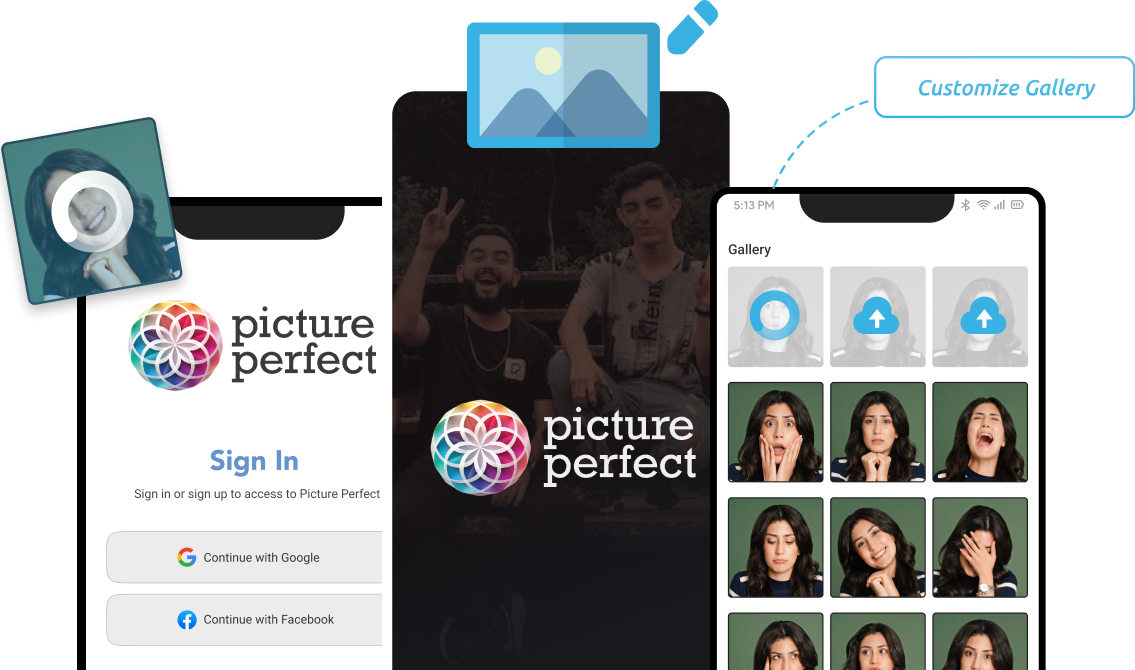
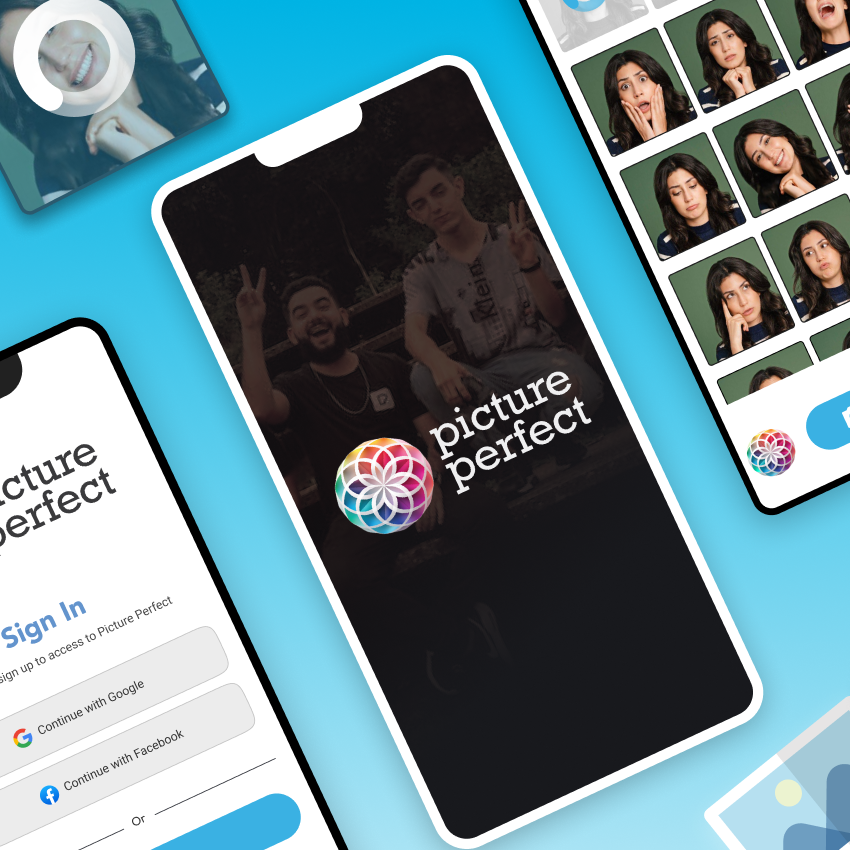
Picture perfect Tezeract

Customer Profile

Client Name

Len Davis, Picture Perfect

Industry

Social, Entertainment

Business Model

B2C subscription app targeting event attendees, content teams, and travelers who need clean group photos without manual editing

Location

Canada

Product

Picture Perfect AI Photo Editing App

Duration

6 months

Pain Point

Users recording short video clips to capture group moments but spending up to an hour manually scrubbing frames to find one usable shot where nobody is blinking or blurry

sub heading component

The Challenge

Turning a 10-Second Clip Into One Clean Group Photo, Automatically

Picture perfect Tezeract

01

Primary Problem

The core problem was not image quality. It was time and effort. Recording a short clip instead of a single photo is already a common workaround for group shots. The real issue was everything that came after: manually scrubbing through frames, identifying the best one, fixing closed eyes in a separate tool, and enhancing the final image in yet another app.

Users needed a single workflow to handle it all. An AI photo editing tool that could go from raw video to a clean, enhanced group photo without requiring any manual steps in between.

Secondary Challenges

Frame volume per clip

A 10-second video at 30fps produces 300 frames. Evaluating each one manually for eye openness, expression quality, sharpness, and motion blur is not a realistic user task.

02

Multi-face scoring complexity

A frame that is perfect for one person may have a closed eye or blurred face for another. The scoring logic needed to evaluate every face in every frame simultaneously.

03

Eye compositing accuracy

Replacing a closed eye with an open one from a different frame requires precise face alignment, natural blending, and consistent lighting. Errors are immediately visible.

04

Image enhancement without over-processing

Enhancement needed to improve quality without introducing artifacts, oversaturation, or an obviously edited look.

05

Mobile performance constraints

The full pipeline, frame extraction, face detection, scoring, compositing, and enhancement, needed to run fast enough for a mobile-first product used at live events.

06

Batch processing for event teams

Event photographers and content teams needed to queue multiple clips and process them in parallel without waiting inside the app.

07

Still Spending Hours Finding One Good Group Shot?

Picture Perfect was built to remove the frustration of manual frame scrubbing, closed eyes, and endless retakes. Tezeract created a complete AI photo editing workflow that turns short video clips into clean group photos automatically

What Slowed Down Operations and Triggered the Need for Immediate Change

Previous Solutions Tried

Business Impact

Without automation, the product had no differentiation. Any app that required manual frame selection and a separate editing tool was just a slightly better version of the existing workflow. The value proposition depended entirely on the pipeline working end-to-end with no manual steps required.

Picture perfect Tezeract
sub heading

Journey Overview

Why Tezeract

Len evaluated three paths before committing to a build partner.

  • Off-the-shelf tools could handle individual parts of the pipeline but not the full workflow. No existing product combined frame extraction, multi-face scoring, eye compositing, and enhancement in a single mobile-first app.
  • API assembly approach was possible but would have required managing multiple vendor relationships, handling edge cases across different APIs, and accepting a longer integration timeline with no single team accountable for the full output.
  • Custom build with a specialist partner offered full ownership of the pipeline, a single team responsible for end-to-end quality, and the ability to tune scoring thresholds and compositing logic to the specific use case.


The evaluation came down to the following questions:

  • Could the frame scoring engine evaluate every face in a frame simultaneously and surface the best group shot reliably?
  • Could the eye compositing layer produce natural results that did not look edited?
  • Could the full pipeline run fast enough for event use on a mobile device?
  • Could the app handle batch processing for teams working across multiple clips?


Tezeract answered all with a concrete technical plan, a phased delivery schedule, and clear acceptance criteria tied to scoring accuracy and compositing quality. The decision moved from the first conversation to an approved scope in under two weeks.

sub heading component

The Solution

Picture Perfect: A Custom AI Photo Editing Pipeline Built for Group Moments

Picture perfect Tezeract

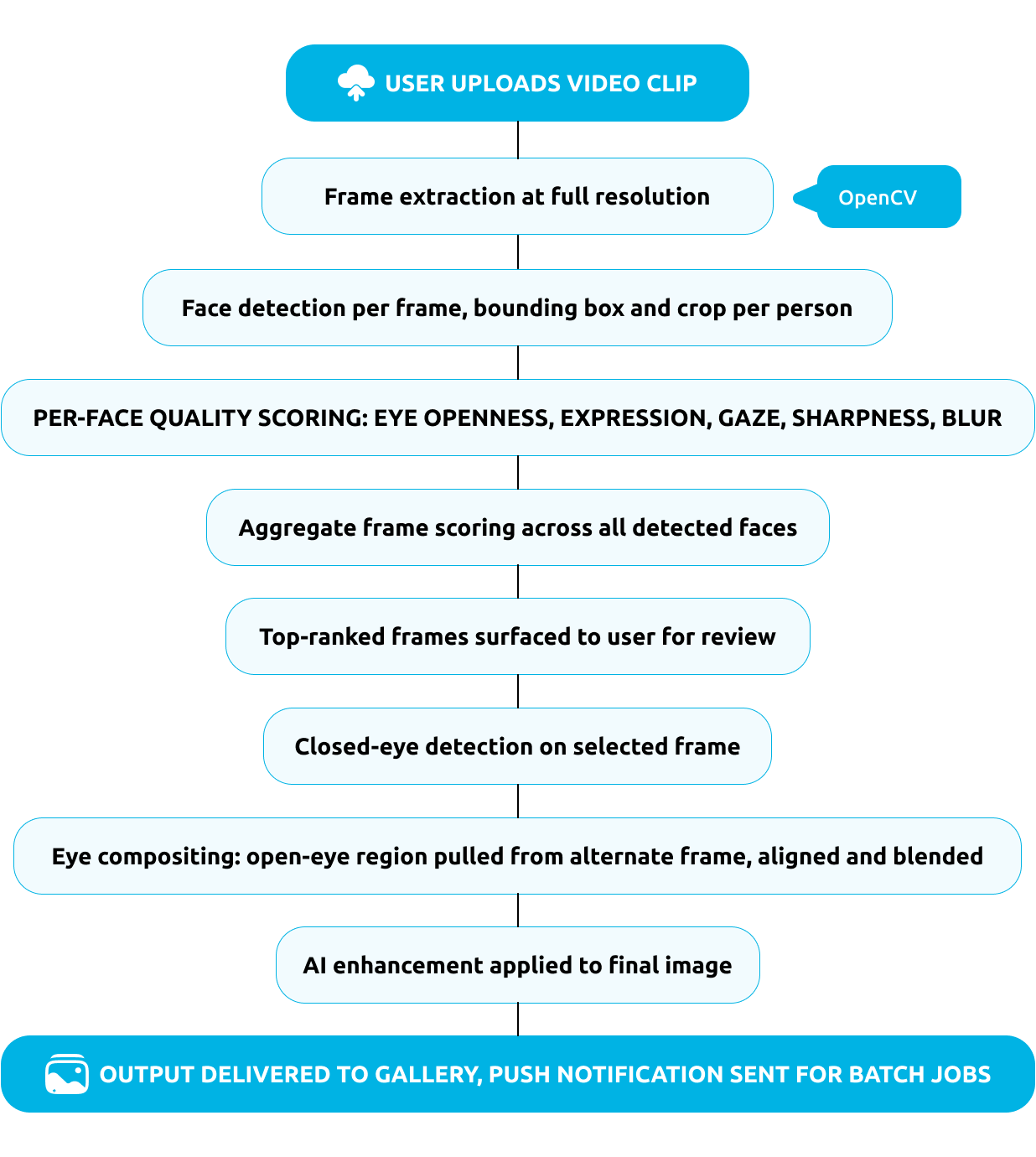
Picture Perfect is a fully custom computer vision pipeline built around one principle: the best group photo already exists inside the video clip. The app’s job is to find it, fix it where needed, and enhance it without asking the user to do any of it manually.

How It Works

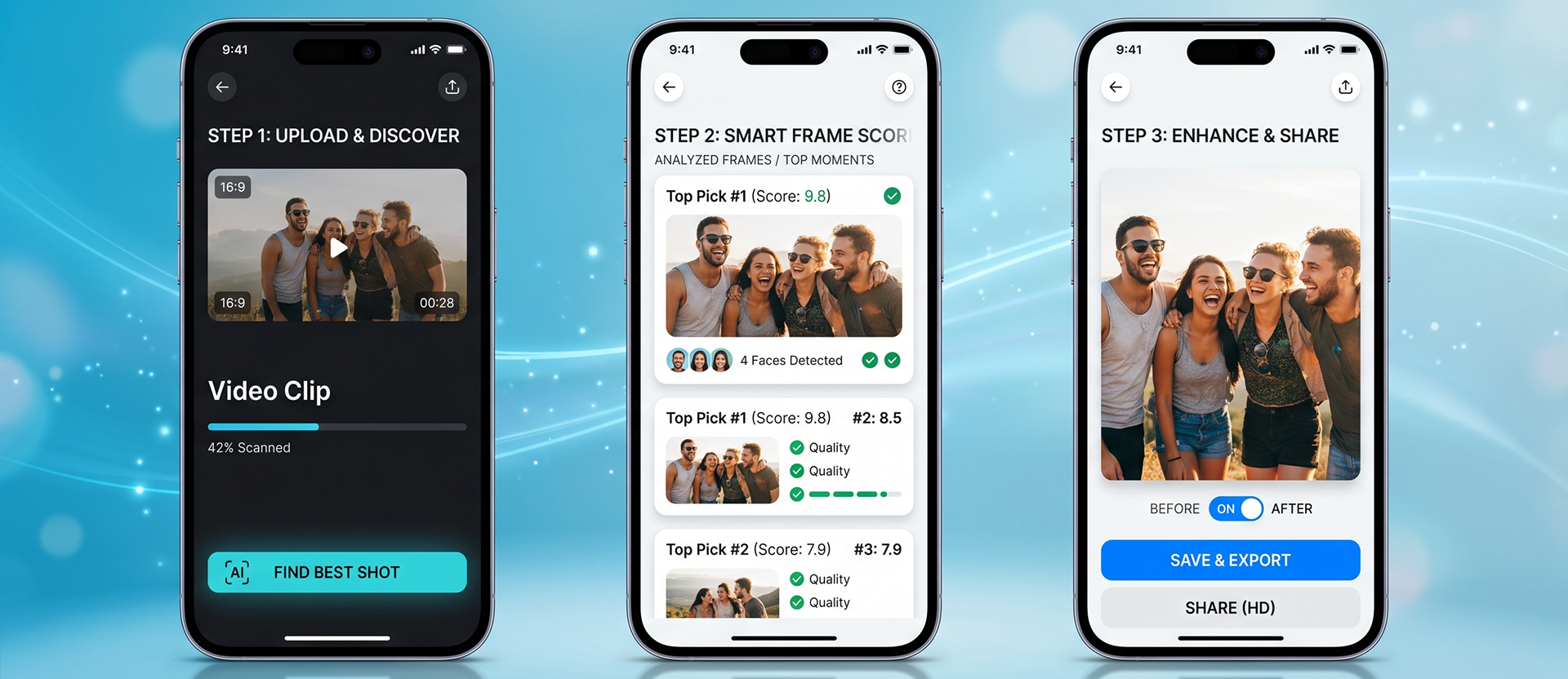
A user opens the app, uploads a short video clip, and taps one button. The pipeline extracts every frame, detects and crops every face, scores each frame across multiple quality dimensions, and surfaces the top-ranked group shots. If the best frame has a closed eye, the compositing layer pulls the open-eye version from another frame and blends it in naturally. The final image is then enhanced and delivered to the gallery, ready to share.

Picture perfect Tezeract

Want To Build A Smart AI Photo Experience Like Picture Perfect?

Tezeract develops custom AI-powered photo and video platforms with computer vision, automation, enhancement pipelines, and scalable mobile experiences tailored to your workflow.

Phases wise Deployment

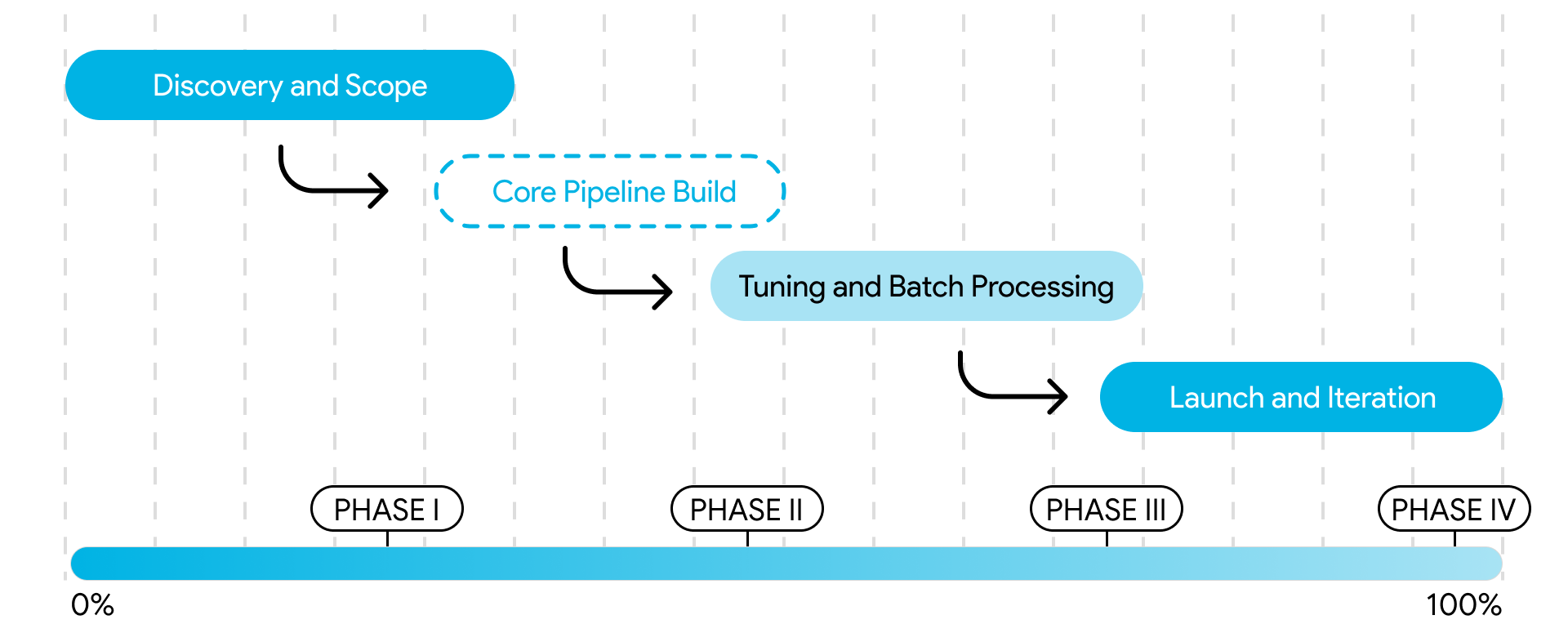
Tezeract delivered Picture Perfect in four structured phases over six months, with weekly sprint reviews and real video samples used to validate scoring accuracy and compositing quality at every stage.

01

Discovery & Technical Scoping

Mapped the full pipeline requirements: frame extraction parameters, face detection thresholds, scoring dimensions, compositing logic, enhancement targets, and batch processing architecture. Defined acceptance criteria for scoring accuracy and compositing naturalness.

Key milestone: Scope approved. Scoring rubric, compositing logic, and pipeline architecture signed off.

Picture perfect Tezeract

02

Core Pipeline Build

Built the frame extraction engine, face detection layer, multi-dimensional scoring system, and initial compositing module. Integrated OpenCV, DeepFace, and the enhancement pipeline. Built the React Native mobile frontend and FastAPI backend.

Key milestone: First end-to-end pipeline run on real video samples with scored output delivered to the gallery.

03

Tuning and Batch Processing

Tested scoring accuracy across varied lighting conditions, group sizes, and camera quality. Refined compositing blending for natural eye replacement. Built the batch processing queue, push notification system, and Stripe subscription billing.

Key milestone: Scoring accuracy and compositing quality targets met across primary test conditions.

Picture perfect Tezeract

04

Launch and Iteration

Deployed the full platform on AWS. Monitored usage patterns, refined scoring thresholds based on early user behavior, and expanded enhancement options for low-light and outdoor conditions.

Key milestone: Platform live with active users and stable performance across event and casual use cases.

Picture perfect Tezeract

Obstacles Countered and Resolved

Obstacles

Scoring accuracy across varied lighting and camera quality

Compositing artifacts on eye replacement

Batch job management for event teams

Privacy handling for uploaded video content

Pipeline speed on mobile hardware

Picture perfect Tezeract

Resolution

Tuned scoring thresholds per lighting condition category; added a fallback ranking layer for low-confidence frames

Implemented landmark-based face alignment before blending; used alpha masking to match skin tone and lighting at the replacement boundary

Built a dedicated queue with job status tracking and push notifications so teams could submit multiple clips and return to results without waiting

Implemented short-retention policies for source video, encrypted storage for outputs, and role-based access controls for team accounts

Offloaded heavy processing to the FastAPI backend; used async job queuing so the app remained responsive during processing

The Results

Picture Perfect delivered results where the product needed them most: speed, accuracy, and a workflow that required no manual steps.

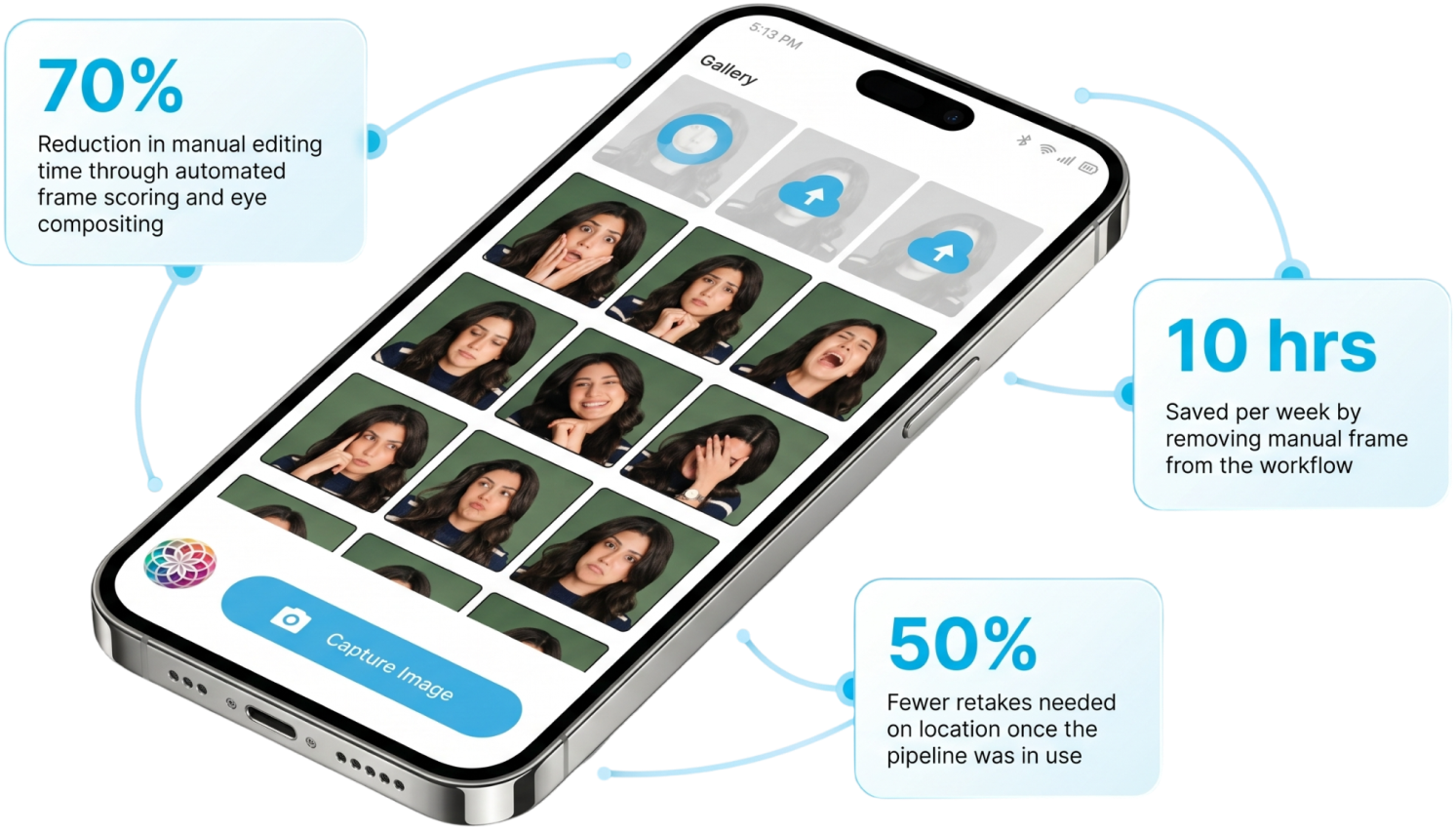
70%

Reduction in manual editing time through automated frame scoring and eye compositing

10 hrs

Saved per week by removing manual frame scrubbing from the workflow

50%

Fewer retakes needed on location once the pipeline was in use

Picture perfect Tezeract

What changed beyond the numbers:

  • Event teams could queue an entire shoot and receive clean outputs before the event wrapped
  • Users who previously spent an hour on a single group photo now had a result in under two minutes
  • The closed-eye problem, previously a reason to discard a shot entirely, became a solvable edge case
  • Output quality was consistent across indoor, outdoor, and low-light conditions after Phase 3 tuning
  • The batch queue removed the need for any team member to stay inside the app during processing

How Picture Perfect Helps Each Stakeholder

For Individual Users

1

Record a short clip and get a clean group shot with no manual scrubbing or retakes required

2

Fix closed eyes and missed expressions automatically without any compositing skills

3

Enhance the final image inside the same app without switching to a separate editing tool

4

Review ranked top picks and confirm the best shot in seconds

For Event Teams

1

Queue multiple clips and process them in parallel without waiting inside the app

2

Receive push notifications when results are ready and review outputs directly from the gallery

3

Deliver clean, organized photo outputs faster without hunting through camera rolls or requesting reshoots

For Content Creators and Travelers

1

Capture the moment on video and let the AI handle frame selection and quality improvement

2

Build a clean, organized gallery of group shots without manual curation or editing sessions

3

Spend less time fixing photos and more time creating content

Looking Forward

Picture Perfect’s roadmap moves the platform from a group photo tool into a full AI-powered visual memory layer. The next phase introduces real-time preview scoring so users can see frame-quality signals while still recording, expanded enhancement options for low-light and outdoor conditions, and a social-sharing layer that lets users publish directly from the gallery.

Build Faster Photo Workflows With Computer Vision

Picture Perfect reduced manual editing time and improved output quality through automated AI processing. We help businesses build the same level of automation into their products.
heading component,

Tech stack used in developing AI photo editing app case study?

Building Picture Perfect with Our Cutting-Edge Artificial Intelligence Tech Stack

React , React Native cross-platform framework icon, React JavaScript library logo

React Native

Node.js JavaScript runtime logo

NodeJS

OpenCV computer vision library logo

OpenCV

Face-recognition Icon

Face Recognition

AWS logo - machine learning services

AWS

S3 icon

S3

FastAPI modern Python framework logo

FastAPI

Python programming language for AI development

Python

OneSignal Icon

OneSignal

Tools & Technologies

Description

Application Development

Application Backend

AI Server

Database Management

Payment & Subscription Plans

Cloud Infrastructure

Realtime Alerts

Key Capabilities Built

Picture perfect Tezeract

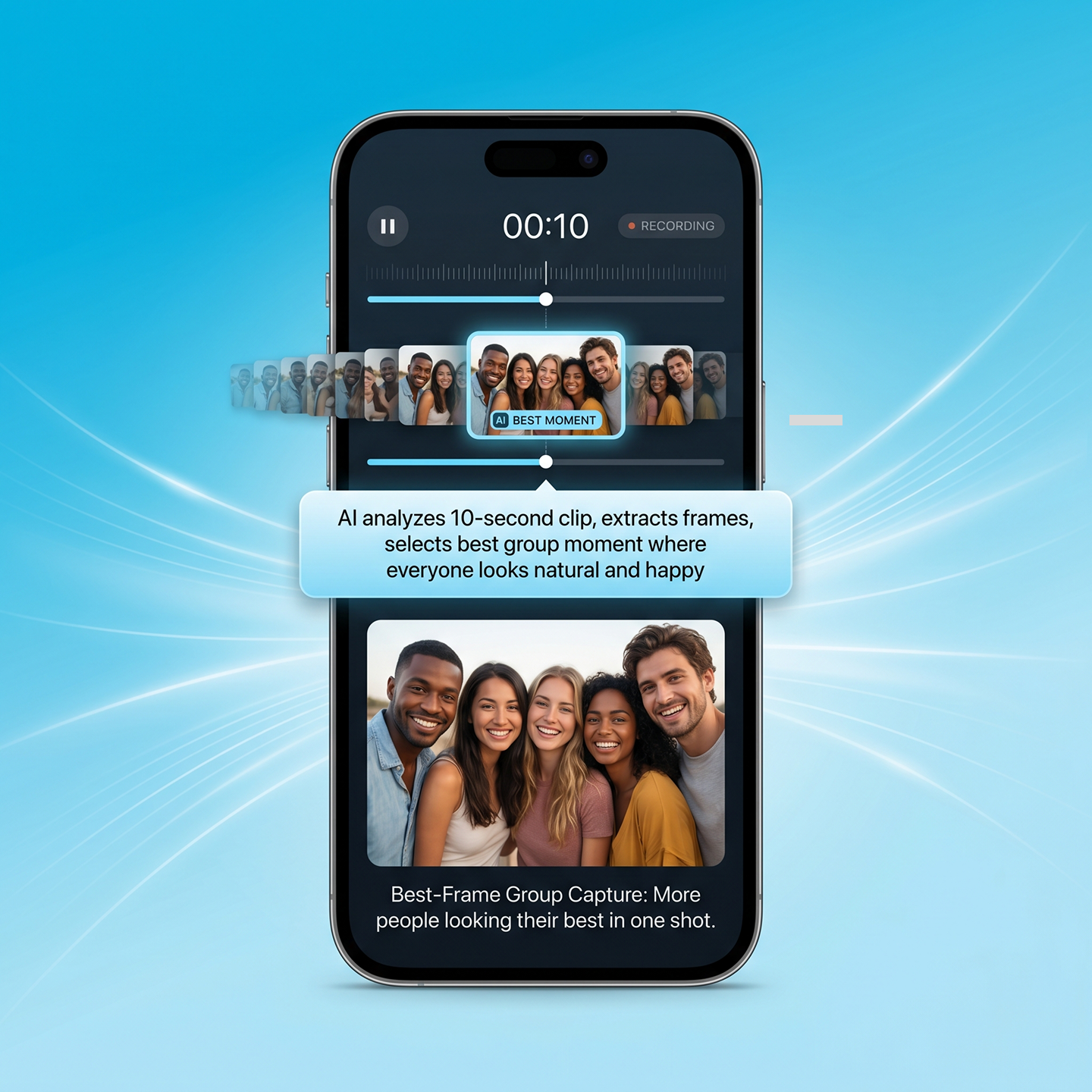
Best-frame group capture

Records a 10-second clip, then uses computer vision for photo editing to extract frames from video and pick the best group moment so more people look their best in one shot.

Picture perfect Tezeract

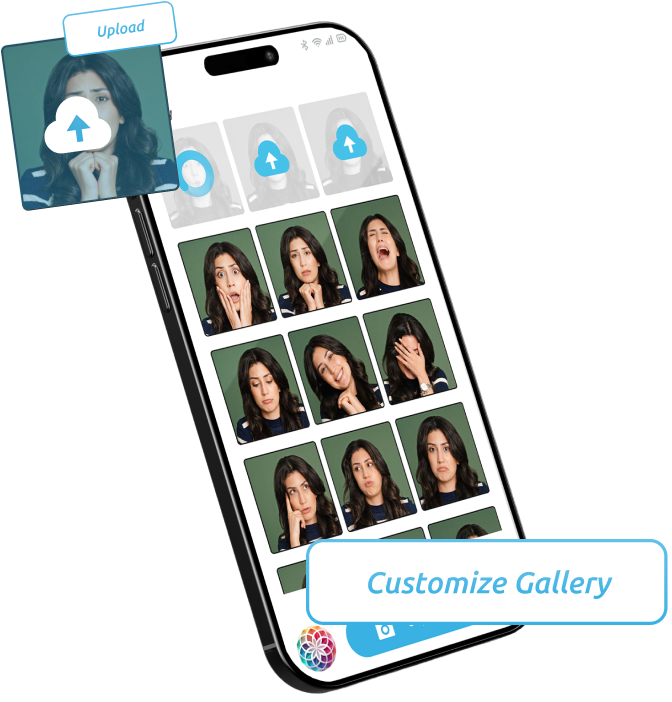
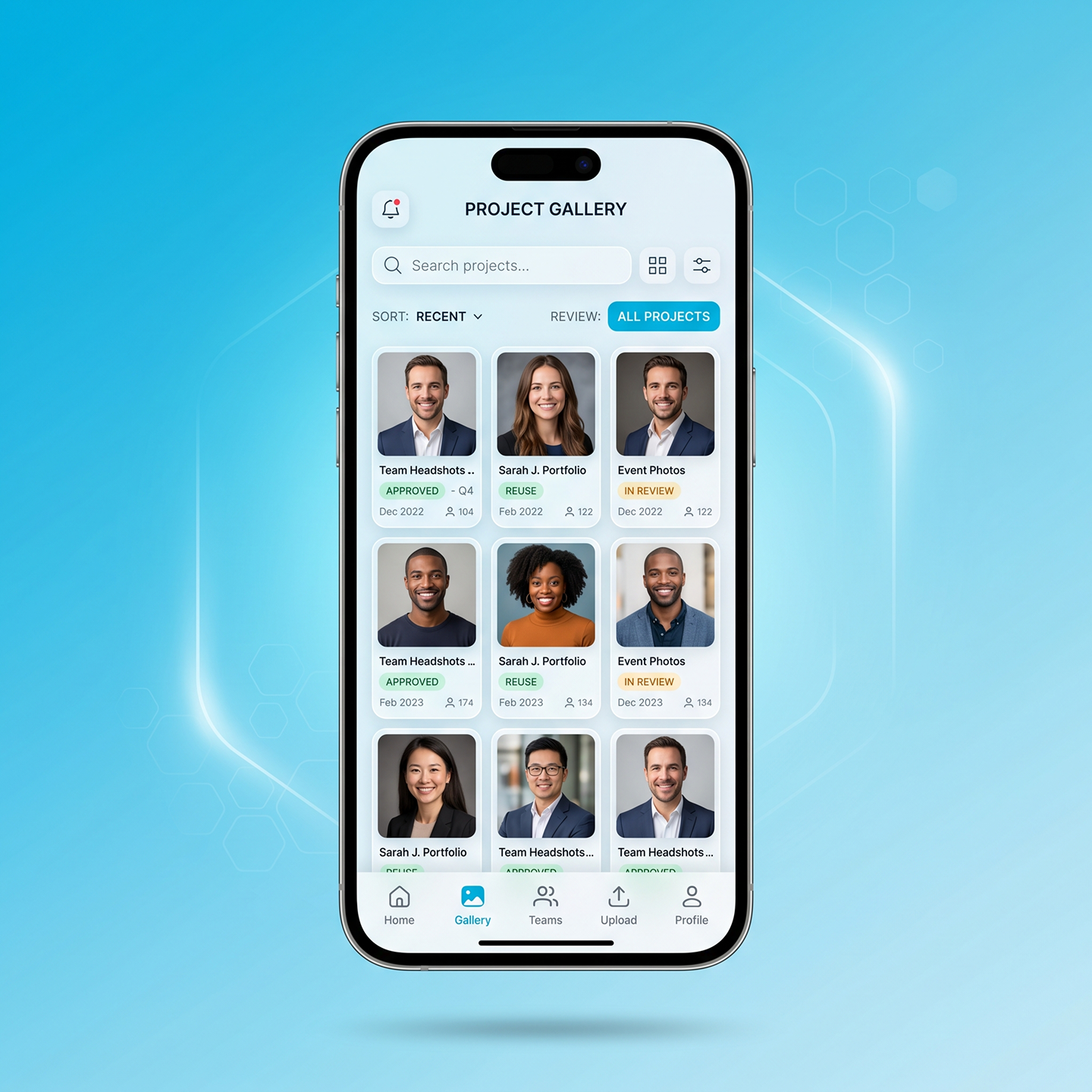
Project gallery

Saves each finished portrait in a clean gallery, so teams can sort, review, and reuse images without hunting through camera rolls.

Picture perfect Tezeract

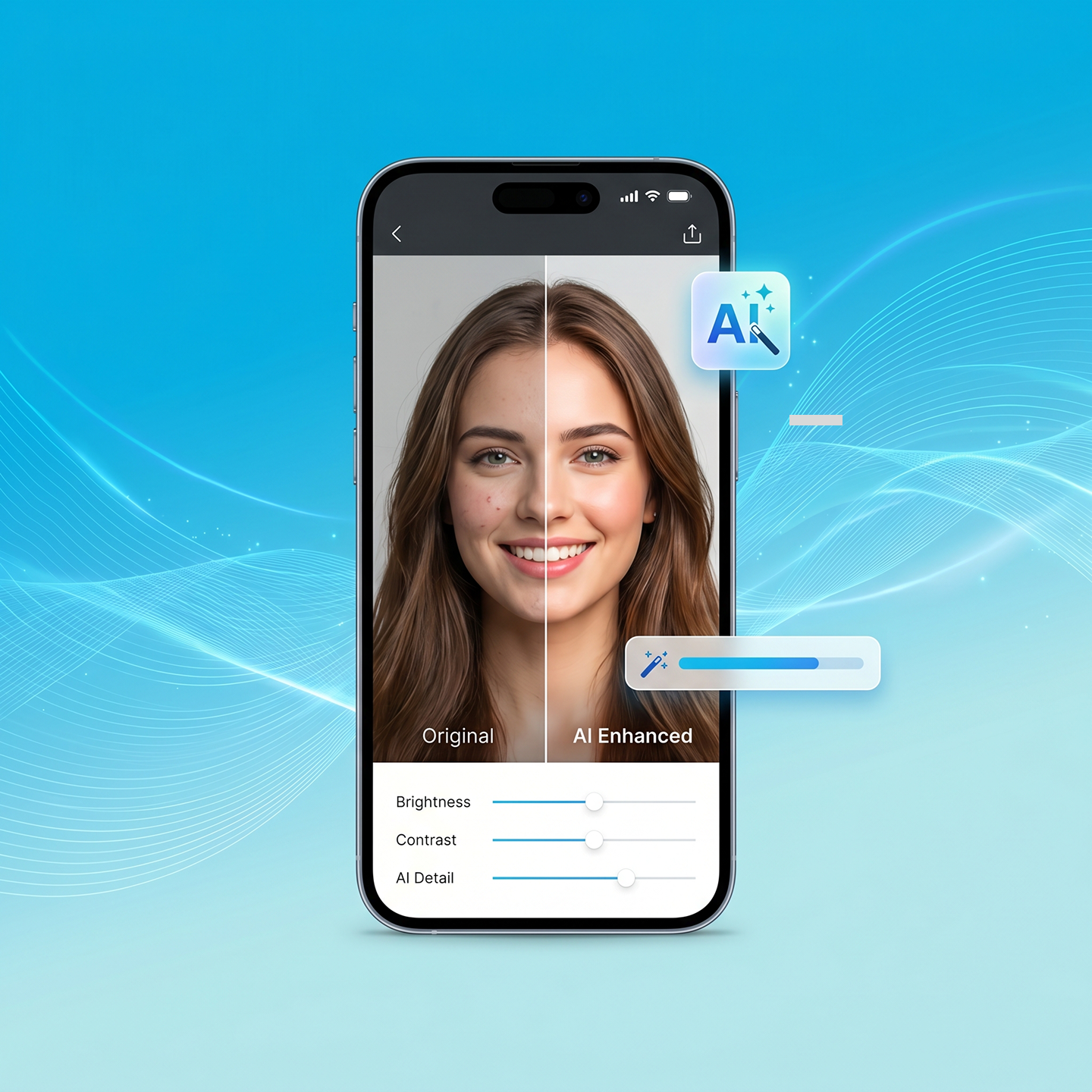
One-click photo enhancements

Offers quick edits with AI photo enhancement technology, so users can enhance image using ai and fine-tune the final portrait before saving or sharing.

sub heading component

What potential use cases AI have?

Benefits of using Picture Perfect for faster, cleaner group photos

Picture Perfect helps teams turn short videos into usable portraits without long edits. It acts like custom ai powered photo editing tools built for real group moments, not perfect studio shots. The result is a faster path from video to publish-ready image.

For Individual Users and Families

Group photos at birthdays, weddings, and travel moments where retakes are not always possible. The app handles the frame selection and eye-fix automatically, so the moment is captured even when the timing was imperfect.

01

For Event Photographers and Teams

High-volume shoots where manual frame review is not practical. Batch processing lets teams submit an entire event’s worth of clips and receive clean outputs before the event wraps. Consistent output quality without consistent manual effort.

02

For Content Creators

Short video clips captured during shoots, collaborations, or travel that contain the right moment but not the right frame. The scoring engine finds the best group shot so creators can focus on content, not curation.

03

For Corporate and Brand Teams

Team photos, event coverage, and brand content where output quality needs to be consistent and delivery needs to be fast. The pipeline removes the manual editing step from the workflow entirely.

04

Picture perfect Tezeract

Build Your Own AI Photo Editing Tool With Tezeract

Picture Perfect demonstrates what becomes possible when computer vision for photo editing is built around the actual problem users face, not around what existing APIs can already do.

Whether you are building a consumer photo app, an event photography platform, or a content tool that needs an automated image quality layer, Tezeract can design and build it. We do not adapt templates. We build for your pipeline, your users, and your output standards.

Ready to build an AI photo editor app that works in real conditions? Let’s talk.

heading component,

Your questions answered here

Frequently Asked Questions

Picture Perfect is built to Extract frames from video in a controlled way, then rank those frames based on what matters in group photos. The system first reads the clip and runs extract frame from video at a set interval or across all frames, based on the use case. After that, it checks each frame for signals that affect business outcomes, like whether faces are sharp, eyes are open, and expressions look natural.


This is where computer vision for photo editing does the heavy lifting. It detects faces, measures face clarity, checks eye openness, and scores the frame. For group scenes, the best “overall” frame is often not enough, so Picture Perfect can also choose the best face per person across multiple frames. That reduces cases where one person blinks in the best group moment.


The output is not a random pick. It is a ranked set of top results, so teams can trust the process and still review quickly when needed.

Yes, this is a core problem Picture Perfect targets. In group photos, someone blinking is normal, so “Fix closed eyes in photos” becomes a repeat request for teams that ship content fast. Picture Perfect approaches this by treating each face as its own item to evaluate, not just the whole frame.


The system checks eye openness per person across many frames. If the best overall frame has one or two people with closed eyes, the workflow can select a better face for those people from nearby frames. This is part of AI to solve imperfect group photos at scale. It reduces the need for manual compositing skills and cuts the time spent fixing group-photo flaws.


This also helps event teams who cannot do retakes. Once the moment is gone, a better frame choice is the only option. The tool aims to produce a result that looks natural, not like a pasted face, by keeping lighting and alignment consistent.

Video frames often look worse than a real photo because of motion blur, compression, and low light. Picture Perfect addresses this with frame and face quality checks before it picks a final result. The system measures sharpness and motion blur at the frame level, then checks face crops for detail. This helps stop a “best moment” frame from winning if it is unusable for marketing or client delivery.


These checks also support trust. Many teams do not want an auto-pick that looks wrong, so the system ranks frames with automated photo quality scoring and can present top options. In practice, this reduces time spent scrubbing video to find one clean still.


For tougher clips, the workflow can include video frame quality enhancement steps after selection, so the chosen frame holds up better. If a clip has heavy blur in most frames, the system can fall back to the least-blurry option and still help the team avoid a full manual search.

Natural output matters because teams worry about “over-edited” results that look fake. Picture Perfect uses AI photo enhancement technology as a controlled finishing step, not as an excuse to over-process the image. The goal is to correct common issues that happen after frame extraction, like low contrast, noise, and uneven lighting, while keeping skin texture and facial detail realistic.


This is also why the workflow is built around choosing better frames first. When the input is cleaner, you need less enhancement. Then users can enhance image using ai with light adjustments, like exposure balance, color correction, and small clarity improvements. This keeps the final photo consistent with the original moment.


For business teams, the practical benefit is less back-and-forth. The content looks credible, clients are less likely to ask for rework, and internal reviewers trust the output. This reduces the manual touchups that often follow an extracted still, especially for event content.

Computer vision for photo editing is the part of the system that understands what is happening inside each frame. It detects faces, tracks where they are in the image, and checks face-level details like eye openness, expression quality, and sharpness. In a group scene, this matters more than picking a frame that looks good “overall,” because one person blinking can ruin the shot.

It also supports quality scoring. Computer vision can estimate blur and detect when faces are too small, blocked, or badly lit. That helps the tool avoid frames that look fine at first glance but fail when used for a campaign image or a client deliverable.

In Picture Perfect, computer vision works together with ranking logic to reduce manual steps. The team does not have to scrub through a timeline, export screenshots, and compare many near-duplicates. The system can Extract frames from video, score them, and present top options quickly.

This is why businesses view it as more than a photo app. It becomes a workflow tool for faster delivery and fewer retakes.

Group photos fail in predictable ways: blinking, uneven smiles, awkward timing, and motion. Solving that at scale needs advanced computer vision solutions focused on face-level signals, not just image-level scoring. Picture Perfect uses face detection and per-face scoring to judge eye openness and expression quality, then uses a group-level decision to choose the best output.


For mixed expressions, a single “best frame” may not exist. In those cases, a face-level merge approach can pick the best face per person across frames and rebuild the final group shot. That is a practical way to apply AI to solve imperfect group photos in real conditions. It also reduces the need for retakes, which is often impossible after an event.


This approach is valuable for business teams because it aligns with the real goal: one usable image where the group looks good enough to publish. It also improves consistency across outputs, so the team spends less time debating which frame is “best” and more time shipping content.

Yes, batch processing is often the difference between a fun demo and a real business tool. Picture Perfect can be designed to Extract frames from video across many clips and process them in a queue. This fits event teams, agencies, and marketing teams that handle large volumes.


Batch processing works best when the workflow is built as jobs. Each clip becomes a job with clear states, like uploaded, processing, ready for review. The system can send alerts when results are ready, so editors do not sit and wait. This saves time and reduces the hidden cost of switching between tools.


Batch support also helps standardize outputs. Teams can apply the same quality rules, the same scoring logic, and the same enhancement settings across a full campaign. It reduces manual selection fatigue and speeds approvals.


If you need it, the system can export top-ranked frames, the final rebuilt group shot, and a small set of alternates for review.

This depends on product scope. Picture Perfect focuses on producing a strong still image, since most business use cases need a photo for web, social, or client delivery. Still, many users ask to convert video to live photo for iOS sharing and personal encourage use. A video to live photo converter feature can be added as an output option if it supports your growth goals.


From a build view, there are two outputs:

  • High-quality still export, where we extract frame from video and enhance it for use as a photo.
  • Live Photo style export, where the still is paired with a short motion segment.


The reason businesses often start with stills is quality control. Live Photo outputs can hide blur with motion, while stills expose quality issues right away. If your users want both, the system can support both and keep one scoring and selection engine underneath. That keeps the workflow consistent while expanding output formats.

Picture Perfect is not a standalone template. It is a custom build that can fit your product and workflow. Most teams want a simple front-end, like a mobile app or web app, plus a backend that manages users, jobs, and files. Video and image storage can sit in your cloud storage, and the AI service can run as a separate service that processes clips.


A common setup looks like this:


  • Mobile app records a short clip and uploads it
  • Backend creates a job and tracks status
  • AI service runs Extract frames from video, scoring, and face-level processing
  • Storage holds source video and outputs
  • Alerts notify users when results are ready


This structure supports scale, audit, and reliability. It also makes it easier to add features later, like batch runs, more editing controls, or new output formats. For business leaders, the value is clear ownership of the workflow, data, and user experience.

ROI is easiest when you measure what the tool replaces. With ai powered photo editing tools, the common savings come from fewer retakes, less time scrubbing video, and fewer manual touchups. You can measure:


  • Time spent per clip before and after
  • Number of frames reviewed per clip
  • Rate of “Fix closed eyes in photos” rework requests
  • Batch throughput per editor per day
  • Delivery time for a campaign set


A simple ROI model uses placeholders:

  • Time saved per week: [Y hours]
  • Internal cost rate: [$H per hour]
  • Value per week: [Y] x [$H]
  • Payback time: build cost [$X] divided by weekly value


You can also include soft benefits that matter to decision-makers: fewer missed deadlines, less stress on editors, and more consistent quality. A strong AI-powered photo editing case study ties these numbers to business outcomes, like faster launches and lower revision cycles.

Trust breaks when the tool picks a frame that looks “almost right” but has a small problem like blinking or blur. Picture Perfect reduces wrong picks by using ranking logic that matches human review. It scores faces and frames based on signals that people care about, like eyes open, clear faces, and natural expressions. That is part of AI to solve imperfect group photos in a way teams can accept.


Two design choices increase trust:

  • Ranked outputs, not a single forced result. Teams can review top [3] picks quickly.
  • Clear quality rules, like blur thresholds and face size checks, so the system avoids weak frames.


Over time, you can tune scoring by reviewing misses. If a team keeps rejecting frames due to one issue, that signal becomes part of the score. This improves accuracy and reduces manual work without removing human control.


For business users, the goal is not perfection on every clip. The goal is high confidence results most of the time, with fast review when needed.

Privacy is a real buyer concern because videos can include faces, locations, and sensitive moments. Picture Perfect can support different privacy levels based on your needs and risk profile. At a basic level, you control where files are stored, how long they are kept, and who can access them. Most teams set short retention for source videos and longer retention for final images.


Common privacy options include:

  • Store videos and outputs in your private cloud storage
  • Encrypt data at rest and in transit
  • Role-based access for internal teams
  • Deletion rules, like auto-delete after [X days]
  • Private deployment, where the AI service runs in your own cloud account


This matters for enterprise buyers who need compliance and clear governance. The system design can also separate identity data from media storage, which lowers risk. If you need on-device processing, it can be explored, yet it often comes with performance and quality limits for frame extraction and enhancement.

WhatsApp