How Rodi Became a Trusted AI-powered Insurance claim monitoring software for Insurance Agents With 98% Fraud Detection Accuracy

Impact

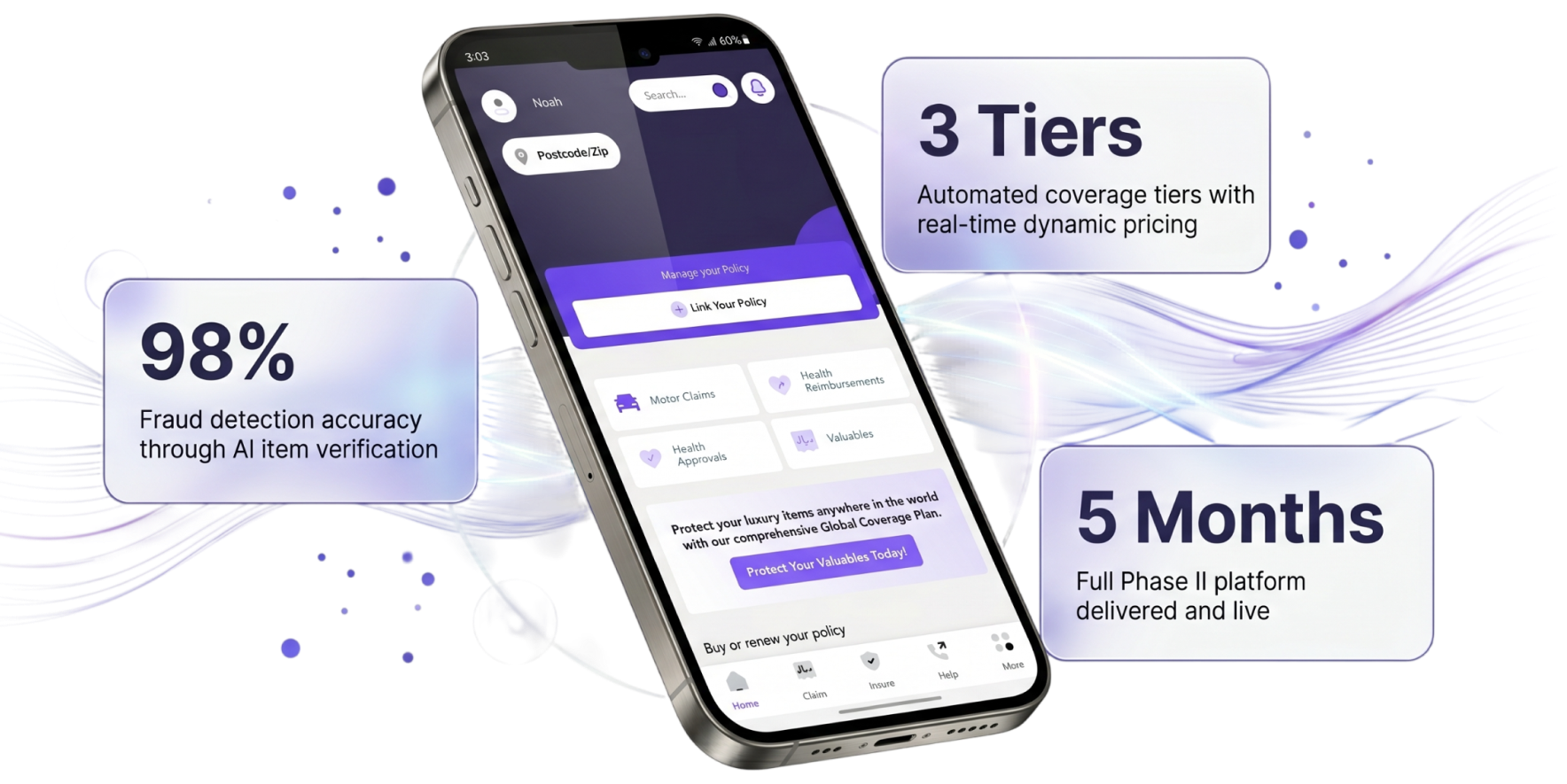
98%

Fraud detection accuracy through AI item verification

3

Insurance tiers with automated dynamic pricing

5 months

Full Phase II platform delivered

Project Overview

Insurance companies lose billions every year to fraudulent claims. The problem is not just bad actors; it is the absence of a verification layer to catch them before a policy is activated.

Rodi Phase II was built to close that gap. After delivering the first version of the platform, Ilia Mallioras, CEO of Rodi, returned to Tezeract with a sharper brief: rebuild the insurance model from the ground up with tiered coverage, AI-driven dynamic pricing, and a multi-layer item verification system that insurers could actually trust. 

The platform needed to work as a complete AI solution for insurance agents, one that automated plan assignment, verified item ownership before coverage began, and flagged suspicious claims before they reached a human reviewer.

Tezeract redesigned and rebuilt the full platform, from the dynamic pricing engine and verification workflow to the claims pre-assessment layer and insurer-facing dashboards, in five months.

RODI-II Tezeract

Customer Profile

Phase I of Rodi proved the concept. Phase II was about building the commercial-grade infrastructure that insurers would trust enough to partner with: tiered plans, verified ownership, and AI-powered claims triage built into the core product.

Client Name

Ilia Mallioras

Industry

Insurance / InsurTech

Business Model

B2C travelers + B2B insurer partnerships

Location

China

Product

Rodi

Duration

6 months

Pain Point

No automated tier assignment, no item verification before coverage, high fraud exposure with no AI layer to catch it

Why This Matters for Buyers Like You

If you are building or scaling an insurance product and your current workflow still relies on manual plan assignment, static pricing, and post-claim fraud review, you are absorbing costs that a well-designed AI software for insurance companies can eliminate. 

The Rodi Phase II build is a direct example of what changes when verification, pricing, and fraud detection are automated from the moment a user registers an item.

sub heading component

The Challenge

Automating Trust Before a Single Claim Is Filed

RODI-II Tezeract

01

Primary Problem

The main issue in Phase I was that coverage activated before ownership was confirmed. Users could register items, select a plan, and become insured without any verification that the item was real, theirs, or worth what they claimed. For insurers, that was an unacceptable risk. 

For the product to scale commercially, the platform needed a verification-first model where no item was insured until ownership was proven. The pricing model was also static. Every item got the same plan options regardless of brand, value, or risk profile. That created mismatches that hurt both user trust and insurers’ margins.

Secondary Challenges

No automated tier logic

Plan assignment was manual and inconsistent. The platform needed insurance-automation AI that could read item attributes and assign the appropriate coverage tier in real time.

02

Fraud exposure at registration

Without a verification gate, fraudulent or inflated item registrations could slip through. The platform needed AI fraud detection in insurance built into the onboarding flow, not the claims review queue.

03

Multiple verification scenarios

Not all users have a receipt. Not every item has an authentication card. The system needed to handle all three scenarios: receipt upload, card-based authentication, and image-based real authentication, without creating friction for legitimate users.

04

Claims pre-assessment gap

Once a claim was submitted, everything was sent for manual review. There was no AI layer to check completeness, flag anomalies, or route cases by risk level before a human touched them.

05

Scalability of the verification workflow

As user volume grew, manual verification would become a bottleneck. The system needed to automate most verifications while routing edge cases for human review.

06

Turn Insurance Verification Into an Automated Workflow

From receipt scanning to AI anomaly detection, Rodi II automated the entire trust layer of insurance onboarding. Tezeract helps insurance companies reduce manual work while improving fraud prevention accuracy.

What Slowed Down Operations and Triggered the Need for Immediate Change

What Did Not Work Before

Business Impact

Without a working verification and tier system, Rodi could not close commercial partnerships with insurers. The platform needed to demonstrate that it could prevent fraud at the point of registration, not just detect it after a claim was paid. That was the commercial gate for Phase II.

RODI-II Tezeract
sub heading

Journey Overview

Why Tezeract

Ilia had already worked with Tezeract on Rodi Phase I. The decision to continue was straightforward, the team understood the product, the insurer requirements, and the technical constraints. The question was not who to work with. It was how to scope Phase II so the build delivered a commercially viable platform, not just a feature update.

Tezeract gave a concrete technical plan and phased delivery milestones. The scope was approved, and the build started within two weeks of the Phase II brief.

sub heading component

The Solution

Rodi Phase II, A Full-Stack AI Software for Insurance Companies Built Around Verified Coverage

RODI-II Tezeract

Tezeract rebuilt Rodi Phase II around one principle: coverage should only activate when ownership is confirmed, and pricing should reflect the actual risk of what is being insured.

The Dynamic Pricing Engine

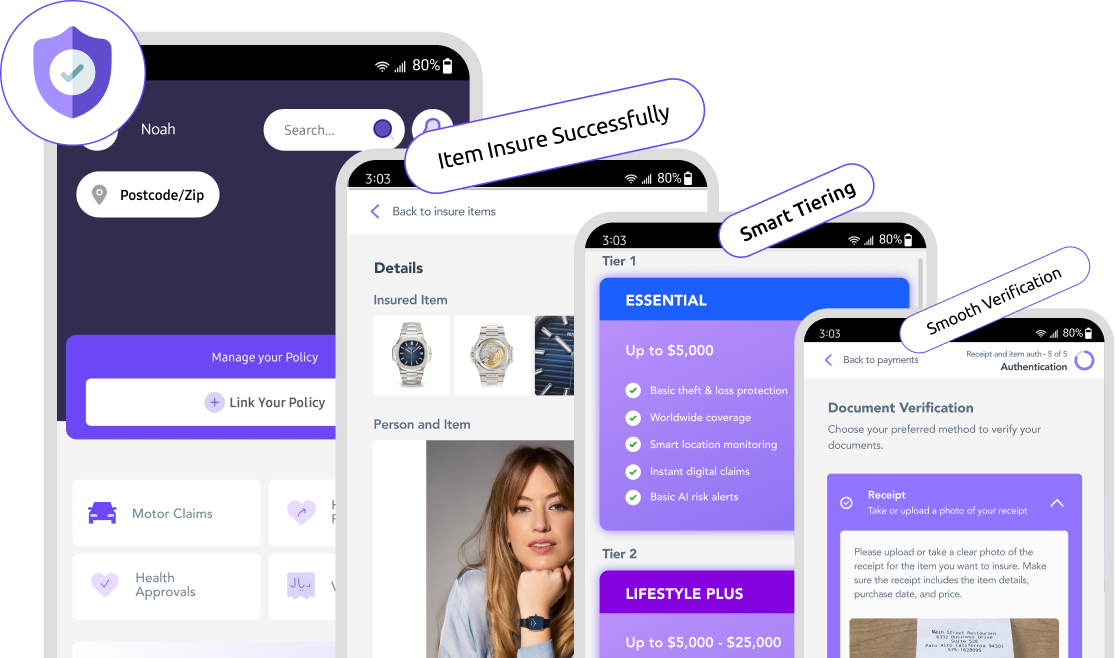
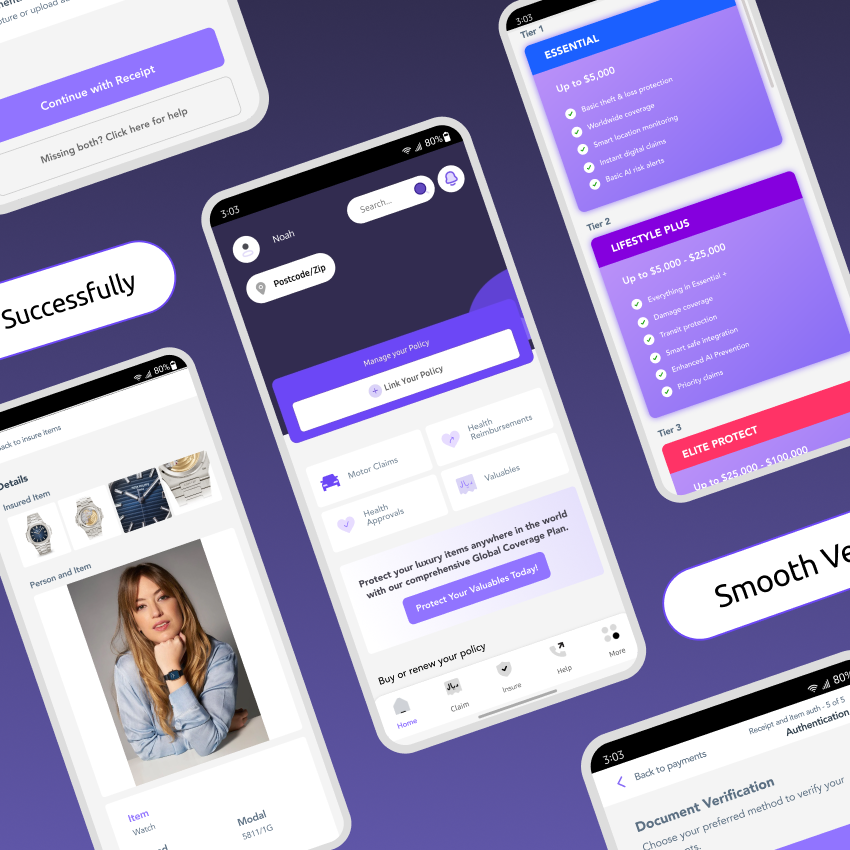
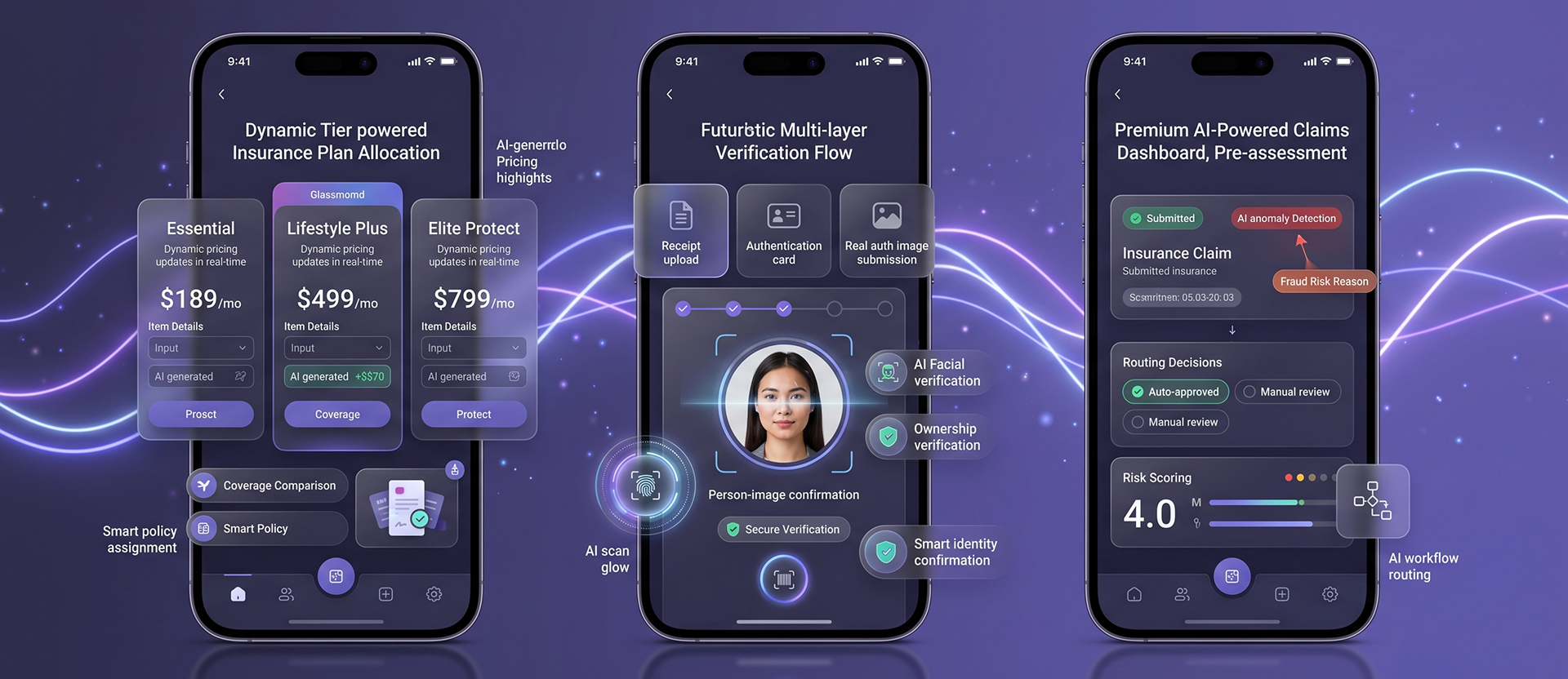
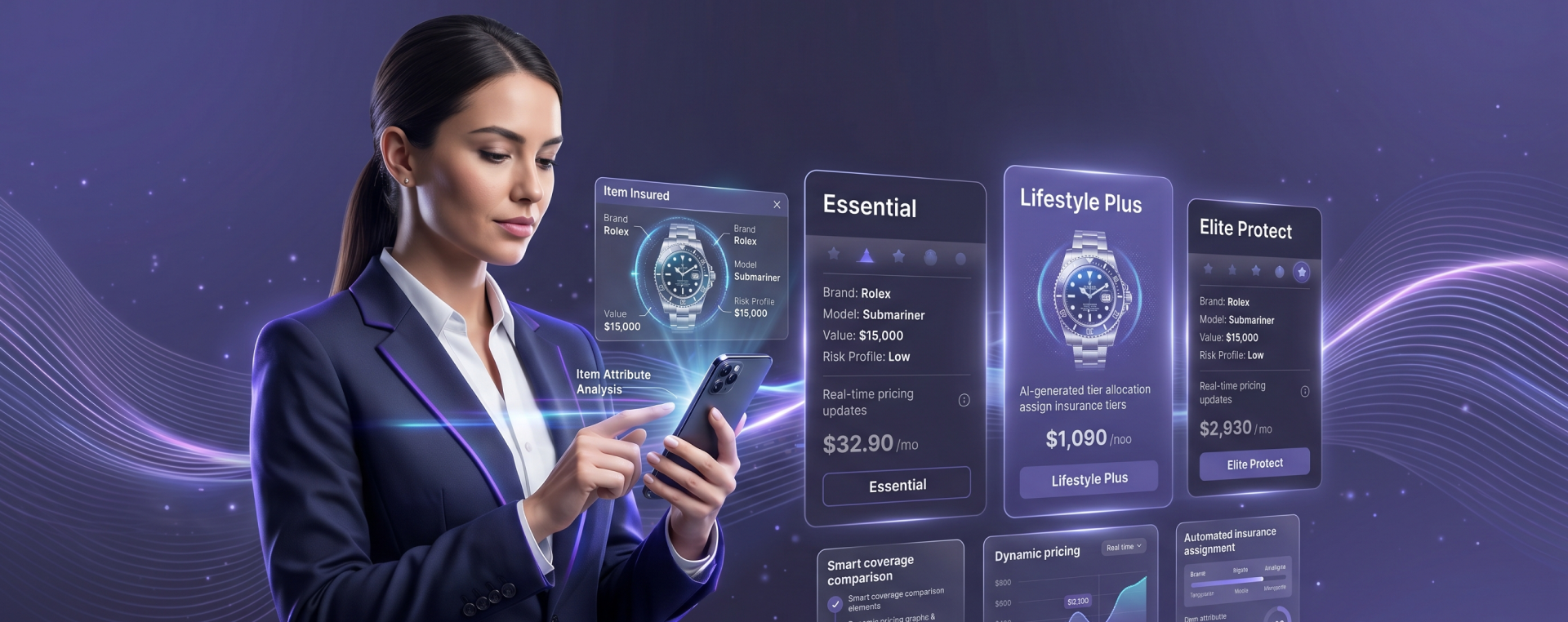
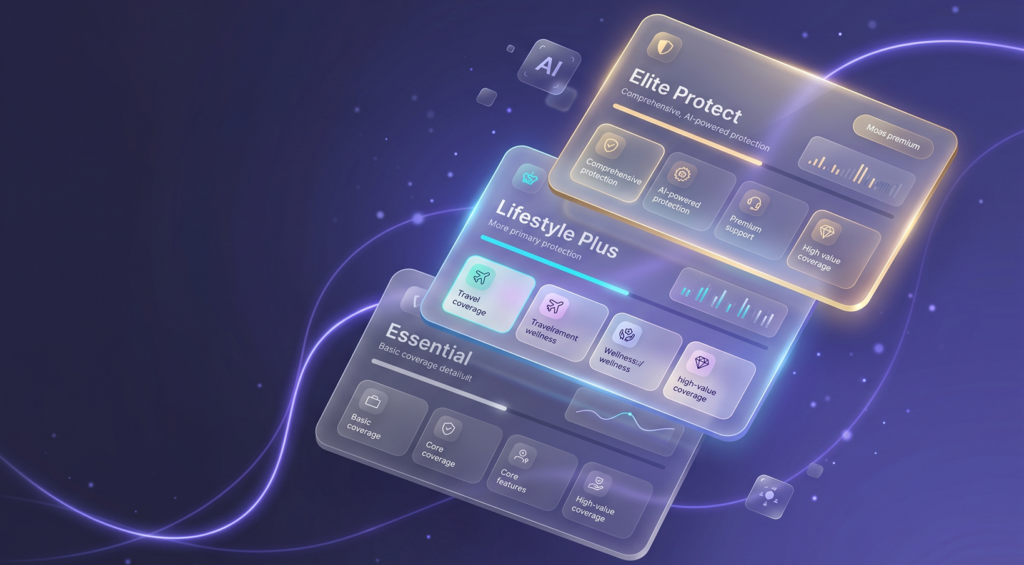
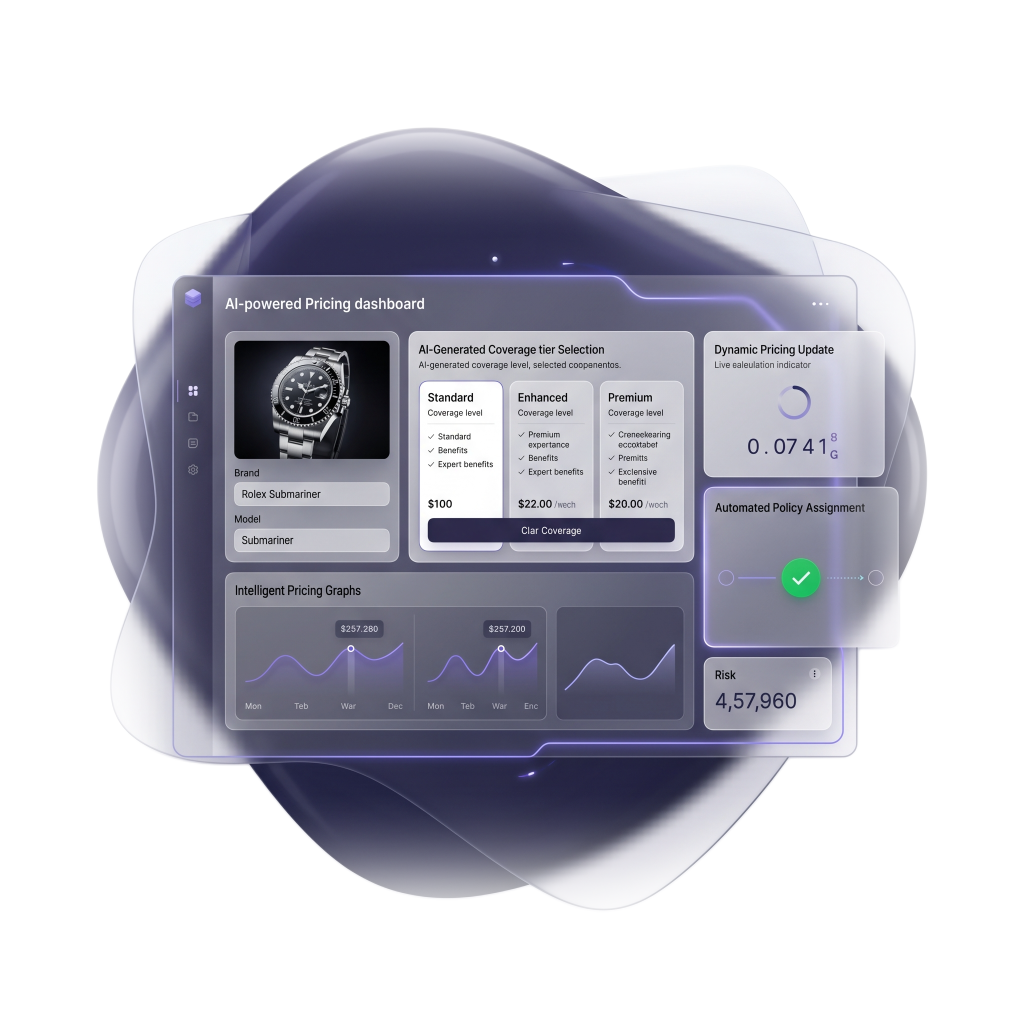
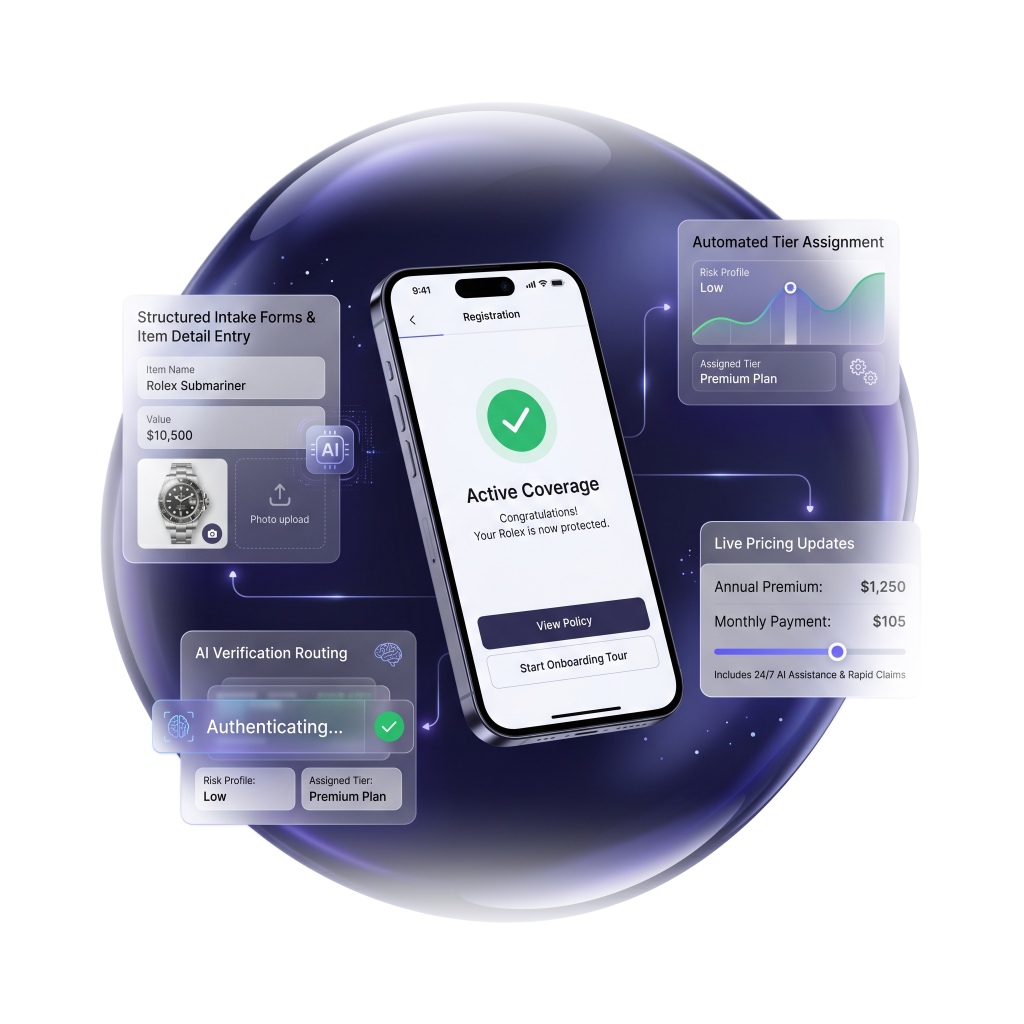
The platform uses an AI-driven tier allocation engine that reads item attributes and automatically assigns the user to one of three coverage tiers: Essential, Lifestyle Plus, or Elite Protect. Each tier carries distinct coverage limits, perks, and pricing. 

The engine runs in real time, so users see their assigned plan and price update as they enter item details.

RODI-II Tezeract

How It Works

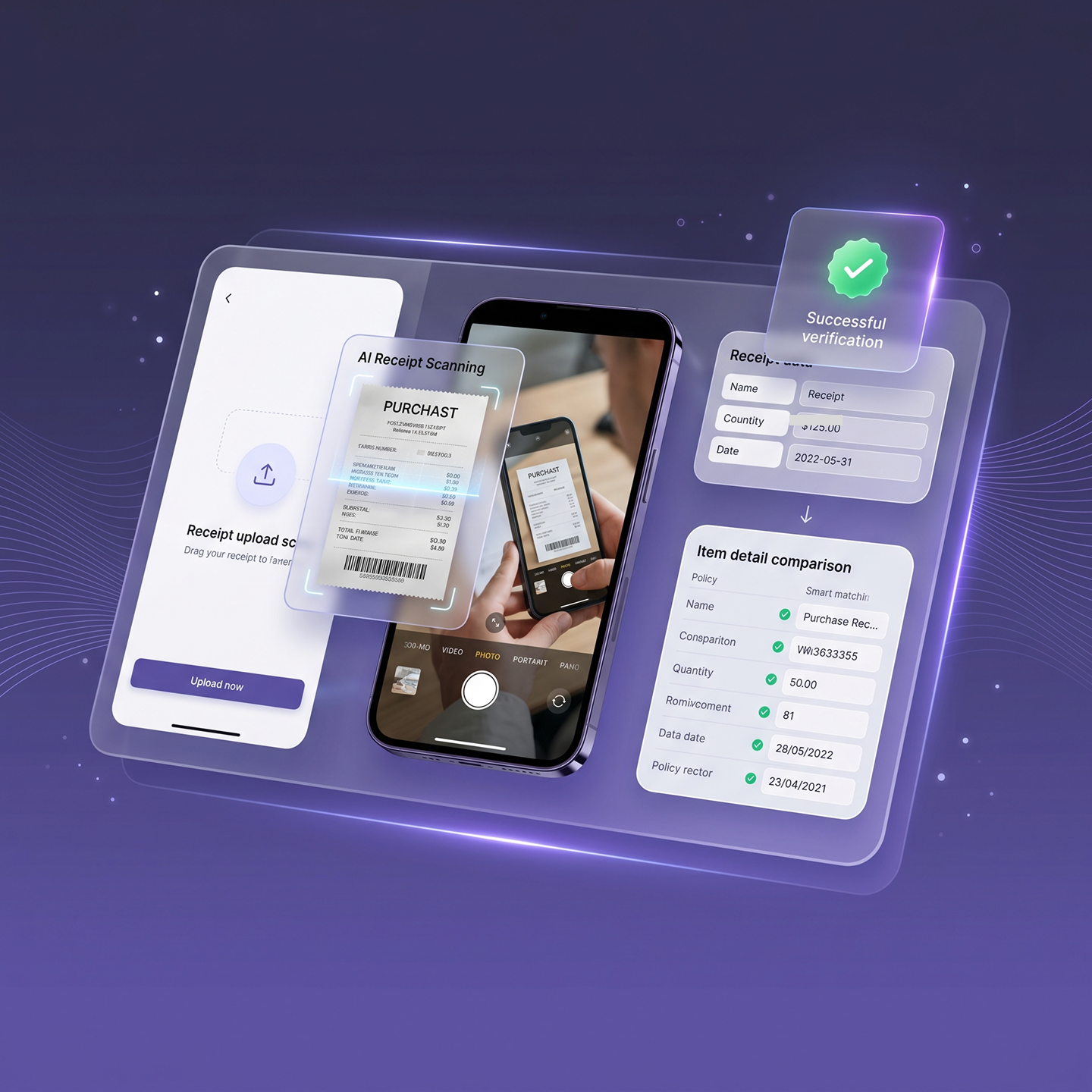
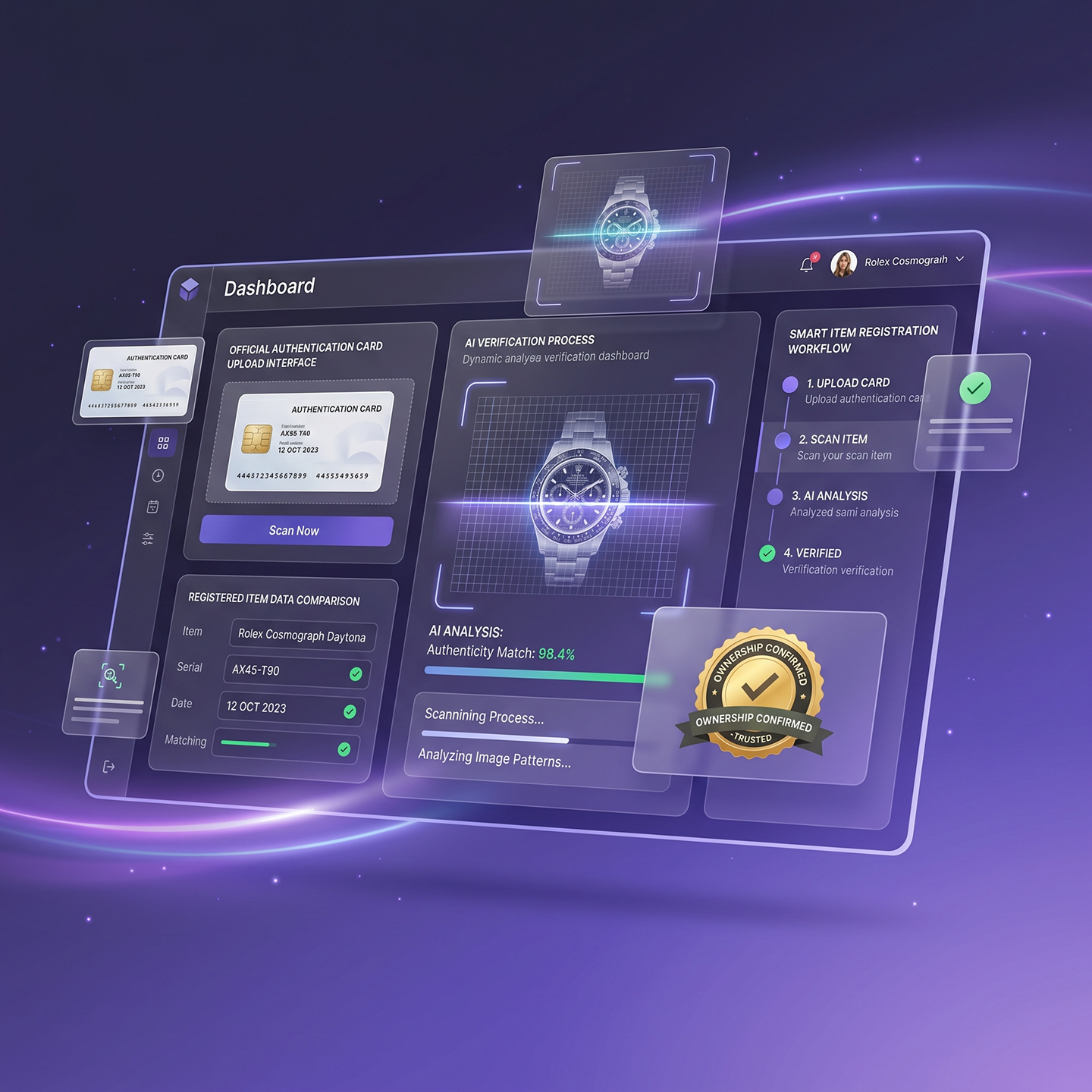
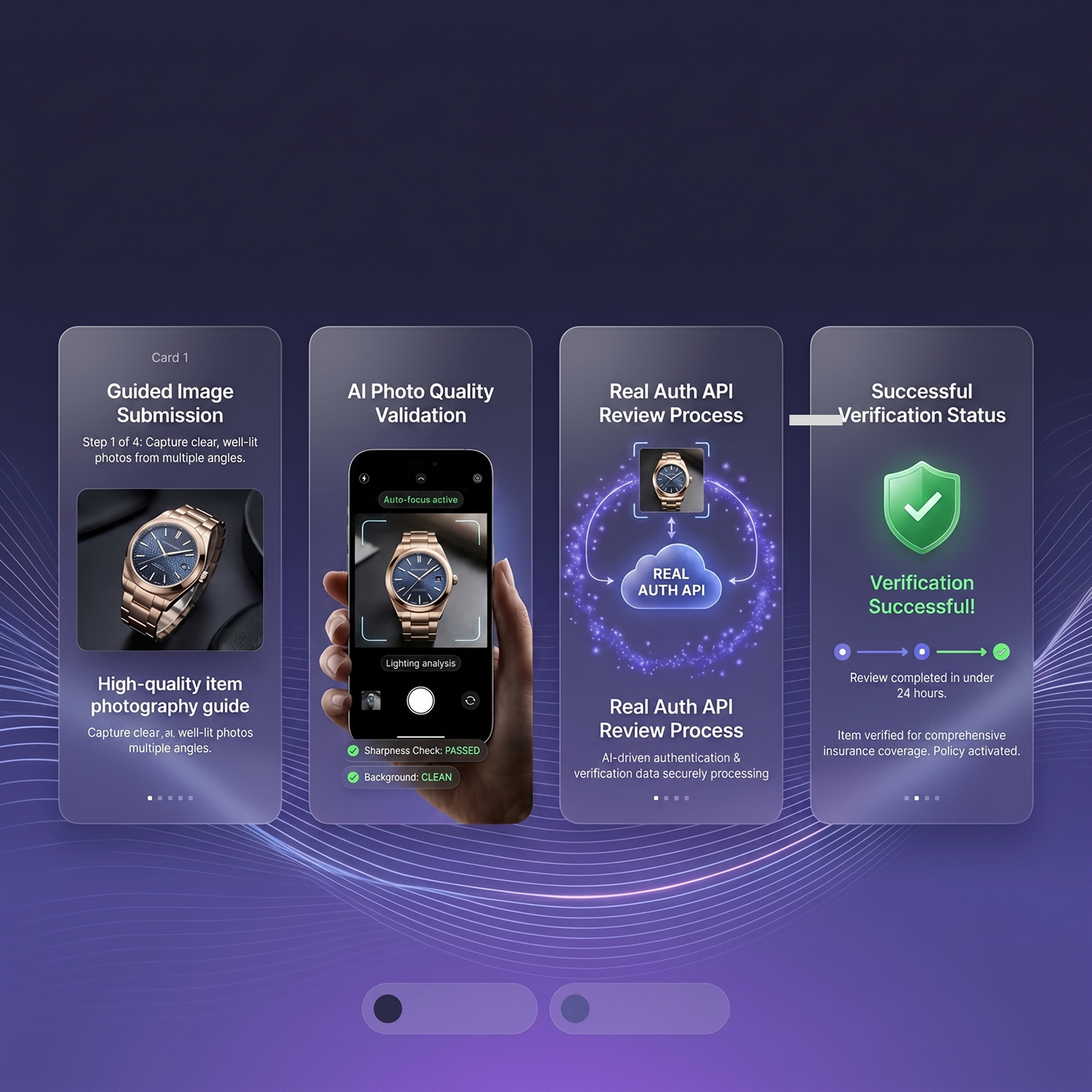
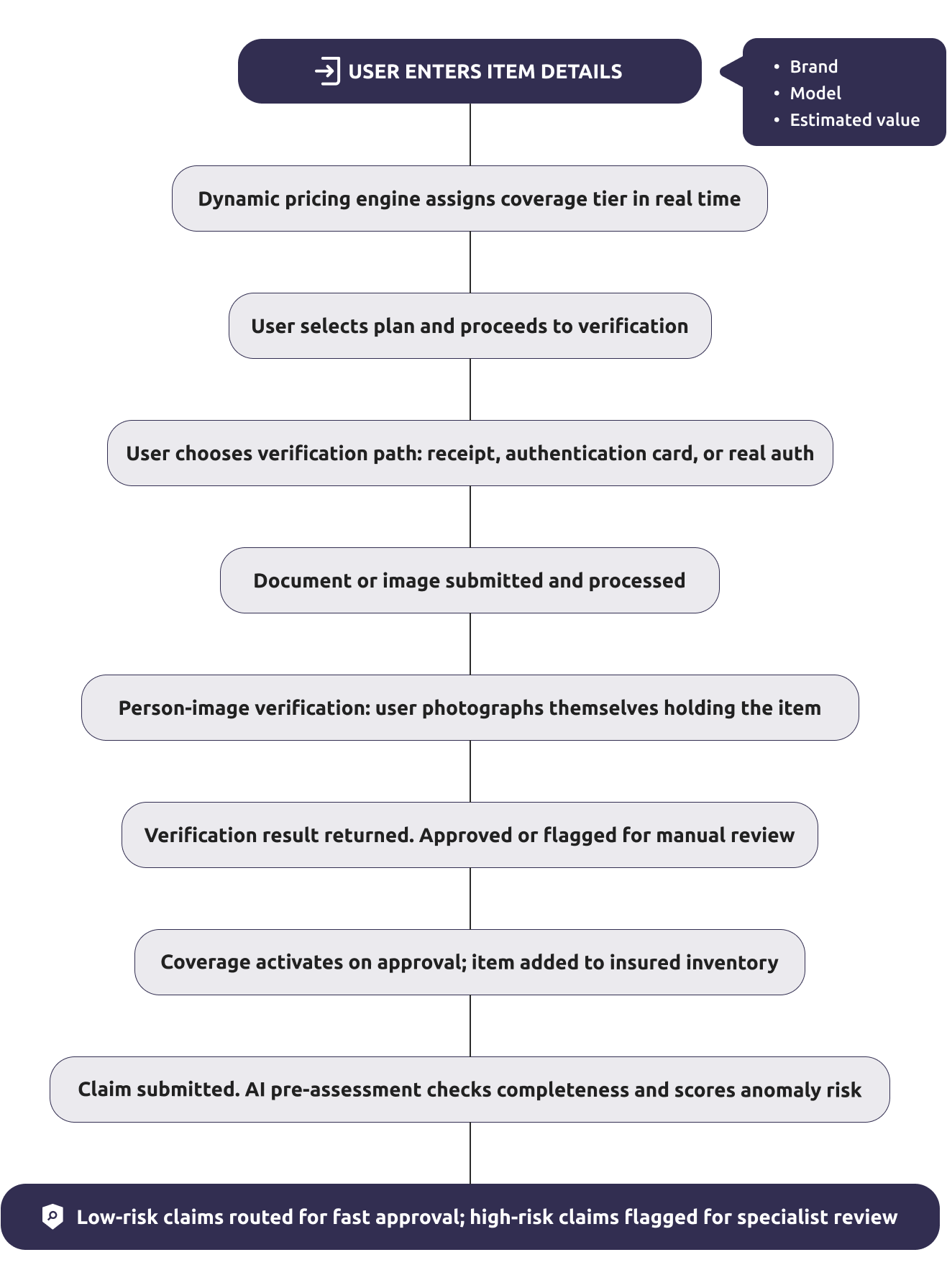
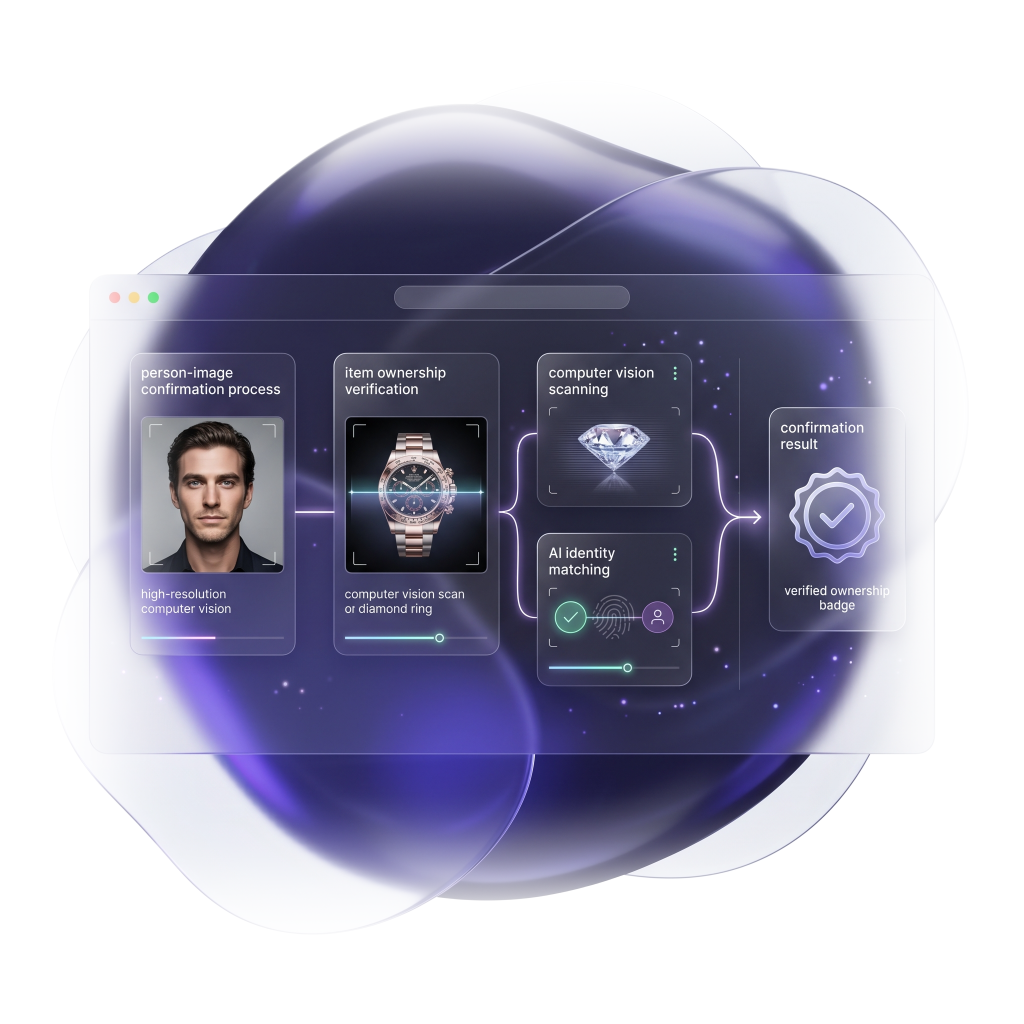
A user opens the app, enters their item details, and the pricing engine instantly assigns a coverage tier. The user then selects their plan and moves to verification. Depending on what documentation they have, they upload a receipt or an authentication card, or submit high-quality photos of the item for real auth review. 

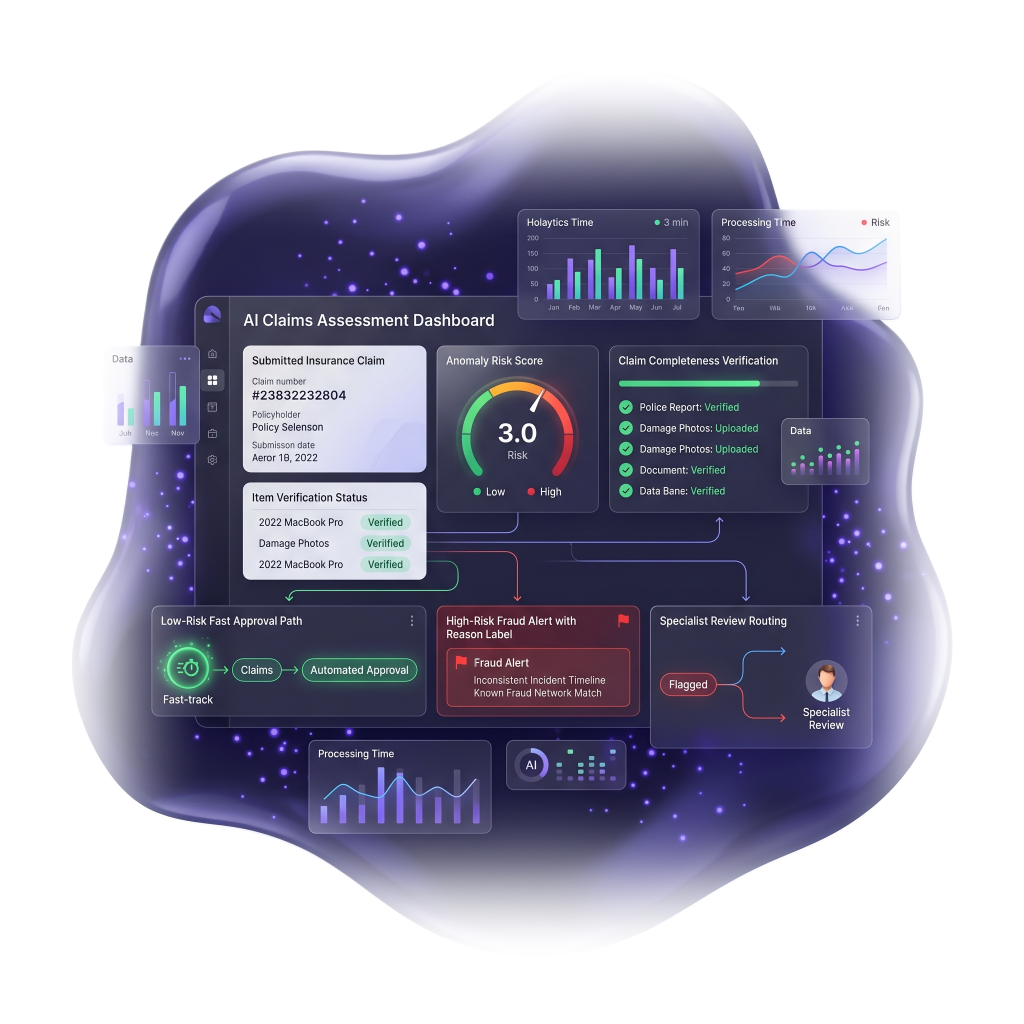
All three paths end with a person-image confirmation. The user photographs themselves holding the item. Once verification passes, coverage activates. If a claim is submitted later, the AI pre-assessment layer checks completeness, scores the anomaly risk, and routes the case before any human reviewer sees it. The platform delivers:

RODI-II Tezeract

Automated tier assignment based on item brand, model, and value

RODI-II Tezeract

Three-path item verification with person-image confirmation as the final gate

RODI-II Tezeract

98% fraud detection accuracy across receipt, authentication card, and image-based verification

RODI-II Tezeract

AI claims pre-assessment with anomaly flagging and intelligent case routing

RODI-II Tezeract

Dynamic pricing that updates in real time as item data is entered

RODI-II Tezeract

Three Core Insurance Tiers

RODI-II Tezeract

Essential

RODI-II Tezeract

Lifestyle Plus

RODI-II Tezeract

Elite Protect

The Verification Architecture

The multi-layer verification system is the commercial heart of Rodi Phase II. It handles three scenarios without forcing users into a single rigid path:

RODI-II Tezeract

Receipt Upload

Users photograph their purchase receipt. The system reads the receipt data, cross-references it with the entered item details, and confirms a match.

RODI-II Tezeract

Authentication Card Upload

Users submit an image of the item’s official authentication card. The system verifies the card against the item registration data.

RODI-II Tezeract

Real Auth Verification

For users without a receipt or authentication card, Rodi’s image submission guidelines guide them in capturing high-quality photos of the item. These are reviewed through the Real Auth API within 24 hours.

All three paths converge at person-image verification. The user photographs themselves holding the item. This final step confirms physical possession and ties the item to a verified identity. Coverage only activates after this step passes.

The Data Flow

RODI-II Tezeract

Need Similar AI Features in Your Insurance Platform?

Dynamic pricing, AI verification, fraud scoring, and claims automation helped Rodi II become a scalable InsurTech platform. Tezeract builds custom AI systems tailored to your insurance workflows and business model.

Phases wise Deployment

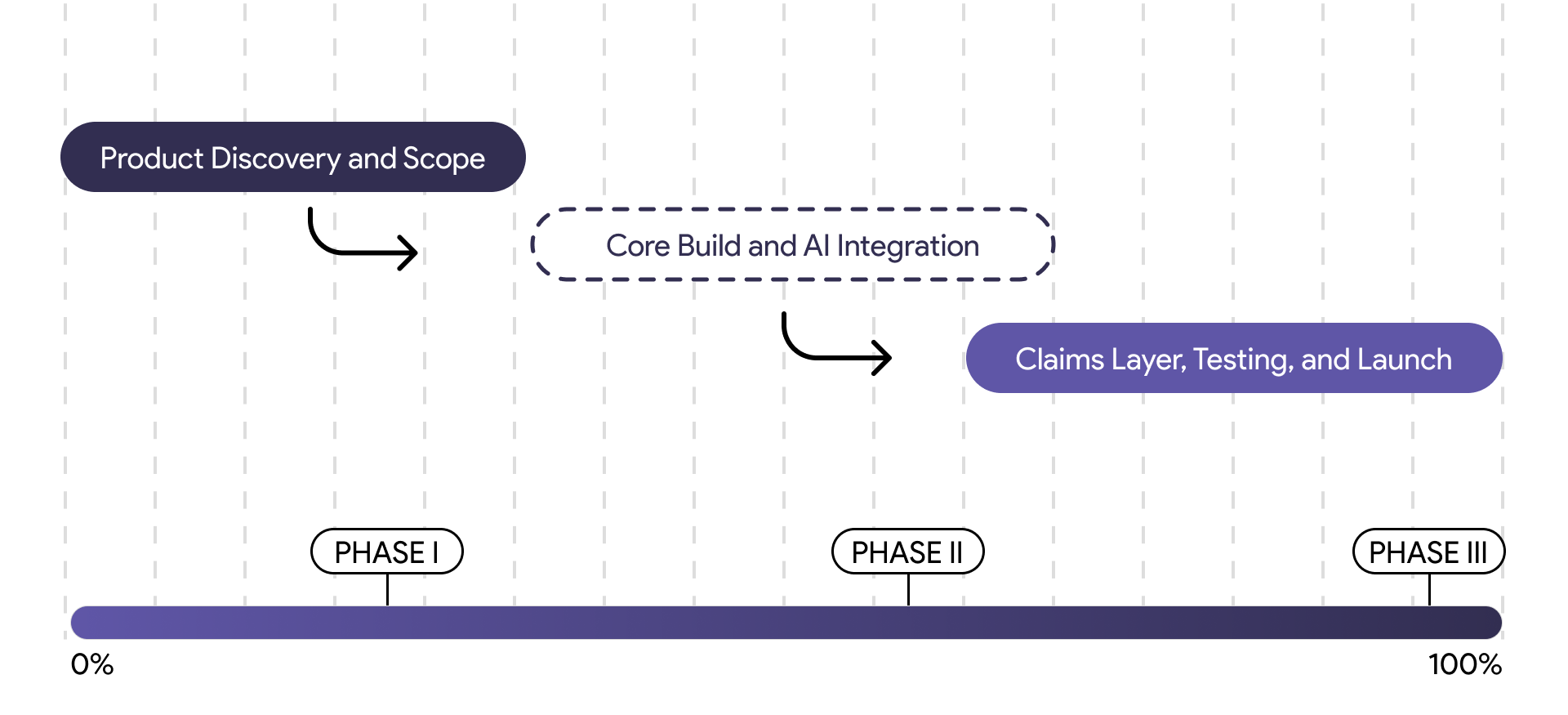
Tezeract delivered Rodi Phase II in three structured phases over five months, with weekly reviews and real-item data used to validate the pricing engine and verify accuracy at each stage.

01

Discovery & Technical Scoping

Mapped the new business model: three-tier coverage structure, dynamic pricing logic, verification paths, and claims pre-assessment requirements. Defined acceptance criteria for tier assignment accuracy, verification pass rates, and fraud detection performance.

Key milestone: Scope approved. Tier logic, pricing algorithm parameters, and verification workflow signed off with the client.

RODI-II Tezeract

02

Core Build and AI Integration

Built the React Native mobile app and NestJS backend for the new tier and pricing model. Developed the dynamic pricing engine and integrated the Real Auth API for image-based verification. Built the computer vision layer for receipt and authentication card processing. Implemented person-image verification as the final ownership confirmation step.

Key milestone: End-to-end registration flow working. Item entry, tier assignment, verification, and coverage activation, with real test data.

03

Claims Layer, Testing, and Launch

Built the AI claims pre-assessment module with anomaly scoring and case routing. Integrated Stripe for tiered subscription billing and coupon-based promotions. Deployed on AWS Lightsail. Ran fraud detection accuracy testing across all three verification paths. Hardened edge cases and prepared the insurer demo run-through.

Key milestone: 98% verification accuracy confirmed across test dataset. Full platform live with all three tiers, verification paths, and claims pre-assessment active.

RODI-II Tezeract

Obstacles Countered and Resolved

Obstacles

Building a pricing engine that accurately assigns tiers across a wide range of item brands and values

Designing a verification workflow that handled three different documentation scenarios without creating user drop-off

Achieving high fraud detection accuracy across receipt scans, authentication cards, and image submissions

Preventing fraudulent registrations without blocking legitimate users

Scaling the verification workflow without creating a manual review bottleneck

RODI-II Tezeract

Resolution

Developed a scalable value-range mapping algorithm with brand and model lookup logic; added input validation to prevent incorrect entries from skewing tier assignment

Built three distinct verification paths with clear UX guidance at each step; all paths converge at person-image confirmation to maintain a consistent ownership standard

Integrated the Real Auth API for image-based verification and trained the computer vision layer on diverse item and receipt formats; 98% accuracy confirmed in testing

Implemented a tiered review system, automated approval for clean verifications, 24-hour manual review for real auth submission

Automated the majority of receipt and authentication card verifications; routed only real auth and flagged cases to human review, keeping manual workload manageable at scale

RODI-II Tezeract

The Results

Rodi Phase II delivered on the two outcomes that mattered most to insurers: verified ownership before coverage activates, and AI-powered fraud detection that catches problems before a claim is paid.

98%

Fraud detection accuracy through AI item verification

3 Tiers

Automated coverage tiers with real-time dynamic pricing

5 Months

Full Phase II platform delivered and live

Stakeholder Impact

For Policyholders

1

Register items once and have verified ownership records available for every future claim without re-submitting documentation

2

Receive a dynamic premium that reflects the actual current value of covered items, not a fixed estimate from policy inception

3

Move through the claims process faster because ownership and condition are already confirmed before a loss event occurs

4

Trust that the platform is working to prevent losses, not just process them after the fact

For Insurance Agents

1

Use AI-generated risk profiles to have more informed conversations with policyholders about coverage gaps

2

Offer dynamic pricing as a competitive differentiator that generic insurance products cannot match

3

Reduce policy disputes tied to item valuation because the current market value is built into the coverage from day one

4

Spend less time collecting and verifying item documentation at the point of claim

For Insurance Companies

1

Reduce fraud exposure through verification that runs at registration, and flags inconsistencies before coverage activates

2

Improve underwriting accuracy with real-time item valuation data that reflects market conditions, not static declared values

3

Scale across multiple insurer integrations through a unified API layer that handles different carrier formats without custom builds per partner

4

Build a data asset over time, verified item records, claim histories, and fraud signals that improve risk models with every policy issued

Looking Forward

Rodi Phase II’s roadmap moves the platform from item-level verification into portfolio-level risk intelligence. The next phase introduces cross-policy fraud pattern detection, automated renewal pricing tied to item condition updates, and an agent-facing dashboard that surfaces risk signals across an entire book of business.
Ready to Build an Insurance Platform Insurers Trust?

Rodi II helped insurers reduce fraud exposure while giving users a smoother digital experience. Tezeract builds AI-powered insurance systems that improve verification, claims handling, and operational efficiency.

sub heading component

Tech Stack Used in Building Rodi's AI Software for Insurance Companies

Building Rodi Phase II With Our Advanced AI Technology Stack

React , React Native cross-platform framework icon, React JavaScript library logo

React Native

Next.js React framework icon

Next js

AWS logo - machine learning services

AWS

MongoDB NoSQL database logo

MongoDB

FastAPI modern Python framework logo

FastAPI

google icon

Real Auth API

Tools & Technologies

Description

Frontend Development

Backend Development

Third Party API

Database Management

Authentication and Security

Payment & Subscription Plans

Cloud Infrastructure & Analytics

Development Tools

Key Capabilities Built

RODI-II Tezeract

01

AI-Based Tier Allocation and Dynamic Pricing Engine

The platform reads item brand, model, and estimated value and assigns the correct coverage tier in real time. Pricing updates as the user enters item details, so there is no ambiguity about what they are paying or why. This is insurance automation AI applied at the point of sale, removing manual plan assignment from the agent workflow entirely.

RODI-II Tezeract

02

Multi-Layer Insurance Item Verification

Three verification paths all converging at person-image confirmation. No item is insured until ownership is physically confirmed. It draws on the same computer vision services Tezeract deploys across identity-sensitive products.

RODI-II Tezeract

03

AI-Powered Claims Pre-Assessment

When a claim is submitted, the AI layer checks completeness, cross-references item records and verification status, and scores anomaly risk. Low-risk claims move to fast approval. High-risk claims are flagged with a reason label and routed to specialist review. This is the kind of AI fraud detection in insurance that reduces fraud losses.

RODI-II Tezeract

04

Frictionless Item Registration

Users enter item details, and the platform handles everything else: tier assignment, pricing, and verification routing. The flow is designed to be short, mobile-first, and clear about what is needed at each step. For agents managing multiple policies, this structured intake is the foundation of a clean, auditable policy record. Teams familiar with AI document processing will recognize the same structured capture logic applied to physical item registration.

RODI-II Tezeract

05

Secure, Tiered Account Management

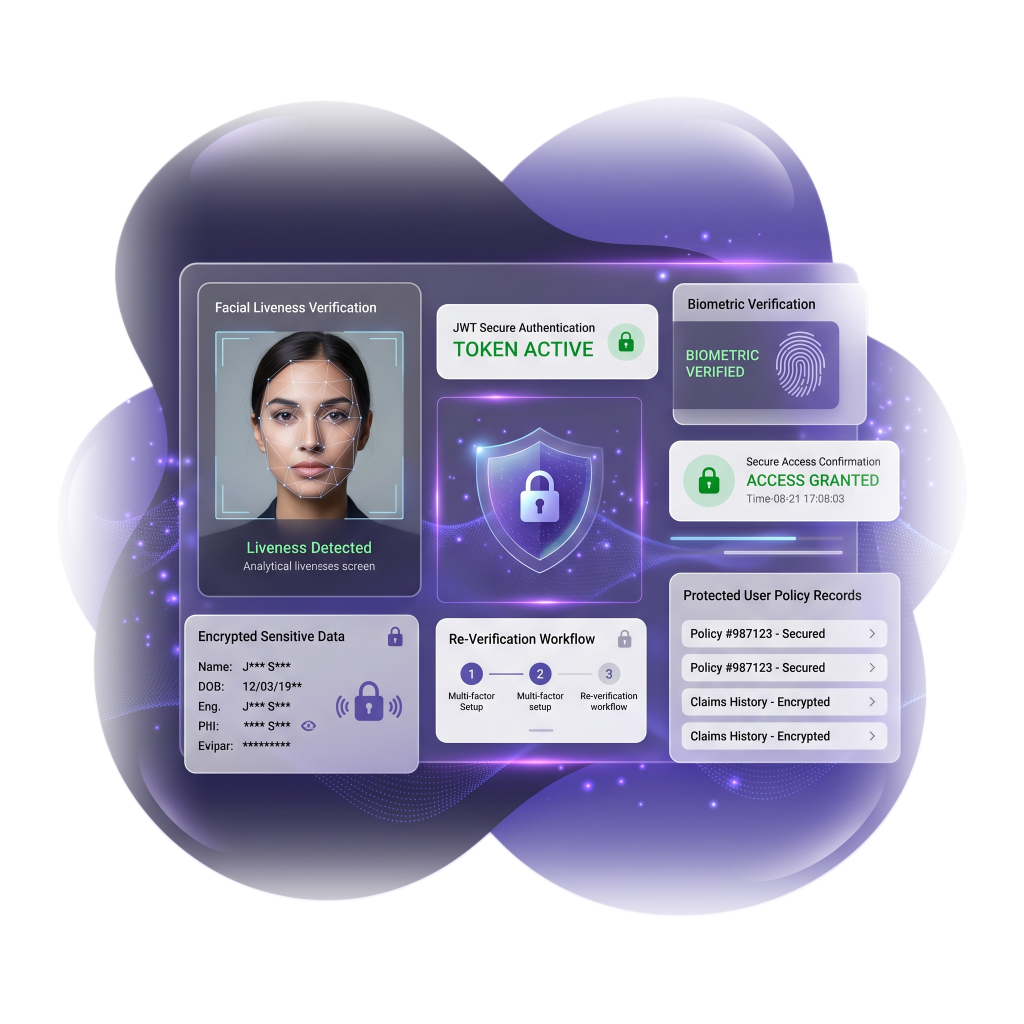
JWT-based authentication, encrypted data storage, and role-based access controls protect user and policy data across the platform. Each tier has its own access permissions and claims-handling rules, so the system scales without creating security gaps as coverage complexity grows.

sub heading component

What potential use cases AI-powered insurance platform?

The AI-powered insurance solution for agents helps

Smart Tier-Based Coverage

The pricing engine automatically assigns the right insurance plan based on item value and brand. Users see their tier and price in real time.

01

Frictionless Item Registration

Users register valuables with structured item inputs. The platform handles tier assignment and verification routing automatically, streamlining the entire onboarding flow for both users and agents.

02

Multi-Layer Verification for Trust

Receipt upload, card authentication submission, and real-image authentication all converge at person-image confirmation, giving insurers a verified ownership record before any coverage activates. This is the AI fraud detection in insurance layer that makes the platform commercially viable.

03

Instant Claims Pre-Assessment

AI anomaly scoring and intelligent case routing mean that straightforward claims move faster and complex or suspicious claims get the specialist attention they need. Agents spend less time on triage and more time on decisions that require judgment.

04

User-Centric Digital Insurance Experience

Real-time alerts, transparent policy terms, and a fully digital workflow give users visibility into their coverage at every stage, from registration through claims resolution. This is what modern AI software for insurance companies looks like when it is built around the user journey, not the legacy back-office process.

05

Scalable Insurer Integration

The platform connects to insurer systems through structured APIs, with a unified data model that handles different insurer formats without requiring custom integration work for each new partner. This is the architecture that makes insurance AI tools scalable across multiple carrier relationships.

06

sub heading component

Your questions answered here

Frequently Asked Questions

A policy management platform is the system that runs the policy lifecycle. It helps users sign up, register items, choose coverage, and keep policy status up to date. On the insurer side, it supports plan rules, verification status, and claim readiness. In RODI – II, the platform links item registration, tier selection, and verification into one flow. This reduces manual steps and gives clearer records for later claim checks. For decision-makers, the main value is control. You can define plan tiers, set pricing rules, and keep audit data in one place. This is also the base layer for automated insurance solutions, since automation needs clean inputs, clear status, and repeatable rules.

Insurance claim monitoring means tracking what is needed to review a claim before it turns into weeks of email back and forth. It starts earlier than most teams expect. If item details and proof are captured at onboarding, claim review becomes faster later. Monitoring also means seeing which claims are missing documents, which cases look unusual, and what needs a person to review. In RODI – II, the goal was to make the claim path “ready” by verifying items before coverage starts. This supports faster decisions, fewer disputes, and better customer trust. It also lowers ops cost since teams spend less time chasing basic proof.

Valuables coverage needs AI that can confirm ownership and reduce fraud risk. The most useful tools are image checks, document checks, and simple risk rules that map items to the right plan. For example, a platform can accept receipt photos, authentication cards, and item images. It can then run checks to confirm the item and the user match. This solves a common pain point: travelers often do not have clean proof of ownership when something goes wrong. AI can also support plan fit with tier selection and pricing rules based on item value and type. For many insurers, these are the first AI steps that show value without changing the full claims stack.

Tiered pricing groups items into coverage levels based on risk and value. In RODI – II, items are matched to Essential, Lifestyle Plus, or Elite Protect using item brand, model, and value. This approach helps users pick coverage without reading long policy text. For insurers, it sets a clear rule path. A pricing and tier engine can also add guardrails to reduce wrong inputs, like value ranges or required fields for high value items. It supports real-time pricing logic and reduces plan mismatch. That matters because mismatch creates claim disputes later.

Insurance claim monitoring software should answer basic questions fast: Is the item verified? What proof exists? What tier plan is active? What location and time data exists, if monitoring is part of the product? It should also show what is missing. For agent teams and ops teams, a clear status view reduces time spent asking the user for the same details. A good screen is simple: item record, verification record, policy record, and claim record. In RODI – II, verification status was designed to be a first-class signal, not a note in a comments thread. This makes reviews faster and reduces mistakes when claims volume grows.

Receipt gaps are common in travel insurance and valuables cover. Many items are gifts, old purchases, or bought abroad. A strong flow offers more than one proof path. RODI – II used three routes: receipt upload, authentication card upload, and photo-based review using clear photo rules. Each route ends with a user holding-item photo match to confirm ownership. This approach helps reduce claim denials caused by missing receipts. It also reduces fraud risk since ownership is checked before coverage starts. For insurer buy-in, this matters because it shifts the work earlier, when users are calm and have the item in hand.

Buying a tool can be fast, yet it often locks you into fixed workflows. A custom build fits better when your product needs unique steps like item verification, tier rules, or geolocation signals. It also helps when you are building a demo to win insurer partners, since you can shape the story and the screens around their questions. The tradeoff is clear: a custom platform needs good scope control. The best approach is to build only what proves the concept, end to end, then expand after partner feedback. That is what RODI – II did. It focused on the customer journey and the insurer review points, not every feature under the sun.

Agent teams need speed and clarity. The software should reduce hunting for information. It should show: who the user is, what item is covered, what proof exists, and what the plan tier is. It should also flag high-risk cases so agents know where to spend time. This supports better triage. It also reduces training time for new agents because the workflow is clear. In a valuables product, the agent view should connect item verification to claim readiness. If the item was verified early, the agent can move faster on review. If not, the system should guide what proof is needed so users do not guess and get rejected.

Insurers often worry about false approvals, unfair denials, and missing audit trails. They also worry about fraud rings and data quality. A strong answer is to design AI as a helper with clear rules and clear records. Keep a human review path for flagged cases. Keep a clear log of what was checked, what evidence was used, and what the system decided. RODI – II focused on pre-coverage verification, which reduces downstream risk. It also used multiple proof routes so users are not blocked when receipts are missing. Clear status and logs help with compliance reviews and partner trust.

Insurers want to see the full flow. A good demo shows sign up, item registration, plan selection, verification, policy status, and how claim readiness is tracked. It should also show how exceptions are handled, like missing receipts or low-quality images. The demo should make two things easy: user experience and insurer review. RODI – II focused on a smooth customer journey with working APIs, geolocation, and verification status. For decision-makers, this reduces partner risk. They can see how proof is captured and how fraud risk is reduced before a claim is filed.

Fraud control fails when it adds too many steps or asks for too much at once. The better approach is short steps with clear choices. Let users prove ownership in more than one way. Use image checks and document checks behind the scenes. Add guardrails on item value inputs. Then use a simple pass or needs-review status. This keeps the flow moving while still raising the bar for fraud. In RODI – II, the verification flow used receipt scans, authentication cards, or photo-based review, then a holding-item photo match. It protects the insurer without turning onboarding into a long form.

Yes, if the platform tracks the right events and outcomes. A policy management platform can capture: sign-up completion rate, item verification pass rate, time to verify, plan tier mix, and claim readiness status. These signals can support an insurer pitch because they show risk controls and user behavior. They can also shape a roadmap because they show where users drop off and where manual review happens. For example, if many users lack receipts, expand photo-based proof paths. If high value items need extra checks, refine tier rules. This links product work to partner questions, not guesses.

Build Your Own AI Solution for Insurance Agents With Tezeract

Rodi Phase II shows what is possible when an AI solution for insurance agents is built around the mechanics of verified ownership and automated risk assessment. Dynamic pricing that reflects the actual item value. Verification that confirms ownership before coverage activates. Fraud detection that works at registration, not after a claim is paid.

Whether you are building a consumer insurance product, a commercial platform for agents, or an insurance chatbot AI layer that handles policy queries and claims guidance at scale, Tezeract can design and build it. We build for your coverage types, your insurer integrations, and the fraud exposure profile specific to your market.

Ready to build an insurance platform that insurers trust and users actually use? Let’s talk.

WhatsApp