Introduction
Picture this: You’re running a warehouse where forklifts move like they’re in a choreographed dance, inventory levels adjust automatically before you even realize you’re running low, and your energy bills drop by 30% without sacrificing a single operation. Sound too good to be true?
Here’s the reality warehouse optimization with AI isn’t science fiction anymore. It’s happening right now in facilities across the globe, and the results are staggering. Companies implementing AI warehouse efficiency strategies are seeing cost reductions of up to 25% while boosting productivity by 40%.
But here’s what most warehouse managers don’t realize: you don’t need a massive budget or a complete overhaul to start seeing results. The key lies in understanding which AI cost reduction in warehouses strategies deliver the biggest impact for your specific operation.
At Tezeract, we’ve helped dozens of warehouse operations transform their efficiency using targeted AI solutions. Today, I’m going to walk you through 12 proven strategies that can revolutionize your warehouse from predictive maintenance that prevents costly breakdowns to AI-driven inventory management that eliminates stockouts and overstock situations.
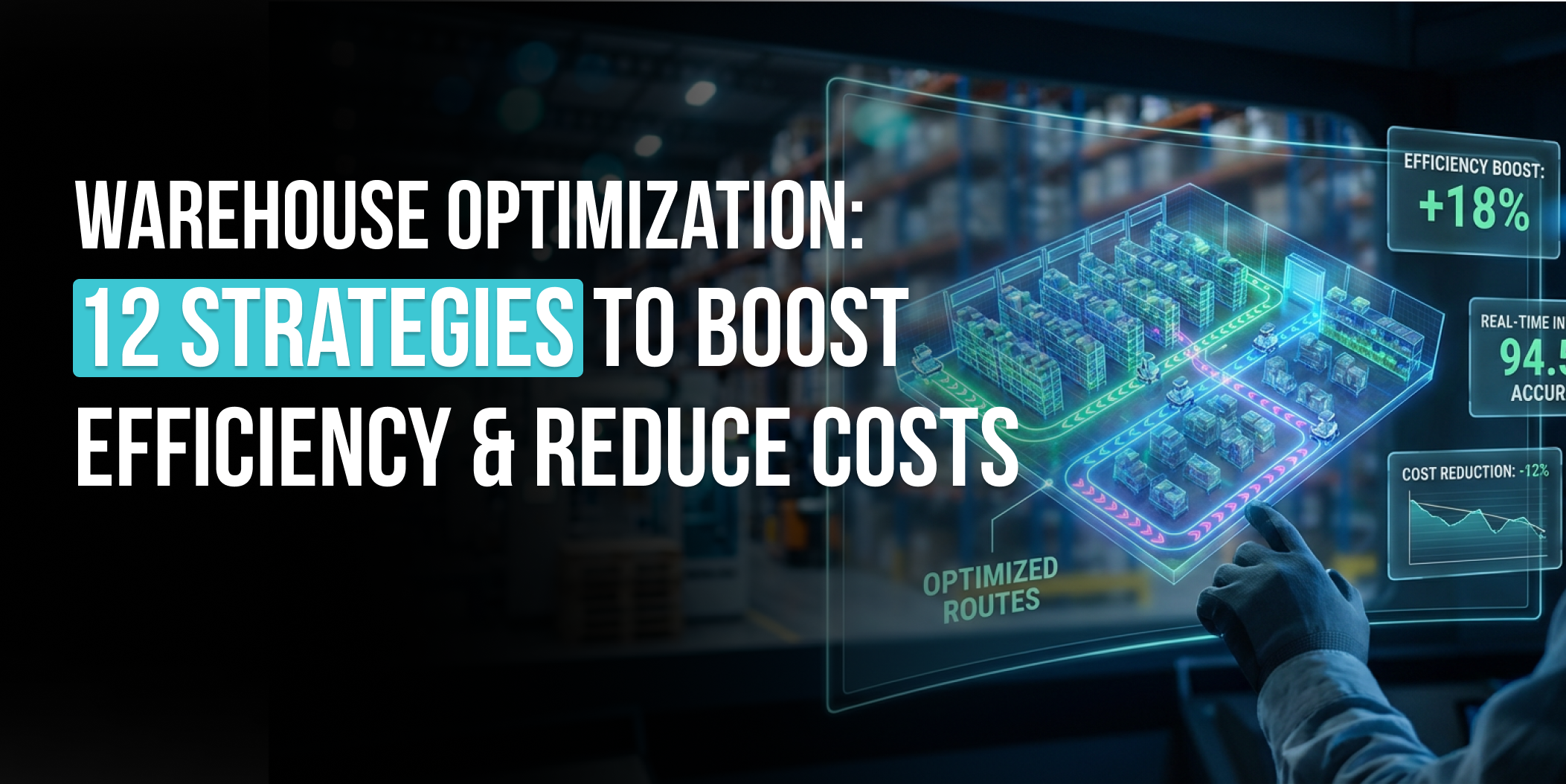
Warehouse Optimization With AI: 12 Strategies To Boost Efficiency & Reduce Costs
1. AI Driven Dynamic Slotting And Warehouse Layout Optimization
Think of your warehouse like a chess board every move matters, and the best players think several steps ahead. That’s exactly what dynamic slotting strategies powered by AI bring to your operations.
Traditional warehouses rely on static layouts that rarely change. But here’s the thing: your inventory patterns shift constantly. Seasonal products, trending items, and changing customer demands create a moving puzzle that manual planning simply can’t solve efficiently.
AI for inventory optimization analyzes historical data, current trends, and predictive patterns to automatically reorganize your warehouse layout. Instead of placing fast-moving items randomly, the system identifies optimal positions based on picking frequency, product relationships, and travel distances.
At Tezeract, we’ve seen clients reduce picking times by up to 35% using intelligent slotting algorithms. The AI continuously learns from your operations, adjusting slot assignments in real-time as demand patterns evolve.
The beauty lies in the details: AI considers factors like product weight, size compatibility, and seasonal variations simultaneously something that would take human planners weeks to calculate manually.
2. Real-Time Task Orchestration Using AI In Warehouse Management
Ever watched a symphony orchestra? Every musician knows exactly when to play their part, creating beautiful harmony. That’s what real-time task orchestration does for your warehouse operations.
AI in warehouse management transforms chaotic daily operations into synchronized workflows. Instead of workers wandering around looking for their next task, intelligent systems assign optimal activities based on location, skill level, and current priorities.
Here’s how it works: AI algorithms continuously monitor all warehouse activities incoming orders, inventory levels, staff locations, and equipment availability. The system then creates dynamic task sequences that minimize travel time and maximize productivity.
For example, when a picker finishes in aisle 12, the AI might direct them to a nearby putaway task instead of sending them across the warehouse. This warehouse process automation eliminates the guesswork and reduces idle time significantly.
Tezeract’s orchestration solutions have helped warehouses achieve 40% improvements in labor efficiency. The system learns from each decision, becoming smarter about task prioritization and resource allocation over time.
3. Machine Learning For Predictive Maintenance In Warehouse Operations
What if your equipment could tell you it needs maintenance before it breaks down? That’s not science fiction it’s predictive maintenance powered by machine learning, and it’s revolutionizing warehouse operations.
Traditional maintenance follows fixed schedules or waits for equipment failure. Both approaches cost money: over-maintenance wastes resources, while unexpected breakdowns halt operations entirely.
Predictive maintenance sensors continuously monitor equipment health, collecting data on vibration, temperature, usage patterns, and performance metrics. Machine learning algorithms analyze this information to identify subtle patterns that indicate potential failures.
The benefits of ai in warehouse operations become clear when you consider the numbers: predictive maintenance can reduce equipment downtime by up to 50% and maintenance costs by 25%. Instead of replacing parts on schedule, you replace them precisely when needed.
Tezeract’s predictive maintenance solutions go beyond simple alerts. Our AI provides specific recommendations: which component needs attention, the optimal maintenance window, and even parts ordering suggestions. This proactive approach keeps your warehouse running smoothly while optimizing maintenance budgets.
4. AI Optimized Labor Planning And Scheduling
Staffing a warehouse feels like solving a complex puzzle daily. You need the right people, with the right skills, at the right time and traditional scheduling methods often miss the mark.
AI strategies to reduce warehouse costs include intelligent workforce planning that considers multiple variables simultaneously. The system analyzes historical patterns, seasonal trends, order forecasts, and individual worker capabilities to create optimal schedules.
Think about it: Monday mornings might need more receiving staff, while Friday afternoons require additional pickers for weekend orders. AI identifies these patterns and automatically adjusts staffing recommendations.
The technology also considers worker preferences, skill certifications, and performance metrics. Instead of generic assignments, each employee receives tasks matched to their strengths and availability.
Warehouse management systems integrated with AI scheduling have shown remarkable results. Our clients typically see 20-30% improvements in labor productivity and significant reductions in overtime costs.
Tezeract’s workforce optimization platform learns continuously, adapting to changing business needs and seasonal variations. The result? Right-sized teams that deliver maximum efficiency without burning out your valuable employees.
5. Computer Vision For Inventory Accuracy And Exception Management
Imagine having eyes everywhere in your warehouse eyes that never get tired, never miss details, and can spot problems instantly. That’s the power of computer vision in modern warehouse operations.
AI quality control inspection uses advanced cameras and machine learning to monitor inventory accuracy in real-time. Instead of periodic cycle counts that disrupt operations, the system continuously verifies stock levels and locations.
Here’s where it gets interesting: computer vision doesn’t just count items. It identifies damaged products, misplaced inventory, and picking errors before they become costly problems. Automated quality checks catch issues that human inspectors might miss during busy periods.
The technology excels at exception management too. When something doesn’t match expected patterns wrong item in a location, damaged packaging, or unusual activity the system immediately flags it for attention.
Examples of ai applications in warehouse management for cost reduction include reducing inventory shrinkage by up to 15% and improving order accuracy to 99.8%. These improvements directly impact customer satisfaction and operational costs.
Tezeract’s computer vision solutions integrate seamlessly with existing warehouse management systems, providing real-time insights without disrupting daily operations. The result is unprecedented inventory accuracy with minimal human intervention.
6. AI-Enhanced Receiving, Putaway, And Cross-Docking
The receiving dock is where efficiency either starts strong or stumbles from the beginning. AI driven techniques to improve warehouse space utilization transform these critical processes from bottlenecks into competitive advantages.
Traditional receiving relies on manual inspection, paper-based tracking, and guesswork about optimal storage locations. AI changes everything by automating decision-making at every step.
When trucks arrive, computer vision systems automatically identify products, verify quantities, and assess quality. The AI then determines optimal putaway locations based on current inventory levels, demand forecasts, and space utilization patterns.
For cross-docking operations, timing is everything. AI coordinates inbound and outbound shipments, minimizing storage time and maximizing dock efficiency. The system can predict when products should arrive and automatically schedule outbound transportation.
Supply chain optimization becomes seamless when receiving processes are AI-enhanced. Products flow through your facility faster, with fewer touches and reduced handling costs.
Tezeract’s receiving optimization solutions have helped clients reduce processing time by up to 45% while improving accuracy. The AI learns from each shipment, continuously refining its recommendations for maximum efficiency.
7. AI Role In Optimizing Warehouse Robotics And Human-Robot Collaboration
Robots and humans working together might sound like a futuristic concept, but it’s happening right now in warehouses worldwide. The key is intelligent orchestration that maximizes both robotic efficiency and human capabilities.
Robotic picking systems excel at repetitive tasks, heavy lifting, and precise movements. Humans bring creativity, problem-solving skills, and adaptability. AI bridges these strengths by coordinating collaborative workflows.
The technology determines optimal task allocation in real-time. Should a robot handle the bulk picking while humans manage exceptions? Or should they work together on complex orders? AI makes these decisions based on current conditions and performance data.
Robotic process automation extends beyond physical tasks to include data processing, order routing, and inventory updates. This comprehensive automation reduces manual errors and frees human workers for higher-value activities.
Safety is paramount in human-robot collaboration. AI systems continuously monitor interactions, ensuring safe distances and preventing accidents through predictive algorithms.
Tezeract’s robotics integration platform creates seamless human-robot teams that outperform either working alone. Our clients typically see 50% productivity improvements while maintaining the flexibility that only human workers can provide.
8. Autonomous AI Agents For Self-Healing Warehouse Operations
What if your warehouse could fix problems automatically, without human intervention? Autonomous AI agents make this possible by creating self-healing operations that adapt and recover from disruptions instantly.
These intelligent agents continuously monitor all warehouse systems from conveyor belts to inventory levels. When problems arise, they don’t just alert managers; they take corrective action immediately.
For example, if a conveyor section fails, the AI agent automatically reroutes traffic, adjusts picking assignments, and notifies maintenance all within seconds. Warehouse optimization ai reaches new levels when systems can self-correct.
The agents learn from every incident, building knowledge bases that improve response times and solution effectiveness. They can predict potential issues and take preventive measures before problems impact operations.
How to use ai to reduce warehouse operating costs becomes clear when you eliminate the delays and inefficiencies caused by manual problem-solving. Autonomous agents work 24/7, ensuring consistent performance even during off-hours.
Tezeract’s autonomous agent platform has helped warehouses achieve 99.5% uptime while reducing operational costs by 20%. The system creates truly resilient operations that adapt to challenges automatically.
9. Network-Aware Warehouse Optimization Strategies
Your warehouse doesn’t operate in isolation it’s part of a complex supply chain network. Warehouse optimization with ai strategies to boost efficiency must consider this broader context for maximum impact.
Network-aware optimization analyzes relationships between multiple facilities, transportation routes, and customer locations. Instead of optimizing each warehouse independently, AI creates coordinated strategies that benefit the entire network.
The system considers factors like transportation costs, delivery timeframes, and regional demand patterns when making inventory and fulfillment decisions. Should a particular order ship from the nearest warehouse or one with excess capacity?
Demand forecasting accuracy improves dramatically when AI analyzes network-wide patterns rather than isolated facility data. The system identifies trends that might not be visible at the individual warehouse level.
Inventory positioning becomes strategic rather than reactive. AI determines optimal stock levels and locations across the network, reducing total inventory investment while improving service levels.
Tezeract’s network optimization solutions have helped multi-facility operations reduce transportation costs by 25% while improving delivery performance. The key is thinking beyond individual warehouses to optimize the entire supply chain ecosystem.
10. Energy Efficiency In Warehouses Through AI Analytics
Energy efficiency in warehouses represents a massive opportunity for cost reduction that many operations overlook. AI analytics can cut energy consumption by 20-30% without impacting operational performance.
Traditional warehouses operate lighting, heating, and cooling systems on fixed schedules or manual controls. AI transforms this approach by creating dynamic energy management systems that respond to real-time conditions.
The technology analyzes occupancy patterns, weather data, and operational schedules to optimize energy usage continuously. Lights dim automatically in unused areas, HVAC systems adjust based on actual needs, and equipment operates at peak efficiency.
AI warehouse efficiency strategies include predictive algorithms that anticipate energy needs based on planned activities. If a large shipment is arriving, the system can pre-cool refrigerated areas or increase lighting in receiving zones.
Smart sensors throughout the facility provide real-time feedback on energy consumption, allowing AI to identify inefficiencies and optimization opportunities instantly.
Tezeract’s energy optimization platform has helped warehouses reduce utility costs by up to 35% while maintaining optimal working conditions. The system pays for itself through energy savings alone, making it one of the fastest ROI improvements available.
11. Centralized Intelligence Layer: Integrating Fragmented Systems
Most warehouses run on multiple disconnected systems WMS, ERP, transportation management, and various specialized tools. This fragmentation creates inefficiencies and blind spots that AI can eliminate through centralized intelligence.
A centralized intelligence layer acts as the brain of your operation, connecting all systems and creating unified decision-making capabilities. Instead of each system operating independently, AI coordinates activities across platforms.
AI driven inventory management becomes exponentially more powerful when it can access data from all sources simultaneously. The system sees the complete picture: current inventory, incoming shipments, pending orders, and resource availability.
This integration enables sophisticated optimization that considers all variables simultaneously. For example, the AI might delay a non-urgent putaway task to prioritize an expedited order, automatically coordinating between multiple systems.
Data flows seamlessly between platforms, eliminating manual data entry and reducing errors. Updates in one system automatically trigger appropriate actions in others.
Tezeract’s integration platform connects disparate warehouse systems into cohesive, intelligent operations. Our clients typically see 30% improvements in overall efficiency simply by eliminating system silos and enabling coordinated decision-making.
12. ROI-Driven AI Governance And Vendor Selection For Warehouse Optimization
Implementing ai cost reduction in warehouses requires strategic thinking about ROI, vendor selection, and governance. Not all AI solutions deliver equal value, and choosing the wrong approach can waste resources.
Start by identifying your biggest pain points and quantifying their costs. Are picking errors costing more than energy inefficiency? Is labor scheduling more critical than predictive maintenance? Prioritize AI investments based on potential impact.
AI driven pick path optimization might deliver faster ROI than complex robotics integration, depending on your specific challenges. The key is matching solutions to problems systematically.
Vendor selection requires careful evaluation of technical capabilities, integration requirements, and ongoing support. Look for partners who understand warehouse operations, not just AI technology.
Governance frameworks ensure AI implementations deliver promised results. Establish clear metrics, regular reviews, and continuous improvement processes from day one.
Tezeract approaches warehouse AI with ROI-focused strategies that deliver measurable results. We help clients identify high-impact opportunities, select appropriate technologies, and implement governance frameworks that ensure long-term success. Our proven methodology has helped warehouses achieve average ROI of 300% within 18 months.
Conclusion
Ready To Transform Your Warehouse Operations?
The warehouse optimization landscape is evolving rapidly, and AI warehouse efficiency strategies are no longer a luxury they’re becoming essential for staying competitive. From dynamic slotting that cuts picking times by 35% to predictive maintenance that slashes downtime by 50%, the benefits of AI in warehouse operations are clear and measurable.
But here’s what I’ve learned after years in this space: success isn’t just about implementing the latest technology. It’s about choosing the right AI strategies to reduce warehouse costs that align with your specific operational challenges and business goals.
Think about it would you rather invest in a dozen different point solutions, or work with a partner who understands how warehouse optimization AI fits into your broader business strategy? The companies seeing 300% ROI aren’t just buying software; they’re building comprehensive systems that grow with their needs.
If you’re curious about how AI can enhance your business, you might find it helpful to book a strategy session. This session helps businesses uncover high-ROI AI opportunities using Business Impact Framework. It’s ideal for business owners or operators looking to improve automation, accuracy, or growth with AI especially in industries like retail, healthcare, or marketing.