Introduction
Are you confused about the difference between LLMs and generative AI for your business? You’re not alone. Many business leaders struggle to understand how these AI technologies can transform their operations. While both involve artificial intelligence, the distinction between LLM vs generative AI is crucial for making informed decisions. Large language models excel at natural language processing tasks, while generative AI applications span broader creative and analytical functions. Understanding these differences helps businesses choose the right AI for customer support, text generation, and other critical operations that drive growth.
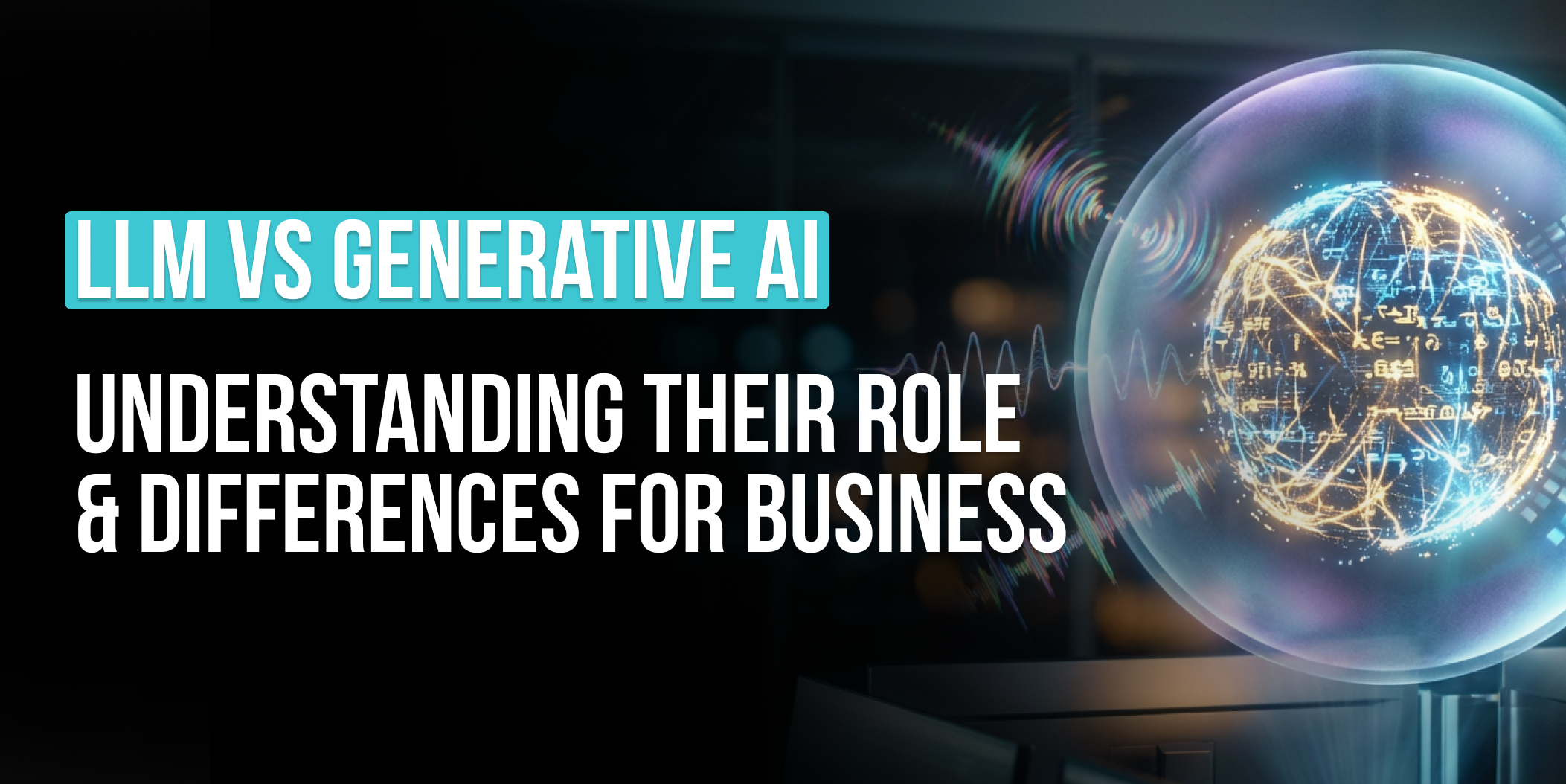
LLM Vs Generative AI: Understanding Their Role & Differences For Business
When business leaders explore AI solutions, they often encounter two powerful technologies that seem similar but serve distinct purposes. Understanding the difference between generative AI vs llm technologies is crucial for making strategic decisions that drive real business value.
Large language models represent a specialized subset of artificial intelligence focused primarily on understanding and generating human language. These systems excel at tasks like customer support automation, content creation, and document analysis. Meanwhile, generative AI vs large language models comparison reveals that generative AI encompasses a broader spectrum of creative capabilities, including image generation, code creation, and multimedia content production.
The distinction between llm vs generative AI becomes particularly important when considering AI in business applications. While LLMs shine in text-heavy operations like chatbots and content management, generative AI offers versatility across multiple content formats and creative processes.
For business leaders, this understanding shapes technology investment decisions. Companies focusing on customer communication and text processing might prioritize LLM solutions, while organizations requiring diverse content creation capabilities may benefit more from comprehensive creative industries platforms.
At Tezeract, we help businesses navigate these choices by analyzing specific operational needs and recommending the most effective AI approach for sustainable growth and competitive advantage.
Key Differences Between LLMs And Generative AI For Business
1. Technology Foundations
When examining the llm vs generative AI landscape, the foundational technologies reveal distinct architectural approaches. Large language models operate on transformer architectures specifically optimized for understanding and generating human language through extensive training on text datasets. These models excel at processing sequential data and maintaining context across lengthy conversations or documents. Generative AI, however, encompasses a broader technological spectrum including variational autoencoders, generative adversarial networks, and diffusion models. This diversity allows generative AI systems to handle multiple data modalities beyond text, creating a more versatile but complex technological foundation that requires different expertise and infrastructure considerations for business implementation.
2. Types Of Outputs
The output capabilities highlight one of the most significant large language models vs generative AI distinctions for business applications. LLMs primarily generate text-based outputs including written content, code, summaries, translations, and conversational responses. Their strength lies in maintaining coherent, contextually appropriate language across various formats and styles. Generative AI platforms produce a much wider array of outputs encompassing images, videos, audio, 3D models, and synthetic data alongside text generation. This broader creative scope means businesses can leverage generative AI use cases spanning marketing materials, product prototypes, training simulations, and multimedia content creation, offering more comprehensive solutions for companies requiring diverse creative assets.
3. Range Of Applications
Business applications reveal how llms differ from generative AI in business contexts through their specialized strengths. LLMs dominate text-centric operations including customer service automation, document analysis, legal research, financial reporting, and content marketing. Their precision in language understanding makes them ideal for industries like finance, healthcare, and legal services where accuracy and context matter most. Generative AI applications extend across creative industries, manufacturing, entertainment, and product development. Companies use generative AI for concept visualization, rapid prototyping, personalized marketing campaigns, and synthetic data generation for training purposes, demonstrating broader applicability across diverse business sectors.
4. Scalability And Flexibility
Scalability considerations differ significantly between these technologies, impacting long-term business strategy. LLMs offer straightforward scaling through llm fine tuning processes, allowing businesses to adapt pre-trained models for specific domains or use cases with relatively modest computational resources. This approach enables rapid deployment and customization for text-focused applications. Generative AI systems require more complex scaling strategies due to their multi-modal nature and diverse output requirements. However, this complexity translates into greater flexibility for businesses needing comprehensive creative solutions. Understanding how do llms and generative AI impact business operations helps organizations choose the right scaling approach based on their growth trajectory, resource availability, and long-term strategic objectives.
Understanding LLM Vs Generative AI Roles In Business
Large Language Models In Business Contexts
When businesses evaluate AI solutions, understanding llm vs generative AI becomes crucial for making informed decisions. Large Language Models excel in text-heavy business operations where precision and context matter most. Think customer support automation, where LLMs can handle complex queries while maintaining conversation flow across multiple interactions.
In financial services, LLMs process loan applications, analyze credit reports, and generate compliance documentation with remarkable accuracy. Legal firms use them for contract analysis, case research, and document drafting. Healthcare organizations leverage LLMs for patient record analysis, medical coding, and clinical documentation.
What makes LLMs particularly valuable is their ability to understand nuanced business language. They grasp industry-specific terminology, regulatory requirements, and company policies. This deep comprehension allows them to provide contextually appropriate responses that align with business standards.
At Tezeract, we’ve seen LLMs transform operational efficiency for our clients. One manufacturing client reduced their technical documentation time by 60% using our customized LLM solution. The model understood their specific processes, safety protocols, and quality standards, generating accurate technical manuals that previously required weeks of manual work.
Generative AI Capabilities Beyond Language
While LLMs focus on language mastery, generative AI opens doors to creative possibilities that extend far beyond text. This broader scope makes generative AI vs llms a fascinating comparison for businesses seeking comprehensive AI solutions.
Generative AI creates visual content for marketing campaigns, designs product prototypes, and generates synthetic training data for machine learning models. Retail companies use it to create personalized product images, while architecture firms generate building concepts and interior designs. Manufacturing businesses leverage generative AI for part optimization and stress testing simulations.
The multimedia capabilities are particularly impressive. Generative AI produces videos for training programs, creates audio content for podcasts, and develops interactive presentations. Marketing teams use it to generate brand-consistent visuals across multiple channels, ensuring cohesive messaging while reducing production costs.
What sets generative AI apart is its ability to work across data modalities simultaneously. It can combine text descriptions with visual elements, merge audio with video content, and create immersive experiences that engage customers on multiple sensory levels. This versatility makes it invaluable for businesses requiring creative solutions that traditional text-based AI cannot provide.
Business Applications: Gen AI And LLMs
1. Customer Service Automation
When it comes to customer service automation, the llm vs generative AI debate becomes crystal clear. LLMs excel at understanding customer intent, managing complex queries, and maintaining conversation context across multiple touchpoints. They can process support tickets, provide personalized responses, and escalate issues intelligently. For instance, we’ve helped clients implement LLM-powered chatbots that reduced response times by 70% while maintaining human-like conversation quality. These systems understand nuanced customer emotions and can adapt their tone accordingly, creating more satisfying customer experiences that drive loyalty and reduce operational costs.
2. Marketing And Content Generation
Marketing teams face a constant challenge: creating fresh, engaging content at scale. This is where understanding what are the key differences between llms and generative AI for business becomes crucial. LLMs specialize in crafting compelling copy, email campaigns, and social media posts that align with brand voice. They can analyze customer data to personalize messaging and generate product descriptions that convert. Meanwhile, generative AI creates visual assets, video content, and interactive experiences. Smart businesses combine both technologies using LLMs for text-heavy campaigns and generative AI for visual storytelling that captures attention across digital channels.
3. Knowledge Management And Analysis
Knowledge management transforms when businesses leverage AI strategically. LLMs excel at processing vast amounts of internal documentation, creating searchable knowledge bases, and extracting insights from unstructured data. They can summarize lengthy reports, identify patterns in customer feedback, and generate actionable recommendations. We’ve seen companies reduce research time by 60% using LLM-powered knowledge systems. These tools can analyze market trends, competitor intelligence, and internal performance metrics to provide executives with clear, data-driven insights. The result? Faster decision-making and more informed strategic planning that drives competitive advantage.
4. Visual And Audio Content Creation
Visual and audio content creation showcases generative AI’s unique strengths in business applications. Unlike traditional content tools, generative AI can create product mockups, architectural renderings, and marketing visuals from simple text descriptions. It generates podcast intros, background music, and even synthetic voices for training materials. Companies use this technology for rapid prototyping, creating diverse marketing assets, and producing multilingual content without extensive production teams. The speed and cost-effectiveness are remarkable what once took weeks of design work now happens in hours, enabling businesses to test creative concepts quickly and iterate based on real market feedback.
What Are The Advantages Of Using LLMs Over Generative AI For Business?
1. Accuracy And Contextual Awareness
When it comes to understanding nuance and delivering precise responses, LLMs shine brightest. Unlike broader generative AI systems that might produce creative but sometimes inaccurate outputs, LLMs excel at maintaining context throughout lengthy conversations and documents. They can remember what was discussed earlier in a conversation, understand implied meanings, and provide responses that align perfectly with the specific business context. This accuracy becomes crucial when handling customer inquiries, processing legal documents, or analyzing complex business data where precision isn’t just preferred it’s essential for maintaining trust and avoiding costly mistakes. Learn more about AI in the legal industry.
2. Specialized Language Understanding
Here’s where the llm vs generative AI debate gets interesting: LLMs demonstrate superior comprehension of industry-specific terminology, regulatory language, and complex business communications. They can parse through technical documentation, understand compliance requirements, and maintain consistency in professional correspondence. While generative AI might create visually appealing content, LLMs process the subtle differences between ‘may,’ ‘shall,’ and ‘will’ in contracts, or distinguish between casual and formal communication styles. This specialized understanding makes them invaluable for businesses that rely heavily on precise language interpretation and generation. Explore how legal document automation helps law firms.
3. Brand Consistency And Fine-Tuning
One of the most compelling llm vs generative AI business applications lies in brand voice consistency. LLMs can be fine-tuned to match your company’s specific tone, style, and messaging guidelines across all communications. Whether you’re responding to customer emails, creating internal documentation, or generating marketing copy, a well-trained LLM maintains your brand’s personality consistently. At Tezeract, we’ve seen businesses achieve remarkable consistency in their communications by implementing custom-trained LLMs that understand not just what to say, but how to say it in a way that reflects their unique brand identity and values.
Implementation Considerations For Enterprises
1. Workflow Integration
When evaluating llm vs generative AI for your business operations, seamless workflow integration becomes the cornerstone of success. The key lies in identifying where each technology fits naturally into your existing processes. LLMs excel at automating text-heavy workflows like customer service responses, document analysis, and internal communications. Meanwhile, generative AI transforms creative workflows by producing marketing materials, product designs, and visual content. Start by mapping your current processes and identifying bottlenecks where AI can add immediate value. Consider API compatibility, user training requirements, and the learning curve for your team. The most successful implementations begin with pilot programs in non-critical areas, allowing teams to adapt gradually while measuring impact.
2. Cost And Roi Factors
Understanding the financial implications of genai vs llms requires looking beyond initial implementation costs. LLMs typically offer faster ROI in text-processing scenarios due to their precision and lower error rates, reducing manual review time. Generative AI investments often show returns through enhanced creativity and faster content production cycles. Calculate total cost of ownership including licensing, infrastructure, training, and ongoing maintenance. Factor in productivity gains, error reduction, and time savings when measuring success. Many enterprises see 30-40% efficiency improvements within six months of proper implementation. Consider starting with cloud-based solutions to minimize upfront infrastructure investments while testing effectiveness across different use cases.
3. Governance And Compliance
Navigating governance and compliance requires understanding how llm generative AI differences impact regulatory requirements. LLMs processing sensitive text data need robust privacy controls and audit trails, especially in healthcare, finance, and legal sectors. Generative AI creating visual content must comply with copyright laws and brand guidelines. Establish clear data governance policies covering model training, output review, and human oversight protocols. Implement version control for AI-generated content and maintain detailed logs for compliance audits. Regular bias testing and performance monitoring ensure consistent quality standards. Create approval workflows for AI outputs in regulated environments, balancing automation benefits with necessary human oversight to meet industry-specific compliance requirements.
Conclusion
Understanding the difference between generative AI vs LLM isn’t just about technology itâs about making smart business decisions. Whether you choose LLMs for precise text processing or generative AI for creative content, success depends on aligning these tools with your specific goals. The LLM vs generative AI debate ultimately comes down to your business needs and implementation strategy. Ready to explore which approach fits your organization? If you’re curious about how AI can enhance your business, you might find it helpful to schedule a session. This session helps businesses uncover high-ROI AI opportunities using the Business Impact Framework.