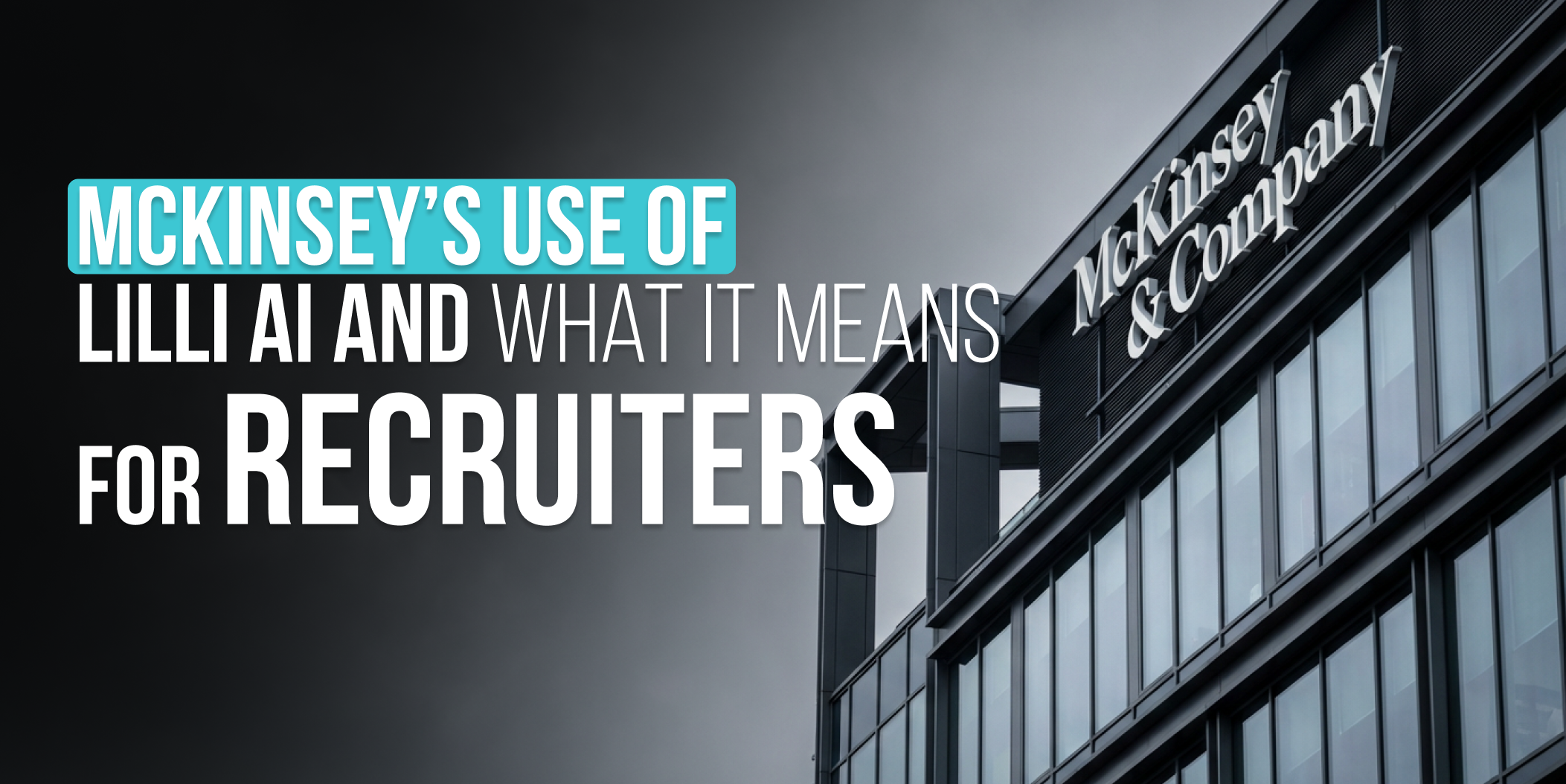
So McKinsey just rolled out Lilli AI for their graduate hiring process, and honestly? The recruitment world hasn’t stopped talking about it since. I’ve been watching this unfold, and what strikes me most isn’t just the technology itself—it’s what it signals about where we’re all headed by 2026.
Look, I get it. When you first hear about McKinsey Lilli AI handling candidate interactions, your stomach probably does that weird flip thing. Mine did too. But after digging into what’s actually happening here, I realized this isn’t the nightmare scenario some folks are painting. It’s more complicated than that. And way more interesting.
What we’re seeing with McKinsey AI hiring is basically a preview of 2026. The consulting giant isn’t just testing some fancy chatbot—they’re fundamentally rethinking how talent acquisition works at scale. And whether you’re a recruiter, a hiring manager, or someone who just wants to understand where jobs are going, you need to pay attention to this.
Here’s what I’ve learned from watching this rollout, talking to people in the trenches, and honestly, losing some sleep over what it all means.
What Exactly Is Lilli AI and Why Should Recruiters Care?
What is Lilli AI? At its core, Lilli is McKinsey’s proprietary generative AI platform that they’ve now adapted for recruitment. Think of it as an incredibly sophisticated AI chatbot recruitment tool that can conduct initial candidate screenings, answer questions about roles, assess responses, and even provide personalized feedback—all without a human recruiter touching the interaction.
But calling it just a chatbot feels like calling a smartphone just a phone. Lilli analyzes communication patterns, evaluates problem-solving approaches, and adapts its questioning based on candidate responses in real-time. It’s handling what used to take recruiters hours of phone screens and preliminary interviews.
Now, I know what you’re thinking. “Great, another tool trying to replace us.” I thought the same thing at first. But after watching how McKinsey is actually deploying this for their graduate hiring AI process, I noticed something interesting—their recruiters aren’t disappearing. They’re doing different work. More strategic work.
The McKinsey AI recruitment strategy isn’t about eliminating human recruiters. It’s about letting AI handle the repetitive, time-consuming parts so humans can focus on what we’re actually good at—building relationships, making nuanced judgment calls, and selling candidates on opportunities.
What makes this particularly relevant for 2026 is the timing. McKinsey isn’t some scrappy startup experimenting with unproven tech. When a firm of their caliber commits to AI in job interviews at this scale, it sends a signal to every other organization: this is the direction we’re all heading.
The reality is that AI tools for interview processes aren’t coming—they’re already here. McKinsey’s Lilli is just the most visible example of a trend that’s accelerating faster than most people realize.
The Real Fear: Will AI Replace Recruiters by 2026?
Let me be straight with you—this is the question keeping recruiters up at night. I’ve talked to dozens of talent acquisition professionals over the past few months, and the anxiety is real. When you see McKinsey Lilli AI conducting interviews that you used to do, it’s hard not to wonder if your job is next on the chopping block.
But here’s where I think the conversation gets it wrong. The question isn’t “Will AI replace recruiters?” It’s “What will recruiters do when AI handles the grunt work?”
I was talking to a recruiter friend last month who put it perfectly. She said, “I spent three hours yesterday doing phone screens with candidates who weren’t even qualified. Three hours I could’ve spent building relationships with hiring managers or creating a better candidate experience for our finalists.” That’s the actual problem AI solves.
The future of recruiting with AI isn’t about replacement—it’s about elevation. When AI chatbot recruitment tools handle initial screenings, recruiters get promoted to what I call “strategic talent advisors.” You’re not scheduling calls and asking basic qualification questions anymore. You’re analyzing market trends, building talent pipelines, negotiating complex offers, and becoming a genuine business partner.
Now, I’m not going to sugarcoat this. Some recruiter roles will change dramatically. If your entire job is conducting first-round phone screens and checking if candidates meet basic requirements, yeah, that’s going to get automated. But most recruiters do way more than that, and those additional skills become your competitive advantage.
What McKinsey AI hiring demonstrates is that the firms winning the talent war in 2026 will be the ones who figured out how to blend AI efficiency with human insight. McKinsey isn’t firing their recruiters—they’re empowering them to focus on higher-value work.[IMAGE REQUIRED: Infographic showing the evolution of recruiter responsibilities from 2020 to 2026, with administrative tasks decreasing and strategic activities increasing][IMAGE ALT TAG: recruiter-role-evolution-ai-recruitment-2026]
The recruiters who’ll struggle are the ones who resist learning how to work alongside AI. The ones who’ll thrive are those who see AI tools for recruiters 2026 as amplifiers of their human skills, not replacements for them.
I’ve seen this pattern before in other industries. When email came along, people worried it would eliminate the need for business development professionals. Instead, it just changed how they worked. Same thing here. The core skills of recruitment—understanding people, building trust, negotiating, strategic thinking—those aren’t going anywhere. The tedious parts? Yeah, those are getting automated. And honestly? Good riddance.
The Skills Gap: Why Most Recruiters Aren’t Ready for AI
Okay, real talk for a second. I attended a recruitment conference last fall, and they did this informal poll. They asked how many recruiters felt confident using AI tools in their daily work. Out of maybe 200 people in the room, about 15 hands went up. Fifteen.
That’s the actual problem we’re facing with McKinsey Lilli AI and similar platforms. It’s not that the technology is coming—it’s that most recruiters have no idea how to use it effectively. And that gap is only getting wider as we head toward 2026.
I’ve watched organizations invest six figures in AI recruiting tech only to have it sit there, underutilized, because nobody really understood how to integrate it into their workflow. It’s like buying a Ferrari and only driving it to the grocery store. You’ve got this incredible capability, but you’re not tapping into even 20% of what it can do.
The skill gaps I’m seeing fall into three main buckets. First, there’s basic AI literacy. Most recruiters can’t explain how machine learning works, what training data means, or why algorithmic bias matters. You don’t need a computer science degree, but you need to understand the fundamentals of what these tools are actually doing.
Second, there’s data interpretation. AI in recruitment 2026 generates massive amounts of data—candidate engagement metrics, sourcing effectiveness scores, predictive quality-of-hire indicators. But data without interpretation is just noise. I’ve seen recruiters stare at dashboards full of insights and have no idea what action to take based on what they’re seeing.
Third, and this one’s subtle, there’s strategic thinking about when to use AI and when to stay human. Not every interaction should be automated. Knowing when a candidate needs a personal touch versus when AI can handle it efficiently—that’s a skill that requires judgment and experience.
According to research from the Society for Human Resource Management (https://www.shrm.org/topics-tools/news/technology/ai-adoption-hr-accelerating), only 38% of HR professionals report having received any formal training on AI tools, despite 58% of organizations already using some form of AI in their recruitment process. That’s a massive disconnect.
What’s frustrating is that upskilling recruiters for AI isn’t actually that hard. I’ve seen teams go from AI-anxious to AI-confident in a matter of months with the right training approach. But it requires intentional investment, not just throwing people into the deep end and hoping they figure it out.[IMAGE REQUIRED: Skills matrix diagram showing traditional recruiter skills on one axis and emerging AI-related competencies on the other, with a highlighted zone showing the ideal blend for 2026][IMAGE ALT TAG: recruiter-skills-matrix-ai-competencies-2026]
The consulting jobs AI test that McKinsey is running with Lilli isn’t just evaluating candidates—it’s also testing how well their internal recruitment team can adapt to AI-augmented workflows. And from what I’m hearing through the grapevine, the learning curve is real, even for a sophisticated organization like McKinsey.
Here’s what I tell recruiters who ask me about preparing for this shift: Start small. Pick one AI tool and actually learn it inside and out. Understand what it’s good at and where it falls short. Then gradually expand your toolkit. You don’t need to become a data scientist, but you do need to become comfortable with technology as a core part of your role.
The recruiters who are thriving with AI tools for recruiters 2026 are the ones who stopped seeing technology as something separate from recruitment and started seeing it as an integrated part of how modern talent acquisition works. They’re not fighting the change—they’re riding it.
How Lilli AI Actually Changes the Candidate Experience
I had a conversation with a recent graduate who went through McKinsey’s AI-powered application process, and her perspective completely shifted how I think about AI chatbot recruitment from the candidate side. She told me, “Honestly? It was kind of refreshing. I got immediate responses, clear feedback, and didn’t have to wait three weeks just to hear if I made it past the first round.”
That surprised me. I’d been so focused on the recruiter side of things that I hadn’t fully considered how candidates might actually prefer some aspects of AI in job interviews. But when you think about it, the traditional recruitment process is often frustratingly slow and opaque from a candidate perspective.
With McKinsey Lilli AI, candidates get instant engagement. They can ask questions about the role at 11 PM on a Sunday and get detailed answers immediately. They receive feedback on their responses in real-time rather than waiting days or weeks. For candidates who value efficiency and transparency, this is actually an upgrade.
But—and this is a big but—there’s a real risk of making the process feel cold and robotic if you’re not careful. I’ve seen some organizations go so heavy on automation that candidates feel like they’re just data points being processed by a machine. And top-tier candidates, the ones everyone’s competing for, they notice that. They care about it.
The McKinsey AI recruitment strategy seems to recognize this balance. From what I understand, they’re using Lilli for initial screening and information gathering, but they’re very intentional about bringing human recruiters in at strategic points. It’s not an either-or proposition—it’s a carefully orchestrated handoff between AI efficiency and human connection.
What I find interesting is how personalized candidate experience AI can actually be when it’s done right. Lilli can remember every interaction a candidate has had, tailor questions based on their specific background, and provide customized resources that match their interests. That level of personalization would be nearly impossible for a human recruiter managing 50+ candidates simultaneously.[IMAGE REQUIRED: Candidate journey map showing touchpoints where AI handles interactions versus where human recruiters engage, with satisfaction scores at each stage][IMAGE ALT TAG: ai-human-candidate-experience-journey-map]
But here’s where organizations mess this up. They automate everything and then wonder why their candidate satisfaction scores tank. The key is using AI to enhance the human elements, not replace them entirely. Use AI to handle scheduling, answer FAQs, conduct initial screenings, and provide updates. But when it comes to selling the opportunity, discussing career growth, or making a final hiring decision, that’s where human recruiters add irreplaceable value.
I talked to a talent acquisition leader who implemented an AI tools for interview system last year, and she said the biggest lesson was knowing when to pull back. “We automated too much at first,” she told me. “Candidates felt like they were talking to a robot the entire time. We had to recalibrate and make sure there were meaningful human touchpoints throughout the process.”
The future of candidate experience isn’t AI or humans—it’s AI and humans working together. McKinsey Lilli AI represents one approach to that balance, but every organization will need to find their own sweet spot based on their culture, their candidates, and their values.
The Bias Problem: Can AI Actually Make Hiring More Fair?
This is where things get really complicated, and honestly, it’s the part that keeps me up at night sometimes. The promise of AI in recruitment 2026 is that it can eliminate human bias from hiring decisions. The reality is way more nuanced than that.
I was at a diversity and inclusion workshop a few months back, and someone asked, “Can AI solve our bias problem?” The facilitator paused for a long time before answering. “AI can help,” she finally said, “but it can also make bias worse if you’re not extremely careful about how you build and monitor it.”
Here’s the thing about McKinsey AI hiring and similar systems. They learn from historical data. If your historical hiring data reflects biased decisions—and let’s be honest, most organizations’ data does to some degree—then your AI will learn and potentially amplify those biases. It’s not malicious. It’s just math.
I’ve seen this play out in real organizations. They implement an AI screening tool thinking it’ll be more objective than human recruiters. Six months later, they audit the results and discover the AI is systematically screening out candidates from certain universities or with certain name patterns. The AI wasn’t programmed to be biased—it just learned patterns from biased historical data.
The ethical implications of AI in hiring go beyond just bias detection. There’s transparency—can candidates understand how they’re being evaluated? There’s consent—do candidates know they’re interacting with AI? There’s accountability—when an AI makes a bad hiring decision, who’s responsible?
What gives me hope about McKinsey Lilli AI is that McKinsey has the resources and expertise to build in robust bias detection and mitigation systems. They’re not a startup rushing to market with untested technology. But even with their resources, I guarantee they’re discovering edge cases and unexpected bias patterns that require ongoing adjustment.
The recruiters I talk to who are successfully navigating this challenge are the ones who see AI as a tool that requires constant human oversight, not a set-it-and-forget-it solution. They’re running regular audits, comparing AI decisions against human decisions, and actively looking for patterns that might indicate bias.
One talent acquisition director told me, “We use AI to flag potential bias in our human recruiters’ decisions just as much as we monitor the AI itself for bias. It’s a two-way street.” That’s the right mindset. AI recruiting tech should make us more aware of bias, not less vigilant about it.
The future job skills AI era requires include understanding algorithmic fairness, knowing how to audit AI systems for bias, and having the courage to override AI recommendations when they don’t pass the smell test. Technology should augment human judgment, not replace it entirely.
What Recruiters Actually Need to Do Right Now
Alright, enough theory. Let’s talk about what you actually need to do if you’re a recruiter trying to prepare for the McKinsey Lilli AI future that’s coming whether we’re ready or not.
First, stop treating AI as this scary, abstract thing that’s happening to you. Start treating it as a tool you’re going to learn to use. I know that sounds obvious, but I meet recruiters all the time who are waiting for their organization to “figure out AI” before they engage with it. Don’t wait. Start experimenting now.
There are free and low-cost AI tools for recruiters 2026 you can start using today. ChatGPT can help you write better job descriptions. LinkedIn’s AI features can improve your sourcing. Calendly’s AI scheduling can save you hours every week. Pick one tool and actually learn it deeply. Understand what it’s good at and where it falls short.
Second, invest in your data literacy. You don’t need to become a data scientist, but you need to get comfortable with metrics, analytics, and interpreting what data is telling you. Take a basic data analysis course. Learn how to use Excel or Google Sheets beyond just making lists. Understand what statistical significance means.
I took an online course on data analytics for HR professionals last year, and it completely changed how I think about recruitment metrics. Suddenly, I could look at sourcing data and actually understand which channels were delivering quality candidates, not just volume. That’s the kind of skill that makes you valuable in an AI-augmented recruitment world.
Third, develop your strategic thinking muscles. As AI handles more tactical work, your value shifts to strategy. That means understanding business objectives, workforce planning, talent market dynamics, and how recruitment ties to organizational success. Start having conversations with hiring managers about their long-term talent needs, not just their immediate open positions.
According to Deloitte’s Human Capital Trends report, the most successful talent acquisition teams in 2026 will be those that position themselves as strategic business partners rather than transactional service providers. That shift requires intentional skill development starting now.
Fourth, get obsessed with the candidate experience. As AI chatbot recruitment handles more interactions, the human touchpoints you do provide become even more important. Master the art of building genuine connections quickly. Learn how to sell opportunities compellingly. Develop your emotional intelligence and ability to read between the lines in conversations.
Fifth, understand the ethical implications of AI in hiring deeply enough to advocate for responsible implementation in your organization. Read up on algorithmic bias. Learn about fairness in AI. Be the person who asks tough questions about how your AI tools are being monitored and audited. This isn’t just about compliance—it’s about building a recruitment process you can be proud of.
What to Do Next:
Pick one AI tool relevant to recruitment and commit to mastering it over the next 30 days—whether it’s ChatGPT for content creation, an AI sourcing tool, or an interview scheduling platform with AI features. Set aside 30 minutes daily to experiment and learn its capabilities and limitations.
Enroll in a basic data analytics course focused on HR or recruitment metrics—platforms like Coursera, LinkedIn Learning, or AIHR offer accessible options. Focus on understanding how to interpret recruitment data, calculate meaningful metrics like quality-of-hire, and make data-driven decisions that you can confidently present to leadership.
Schedule monthly strategic conversations with three hiring managers where you discuss their 6-12 month talent needs rather than just current openings—use these conversations to practice thinking like a strategic business partner and understanding how talent acquisition connects to broader organizational goals and challenges.
The ROI Question: Proving AI Recruitment Tech Is Worth It
Let’s talk money for a minute, because this is where a lot of AI recruitment initiatives die. You get excited about McKinsey Lilli AI and similar tools, you pitch it to leadership, and then someone asks, “Okay, but what’s the ROI?” And suddenly you’re scrambling to justify a six-figure investment with vague promises about “efficiency” and “better candidate experience.”
I’ve been in that room. It’s uncomfortable. Especially when you’re competing for budget against other departments with clearer, more quantifiable returns. But here’s what I’ve learned: the ROI of AI recruiting tech is absolutely there—you just need to know how to articulate it.
Start with time savings. This is the easiest one to quantify. If your recruiters spend 13 hours per week on initial screenings and sourcing, and AI can handle 70% of that work, you’re looking at about 9 hours per recruiter per week. Multiply that by your team size and their hourly cost. For a team of 10 recruiters at $50/hour, that’s $4,500 per week or roughly $234,000 annually in reclaimed time.
But time savings is just the beginning. The real ROI comes from what your recruiters do with that reclaimed time. Are they building stronger relationships with hiring managers? Improving the candidate experience for finalists? Developing more sophisticated sourcing strategies? Those activities drive quality-of-hire improvements, which have massive downstream financial impact.
Then there’s cost-per-hire reduction. AI-driven talent sourcing can significantly reduce your reliance on expensive external recruiters and job board postings. I’ve seen organizations cut their external recruiting spend by 40% after implementing sophisticated AI sourcing tools because they’re finding qualified candidates more efficiently through their own channels.
Don’t forget about the diversity and inclusion benefits. If your McKinsey AI recruitment strategy includes robust bias detection and mitigation, you should see improvements in the diversity of your candidate pipeline and hires. Those improvements have both ethical value and business value—diverse teams consistently outperform homogeneous ones across multiple metrics.
The challenge I see most often is that organizations implement AI recruitment tools but don’t actually measure the right things. They track vanity metrics like “number of candidates screened” but don’t connect that to business outcomes like quality-of-hire, retention rates, or hiring manager satisfaction.
One talent acquisition leader I know built a comprehensive ROI dashboard that tracked everything from time-to-fill and cost-per-hire to 90-day retention rates and hiring manager satisfaction scores. She could show exactly how their investment in AI tools for recruiters 2026 was impacting each metric. When budget season came around, she had no trouble securing continued investment because the value was crystal clear.
The key is establishing baseline metrics before you implement AI, then tracking those same metrics consistently after implementation. You need to be able to say, “Before AI, our average time-to-fill was 45 days and our cost-per-hire was $4,200. Six months after implementation, time-to-fill is down to 32 days and cost-per-hire is $3,100.” Those are numbers executives understand.
Also, don’t ignore the qualitative benefits. Improved candidate experience might be harder to quantify, but it absolutely impacts your employer brand and your ability to attract top talent. Better recruiter satisfaction and reduced burnout from eliminating tedious tasks affects retention and team performance. These things matter, even if they’re not as easy to put in a spreadsheet.
Building an Agile Recruitment Strategy for Constant Change
Here’s something that doesn’t get talked about enough: the pace of change in recruitment technology is accelerating so fast that any strategy you build today might be outdated by 2026. That’s not a reason to give up on strategy—it’s a reason to build strategy differently.
I was talking to a Chief Talent Officer last month who said something that stuck with me. “We used to build three-year recruitment strategies. Now we build six-month strategies with quarterly reviews and adjustments. The world is moving too fast for anything longer.”
That’s the reality of McKinsey hiring 2026 and beyond. The organizations that’ll win aren’t the ones with the perfect long-term plan. They’re the ones that can adapt quickly as technology evolves, market conditions shift, and candidate expectations change.
What does an agile recruitment strategy actually look like? First, it’s built on principles rather than specific tactics. Instead of saying “We’ll use this specific AI tool for screening,” you say “We’ll continuously evaluate and adopt the best available technology for efficient, fair candidate screening.” The principle stays constant even as the specific tools change.
Second, it includes regular experimentation and learning cycles. You’re constantly testing new approaches, measuring results, and iterating. Maybe you pilot AI chatbot recruitment for one department before rolling it out company-wide. Maybe you A/B test different candidate communication strategies to see what drives better engagement.
Third, agile recruitment strategy requires building strong feedback loops. You’re constantly gathering input from candidates, hiring managers, and your recruitment team about what’s working and what’s not. You’re monitoring recruitment automation trends 2026 and adjusting your approach accordingly.
According to McKinsey research (https://www.mckinsey.com/capabilities/people-and-organizational-performance/our-insights/), organizations with agile talent acquisition practices fill roles 30% faster and report 25% higher hiring manager satisfaction compared to those with rigid, traditional approaches. That’s a significant competitive advantage.
Fourth, you need to build flexibility into your technology stack. Don’t lock yourself into long-term contracts with single vendors if you can avoid it. Look for platforms that integrate well with other tools so you can swap components as better options emerge. The AI tools for interview processes that are cutting-edge today might be obsolete in 18 months.
One thing I’ve learned from watching organizations navigate this is that agility requires investment in your team’s learning and development. If your recruiters are constantly learning new skills and staying current with emerging trends, your organization can pivot quickly when needed. If they’re stuck in old patterns and resistant to change, even the best strategy will fail in execution.
The future of recruiting with AI belongs to organizations that can balance stability with flexibility—maintaining core values and principles while continuously evolving their tactics and tools. That’s not easy, but it’s necessary in a world where the pace of change keeps accelerating.
Real Talk: What This Means for Your Career
Okay, let’s get personal for a minute. If you’re a recruiter reading this, you’re probably wondering what all of this means for your actual career. Not in some abstract, theoretical way, but in a “will I have a job in three years” kind of way.
I’m not going to lie to you—some recruiter roles will disappear. If your entire value proposition is conducting phone screens and checking if candidates meet basic qualifications, that work is getting automated. But I genuinely believe that’s a small percentage of what most recruiters actually do.
What I see happening is a bifurcation. On one end, you’ll have highly strategic talent advisors who use AI tools for recruiters 2026 to amplify their impact. They’re the ones building talent pipelines, advising on workforce strategy, negotiating complex offers, and serving as genuine business partners. These roles will be more valuable and better compensated than traditional recruiter roles are today.
On the other end, you’ll have recruitment coordinators and specialists who focus on managing AI systems, ensuring data quality, monitoring for bias, and handling the operational aspects of AI-augmented recruitment. These roles will be different from today’s coordinator roles, but they’ll still exist and still be important.
The middle ground—traditional recruiters who do a mix of screening, sourcing, and coordination—that’s where the pressure will be most intense. Those roles will either evolve upward toward strategic advisory or downward toward AI system management. Staying in the middle won’t really be an option.
Second, make yourself indispensable by developing skills that AI can’t easily replicate. Relationship building. Complex negotiation. Strategic thinking. Cultural assessment. Reading between the lines in conversations. These are inherently human skills that become more valuable as routine tasks get automated.
I know a recruiter who completely transformed her career by positioning herself as the go-to person for executive-level hires. She let AI handle the high-volume, entry-level recruiting while she focused exclusively on senior roles that required sophisticated relationship building and strategic thinking. Her compensation doubled in two years because she was solving problems that AI couldn’t.
Third, stay curious and keep learning. The recruiters who’ll thrive with McKinsey Lilli AI and similar technologies are the ones who see every new tool as an opportunity to learn rather than a threat to fear. Subscribe to recruitment technology newsletters. Attend webinars. Join communities where people are discussing these trends. Stay ahead of the curve rather than reacting to it.
According to LinkedIn’s Workplace Learning Report (https://learning.linkedin.com/resources/workplace-learning-report), employees who spend time learning on the job are 47% less likely to be stressed, 39% more likely to feel productive and successful, and 23% more ready to take on additional responsibilities. Learning isn’t just about career survival—it’s about career thriving.
Fourth, build your personal brand as someone who understands both the human and technical sides of recruitment. Write about your experiences with AI tools. Share what you’re learning. Position yourself as someone who’s navigating this transition successfully. That visibility will create opportunities even as the industry changes.
Look, I won’t pretend this transition is going to be easy or comfortable. Change never is. But I genuinely believe that recruiters who embrace AI in recruitment 2026 rather than resist it will find themselves in a better position than they are today—doing more interesting work, having more impact, and being more valued by their organizations.
The Bottom Line: AI Is Here, Now What?
So here we are. McKinsey Lilli AI is real. AI chatbot recruitment is happening at scale. The future of talent acquisition is being written right now, and you get to decide what role you play in that story.
I started this article talking about that stomach-flip feeling when you first hear about AI handling recruitment tasks. I’ve felt it too. But after spending months researching this, talking to people in the trenches, and watching how organizations are actually implementing these tools, I’m cautiously optimistic.
The key word there is “cautiously.” This isn’t going to be a smooth, easy transition. There will be job displacement. There will be failed implementations. There will be ethical challenges we haven’t even anticipated yet. But there will also be opportunities for recruiters who are willing to adapt and grow.
What McKinsey AI hiring demonstrates is that the most sophisticated organizations in the world are betting big on AI-augmented recruitment. That’s not a trend you can ignore or wait out. It’s the new reality of talent acquisition.
The recruiters who’ll succeed in this new reality are the ones who see AI as a tool that amplifies their human capabilities rather than replaces them. They’re the ones investing in upskilling recruiters for AI right now, not waiting for their organization to force them into it. They’re the ones asking tough questions about ethical implications of AI in hiring and pushing for responsible implementation.
Most importantly, they’re the ones who remember that recruitment is fundamentally about people. Technology changes. Tools evolve. But the core mission—connecting talented people with opportunities where they can thrive—that doesn’t change. AI just gives us new ways to accomplish that mission more effectively.
So yeah, McKinsey Lilli AI is a big deal. It signals where we’re all headed by 2026. But it’s not the end of the recruiter—it’s the evolution of the recruiter. And that evolution starts with the choices you make today about how you’re going to adapt, learn, and grow.
The future of recruitment isn’t AI or humans. It’s AI and humans working together in ways we’re still figuring out. And honestly? I think that future is going to be pretty interesting.