Introduction
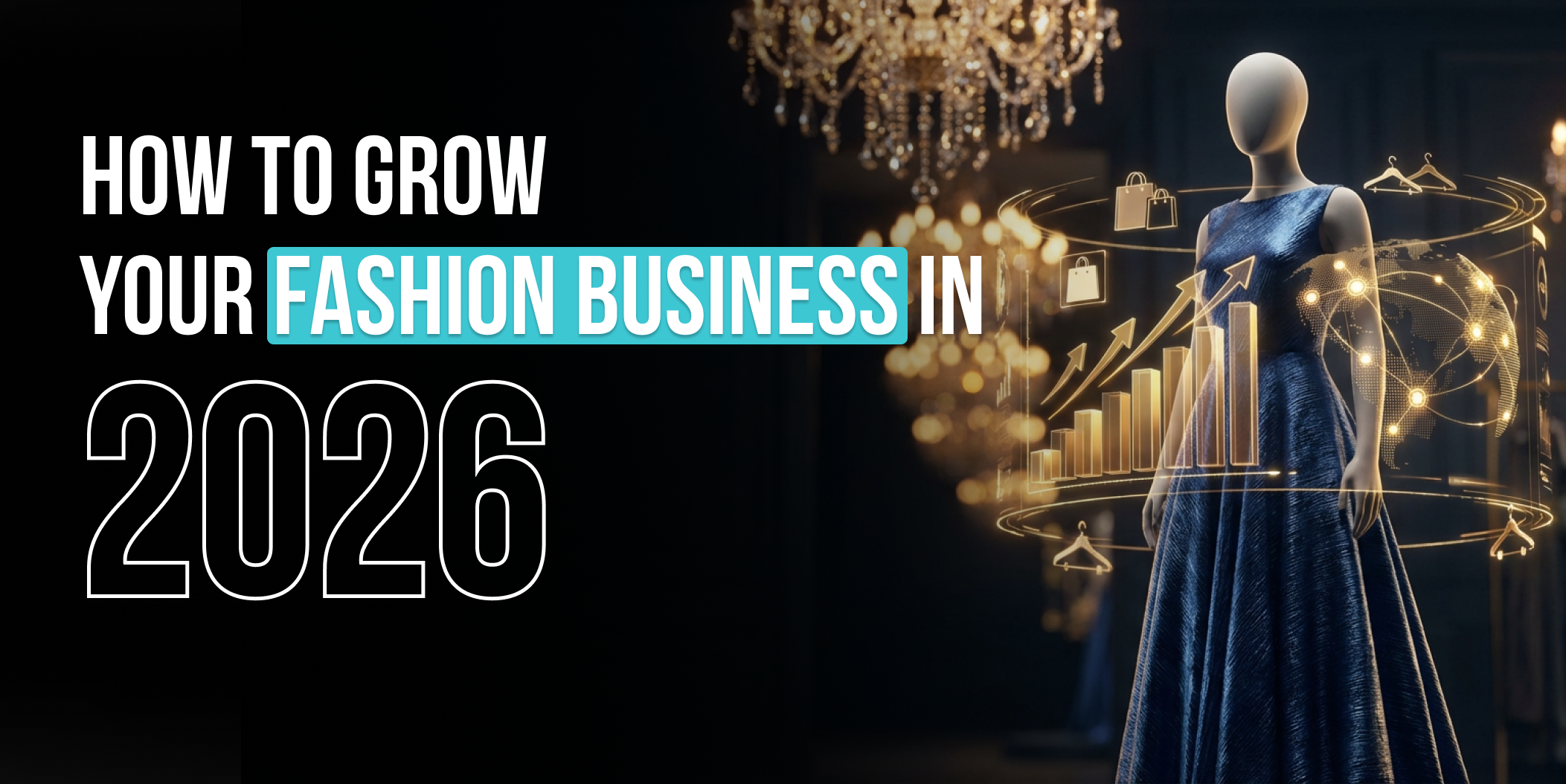
The fashion industry is evolving faster than ever, and if you’re running a fashion business, you’ve probably felt the pressure. Between shifting consumer behaviors, supply chain challenges, and the digital transformation that’s reshaping retail, it’s easy to feel overwhelmed. But here’s the thing 2026 presents incredible opportunities for fashion brands that know how to adapt and grow strategically.
Want to know how to grow your fashion business in 2026? You’re in the right place. Whether you’re a small boutique owner or managing an established brand, the strategies I’m about to share will help you expand your fashion brand 2026 and beyond. We’ll dive into proven fashion business growth strategies that successful brands are already implementing from leveraging AI in fashion retail to building sustainable and circular fashion models that resonate with today’s conscious consumers.
At Tezeract, we’ve helped numerous fashion brands navigate these challenges using AI-powered solutions. The key isn’t just keeping up with trends it’s about building a resilient, data-driven business that can thrive in any market condition.
10 Steps To Expand Fashion Brand In 2026
1. Embrace Data-Driven Fashion Brand Development
Here’s the thing about fashion in 2026: gut instinct alone won’t cut it anymore. The most successful brands are those that marry creativity with cold, hard data. Think about it why guess what your customers want when you can actually know?
Data-driven fashion brand development starts with understanding your customer journey at every touchpoint. Are people abandoning their carts at checkout? Which products get the most social media engagement? What’s your return rate by category? These insights become your roadmap.
Start by implementing analytics tools that track customer interactions across all channels. Google Analytics, heat mapping tools, and customer feedback platforms should be your best friends. But here’s the key: don’t just collect data act on it.
When FN-AD partnered with Tezeract to automate their manual brand classification and lead management processes, the results were transformative: 60% reduction in manual effort, 47% productivity boost, and 50% higher lead conversion rates. Our AI-powered solution turned scattered data into intelligent automation, proving that data-driven strategies deliver real, measurable growth. See the full case study.
Remember, effective strategies for fashion business growth in 2026 rely heavily on understanding what the numbers are telling you about your customers’ preferences and behaviors.
2. Implement AI-Powered Demand Forecasting
Want to know the difference between brands that thrive and those that barely survive? It’s often their ability to predict what customers will want before customers even know it themselves.
AI-powered demand forecasting isn’t science fiction it’s happening right now. These systems analyze historical sales data, social media trends, weather patterns, and even economic indicators to predict future demand with remarkable accuracy.
Think about the last time you had too much inventory sitting in your warehouse or, worse, ran out of your bestselling item during peak season. Frustrating, right? AI in fashion retail eliminates much of this guesswork.
The beauty of AI forecasting is that it learns and improves over time. The more data it processes, the more accurate its predictions become. This means better cash flow, reduced storage costs, and happier customers who can actually buy what they want when they want it.
Start small implement forecasting for your top 20% of products first, then expand as you see results.
3. Accelerate Design-To-Market With Digital Fashion Brand Growth Tools
Speed wins in fashion. Period. While your competitors are still sketching designs on paper, you could be testing digital prototypes with real customers and getting feedback in real-time.
Digital fashion brand growth tools are revolutionizing how quickly brands can move from concept to customer. We’re talking about 3D design software, virtual sampling, and digital pattern-making that can cut your design-to-market timeline in half.
Here’s what’s exciting: you can now create photorealistic product images without ever manufacturing a physical sample. This means you can test market response, gather pre-orders, and validate demand before investing in production.
Tezeract has worked with emerging fashion brands to implement digital workflows that reduced their time-to-market from 12 months to just 6 months. Imagine the competitive advantage of being first to market with trending styles.
The tools you should consider include CLO 3D for virtual garment creation, Adobe Illustrator for technical drawings, and PLM (Product Lifecycle Management) software to streamline your entire design process.
Don’t think of these as just efficiency tools they’re strategic weapons that help you respond to fashion marketing strategies and market demands faster than ever before.
4. Use Trend Prediction Analytics For Collection Planning
Ever wonder how some brands seem to nail every trend while others are always playing catch-up? The secret isn’t luck it’s trend prediction analytics.
These sophisticated systems analyze millions of data points from social media, runway shows, street style photos, search trends, and even economic indicators to identify emerging trends months before they hit mainstream.
But here’s where most brands get it wrong: they try to chase every trend. Smart brands use analytics to identify which trends align with their brand identity and target audience. Not every trend is worth pursuing.
The key is to start your trend analysis 12-18 months before your intended launch date. This gives you enough time to design, source materials, and plan production without rushing.
Consider platforms like WGSN, Trendalytics, or custom AI solutions that can monitor social media sentiment and emerging style preferences. Remember, sustainable fashion business practices also mean not overproducing items that won’t sell trend prediction helps you avoid this costly mistake.
5. Personalize Customer Experiences With AI Shopping Assistants
Your customers don’t want to feel like just another number in your database. They want to feel understood, valued, and personally catered to. That’s where AI shopping assistants become game-changers.
These intelligent systems learn from each customer’s browsing history, purchase patterns, and preferences to provide personalized product recommendations. It’s like having a personal stylist for every single customer, available 24/7.
Think about Netflix’s recommendation engine it knows what you’ll want to watch before you do. AI shopping assistants work the same way for fashion. They can suggest complementary items, notify customers when their preferred brands have new arrivals, and even predict when they might need to reorder basics.
Start with chatbots that can answer basic questions and gradually evolve to more sophisticated recommendation engines. The goal is to make shopping effortless and enjoyable, turning one-time buyers into loyal customers who keep coming back.
6. Optimize Supply Chain And Inventory Management
Your supply chain is the backbone of your fashion business, but it’s probably also your biggest headache. Late deliveries, quality issues, and inventory imbalances can kill even the best fashion brand.
Supply chain resilience fashion 2026 requires a multi-pronged approach. First, diversify your supplier base don’t put all your eggs in one basket. Second, implement real-time tracking systems that give you visibility into every step of your production process.
Inventory management isn’t just about having enough stock; it’s about having the right stock in the right place at the right time. This means understanding seasonal patterns, regional preferences, and even weather impacts on demand.
Consider implementing just-in-time inventory practices for fast-moving items while maintaining safety stock for your bestsellers. Use ABC analysis to categorize your products and apply different inventory strategies accordingly.
Remember, margin protection strategies 2026 start with efficient supply chain management every day of reduced lead time and every percentage point of waste elimination goes straight to your bottom line.
7. Strengthen Fashion Marketing Strategies For Omnichannel Retail
Your customers don’t think in channels they think in experiences. They might discover your brand on Instagram, research on your website, try on in-store, and purchase through your mobile app. Your marketing needs to be seamlessly connected across all these touchpoints.
Omnichannel fashion retail isn’t just about being present everywhere; it’s about creating a cohesive brand experience that feels natural and intuitive. Your messaging, visual identity, and customer service should be consistent whether someone interacts with you online or offline.
The key is data integration. When a customer adds items to their cart on mobile but doesn’t complete the purchase, your email marketing should know about it. When they visit your store, your sales associates should have access to their online browsing history.
Tezeract has helped fashion brands create unified customer profiles that track interactions across all channels, resulting in 25% higher customer lifetime value and improved brand loyalty.
Start by auditing your current customer journey. Map out every touchpoint and identify gaps or inconsistencies. Then prioritize the most impactful improvements usually, this means better data integration and staff training.
Remember, omnichannel retail digital experience is about making your customers’ lives easier, not just checking boxes on your marketing strategy.
8. Improve Product Discovery With Advanced AI Technologies
Here’s a frustrating truth: your customers can’t buy what they can’t find. If your product discovery experience is clunky, you’re literally watching sales walk out the door.
Advanced AI technologies are transforming how customers find and interact with products. Visual search allows customers to upload photos and find similar items in your catalog. Voice search lets them describe what they’re looking for in natural language. Recommendation engines surface products they didn’t even know they wanted.
Think about how often you’ve left a website because you couldn’t find what you were looking for quickly enough. Your customers do the same thing. AI-powered search and discovery tools eliminate this friction.
Start with improving your site search functionality add auto-complete, spell-check, and synonym recognition. Then consider implementing visual search for fashion items where customers often struggle to describe what they want in words.
The goal is to reduce the time between wanting something and finding it in your store. Every second you save in the discovery process is a second closer to a sale.
9. Prioritize Sustainable Fashion Business Practices
Sustainability isn’t just a trend it’s becoming a business imperative. Today’s consumers, especially younger demographics, are making purchasing decisions based on brands’ environmental and social impact.
Sustainable fashion business practices go beyond using organic cotton or recycling packaging. It’s about creating circular business models where waste becomes input for new products, implementing transparent supply chains, and designing for durability rather than disposability.
But here’s the business case: sustainable practices often lead to cost savings through reduced waste, improved efficiency, and stronger customer loyalty. Brands that embrace sustainability early are positioning themselves for long-term success.
Start with an honest assessment of your current practices. Where can you reduce waste? How can you extend product lifecycles? Can you implement take-back programs or repair services?
Remember, sustainable and circular fashion models aren’t just good for the planet they’re increasingly good for business as consumers vote with their wallets for brands that align with their values.
10. Analyze Performance To Refine Fashion Business Growth Strategies
You can’t improve what you don’t measure. The most successful fashion brands in 2026 will be those that continuously analyze their performance and refine their strategies based on real data, not assumptions.
This means going beyond basic sales metrics to understand customer lifetime value, acquisition costs, inventory turnover, and brand sentiment. You need to know not just what’s happening, but why it’s happening and what you can do about it.
Regular performance analysis helps you identify what’s working and what isn’t before small problems become big ones. It also helps you spot opportunities that might not be obvious from day-to-day operations.
Set up monthly performance reviews where you analyze key metrics and identify action items. Don’t just look at what happened focus on what you’re going to do differently based on what you learned.
Remember, ways to expand your fashion brand in 2026 require constant refinement and optimization. The brands that win are those that treat their business as a continuous experiment, always testing, learning, and improving.
Conclusion
Ready to Transform Your Fashion Business?
Growing your fashion business in 2026 isn’t just about following trends it’s about building a resilient, data-driven operation that can adapt and thrive. The 10 strategies we’ve covered give you a comprehensive roadmap, from leveraging AI for demand forecasting to creating seamless omnichannel fashion retail experiences.
Here’s the reality: fashion brands that embrace these digital fashion brand growth strategies now will have a significant competitive advantage. Whether you’re implementing sustainable fashion business practices, optimizing your supply chain resilience, or enhancing customer engagement through personalization, each step builds toward long-term success.
Remember, you don’t have to tackle everything at once. Start with the strategies that align most closely with your current challenges and resources. The key is consistent progress, not perfection.
If you’re curious about how AI can enhance your business, you might find it helpful to book a free 30-minute strategy session. This session helps businesses uncover high-ROI AI opportunities using Business Impact Framework. It’s ideal for business owners or operators looking to improve automation, accuracy, or growth with AI especially in industries like retail, healthcare, or marketing.