Introduction
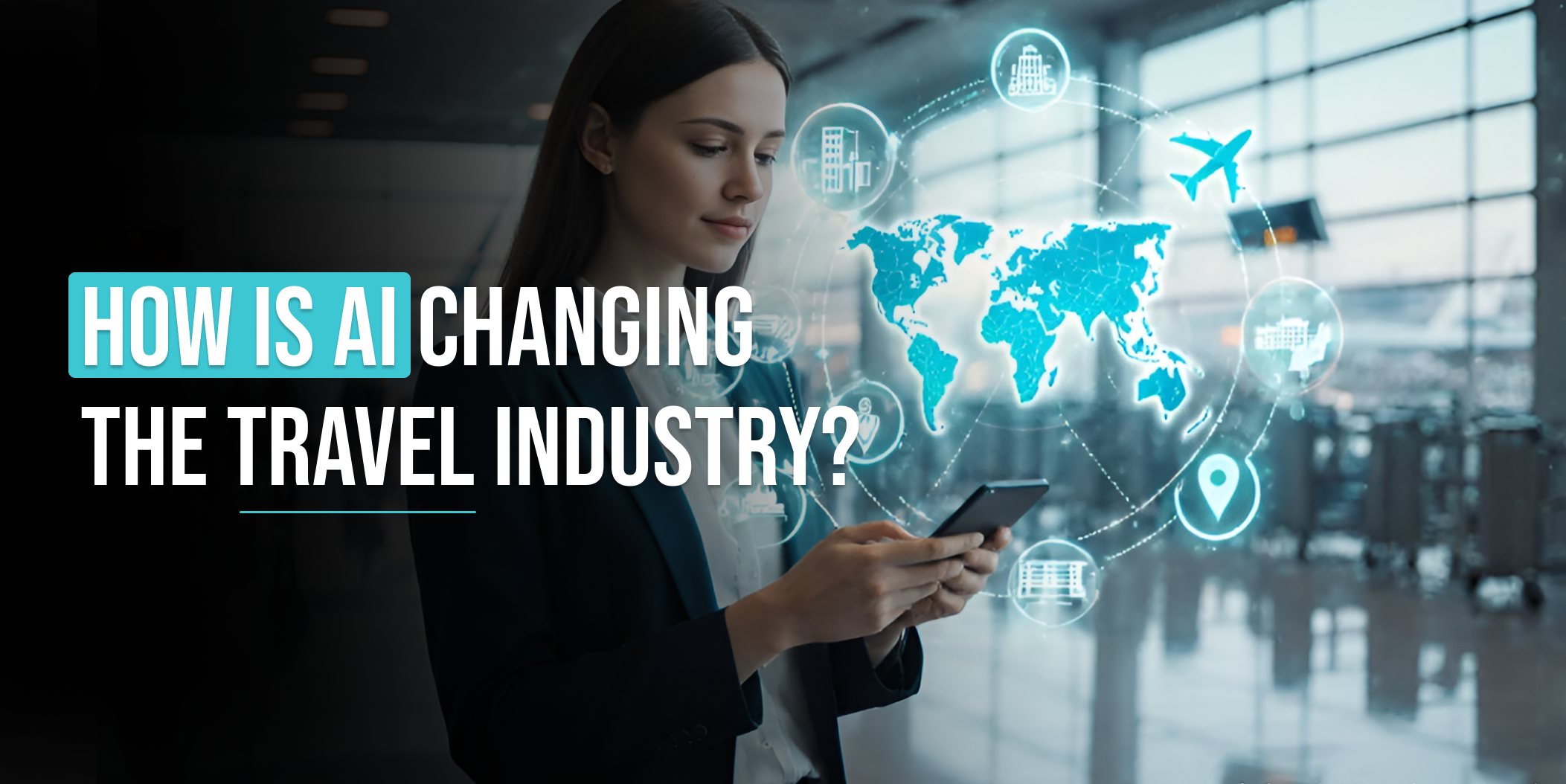
Did you know that ai in travel industry is quietly reshaping how we plan, book, and experience trips? In my role at Tezeract, I see intelligent systems turning scattered data into smoother journeys. From predictive search to proactive support, AI is shifting decisions from guesswork to insights, helping travelers save time and money while enjoying more personalized trips.
This introduction highlights the core ways technology is changing the travel landscape, why executives should care, and how Tezeract partners with clients to implement practical AI solutions. At the heart of the shift is the ability to translate complex patterns into simple choices without sacrificing the human touch. As travelers, we want frictionless discovery, transparent pricing, and help when things go wrong; ai travel assistants are becoming a common, reliable ally in making travel feel effortless.
If you’re guiding a travel business, these shifts aren’t futures you buy into they’re capabilities you implement today.
AI In Travel Industry: Key Applications
1. AI Travel Agents And Virtual Assistants
AI travel agents and virtual assistants are becoming front-line interfaces in trip planning. They handle routine inquiries, suggest itineraries, and monitor price changes without human delay. For travelers, that means faster answers and more personalized options, 24/7. For operators, it reduces call volumes and frees human agents for complex problems. At Tezeract, we help teams deploy these assistants with natural language capability and context awareness, enabling seamless conversations that guide travelers toward confident decisions and smooth bookings. ai for travel.
2. Dynamic Pricing And Deal Hunting
Dynamic pricing and deal hunting leverage to maximize occupancy and revenue. With travel data analytics informing adjustments, AI analyzes demand patterns, competitor movements, and price elasticity to adjust rates with precision. For travelers, this translates into timely discounts today and smarter choices; for operators, it reduces markdown waste and improves margin. In practice, teams implement dashboards and alerts that surface price shifts, ensuring teams act quickly. Travel leaders who adopt these insights stay profitable across routes and segments worldwide today.
3. Personalized Travel Experiences With AI
Personalization is no longer a luxury; it’s expected. AI evaluates past trips, search patterns, and stated interests to craft tailored suggestions. Travelers see options aligned with pace, budget, and activity preferences, reducing decision fatigue. Hotels, transport, and experiences become coherent bundles rather than isolated purchases. For teams, streaming these signals into content and offers raises engagement without feeling intrusive. In practice, the most successful programs surface personalized travel recommendations that users actually value. This approach boosts loyalty and lifetime value.
4. How AI Is Used In Travel Booking And Search
AI is changing travel booking and search by moving from keyword matching to intent understanding. Modern engines parse traveler goals, context, and timing to rank options that truly matter, not just cheapest. Real-time signals unify flight, hotel, and activity data into coherent itineraries. This improves conversion and reduces the time-to-book, while maintaining human oversight for complex choices. This is where ai travel booking capabilities shine. For teams, embedding explainable AI helps users trust each recommendation while streamlining experiences.
A practical example is Visabot, an AI-driven Telegram bot that automates visa appointment booking. Instead of manually refreshing embassy websites, Visabot continuously scans official portals for available slots and instantly notifies users through Telegram. This intent-driven approach reduces booking time from hours to minutes, demonstrating how AI handles time-sensitive tasks that directly impact travel planning while freeing applicants and visa offices from manual coordination.
5. AI Concierge And In-Trip Support
AI concierges elevate in-trip support, turning data into action for travelers on the go. Bots can secure reservations, alert about gate changes, and adjust plans when plans shift, all while preserving a human touch where it matters. For operators, concierge tools knit together hospitality and logistics, creating seamless moments that feel curated rather than automated. As the ecosystem matures, AI-powered travel apps emerge as trusted companions, extending the journey beyond booking to ongoing, context-aware assistance during the trip for travelers.
6. Predictive Analytics For Demand And Sustainability
Predictive analytics brings demand insight, capacity planning, and sustainability into one confident framework. By analyzing booking curves, weather, events, and seasonal cycles, AI can forecast occupancy, optimize staffing, and guide inventory decisions weeks in advance. For operators, this translates into fewer overbookings and wasted capacity, while travelers benefit from steadier prices and better availability. In the broader context of the ai in travel industry, these tools enable smarter routing, greener choices, and measurable progress toward carbon goals. Tezeract helps clients implement governance, explainability, and risk controls around these powerful models. Our team collaborates with clients to validate results and ROI.
Impact On Business Operations
1. Operational Efficiency And Automation
Operational efficiency is no longer about cutting costs alone; it’s about rethinking workflows end to end. In the ai in travel industry, operations teams are increasingly adopting automation to handle repetitive tasks, from baggage and ticketing data entry to staff scheduling and inventory checks. Automated processes reduce manual errors, speed up turnaround times, and free human agents to tackle higher‐value work.
Tezeract helps clients deploy AI-enabled platforms that consolidate data streams, align scheduling with demand, and deliver real‐time visibility into capacity and bottlenecks, a hallmark of AI travel solutions. These capabilities also unlock personalized travel experiences AI by aligning operations with traveler preferences and past behavior. Moreover, this shift enables AI-driven customer service that scales without compromising quality, offering proactive support and context‐aware recommendations.
Start small with automated check‐in, notifications, and ticketing audits; layer in predictive capacity planning; and track metrics like cycle time, error rate, and cost per conversation to demonstrate ROI.
2. Revenue Management And Pricing Strategies
Pricing dynamics have shifted from fixed rates to agile strategies driven by data and demand signals. In revenue management and pricing, AI helps airlines, hotels, and OTAs anticipate shifts in occupancy, competition, and external events. Real-time dashboards blend internal performance with external indicators such as market pace, weather, and calendar effects, enabling dynamic allocation of inventory across channels and segments. The result is better margins, higher conversion, and more stable occupancy.
A practical approach is to start with segmentation-based pricing, then layer in elastic pricing for popular packages and limited-time offers. Historical data combined with live booking pace allows models to propose optimal price bands and cadence, reducing the risk of revenue leakage while avoiding price shocks for loyal travelers.
With Tezeract, operators can implement governance around pricing decisions, maintain human oversight for high-stakes adjustments, and measure lift through controlled pilots, A/B tests, and ongoing KPI monitoring.
3. Fraud Detection And Security Improvements
Fraud detection and security improvements are increasingly proactive, powered by machine learning, anomaly detection, and continuous risk scoring. In travel, the payoff is not only preventing losses but also preserving trust in frictionless experiences, from digital wallets to identity checks at check-in.
AI models monitor patterns across bookings, payments, and traveler behavior, flagging unusual activity and alerting teams before a transaction completes. Implementations typically combine rule-based controls with adaptive risk scoring, multi-factor authentication, and secure payment routes to reduce false positives and customer friction.
Data governance and privacy remain essential; anonymized telemetry and transparent consent flows help travelers feel safe while still receiving personalized services. The goal is seamless security that does not slow down the customer journey. For operators, the payoff is lower chargebacks, faster dispute resolution, and stronger compliance posture, all while maintaining a human-centered hospitality approach.
Technology Enablers And Implementation
1. Core Technologies: ML, NLP And Computer Vision
Core technologies are the engine behind practical artificial intelligence in travel. Machine learning models sift booking histories, search patterns, and price movements to detect signals others miss. Natural language processing turns customer questions into precise intents, powering search, chat, and recommendations with human-like understanding. Computer vision lets apps recognize objects in images, from hotel room quality to visa documents, speeding verification and personalization. At Tezeract, we architect modular pipelines so these technologies talk to each other without friction, enabling real-time decision-making across channels. The result is faster discovery, more accurate matches, and fewer manual interventions.
For operators, the payoff is measurable: accelerated conversions, improved yield, and happier travelers who feel understood. The right combination of ML, NLP, and computer vision creates a foundation for scalable, responsible AI that respects privacy and stays transparent to users in daily customer journeys everywhere.
2. Data Governance, Privacy And Ethics
Data governance, privacy, and ethics keep pace with capability. As AI systems ingest more customer data to improve relevance, leaders must codify guardrails that protect consent, transparency, and security. Policy-first design helps teams avoid bias, enforce data minimization, and log model decisions for auditability. In practice, this means clear data lineage, and red-teaming against cases that could harm trust.
On the bright side, data governance supports faster, safer experimentation. Teams can run controlled A/B tests, validate results, and scale successful models with confidence. The right protocols enable sustainable growth and a stronger customer relationship. Meanwhile, experiences like virtual travel experiences illustrate how AI can extend exploration without leaving home, fueling curiosity while keeping privacy intact. Sound governance also helps justify continued investment and faster ROI machine learning in travel industry.
3. Integration Challenges And Vendor Solutions
Integrating AI capabilities into travel operations means aligning data flows, systems, and teams without creating islands of automation. The challenge is not the idea of intelligence, but the logistics of making it work with existing ERP, CRM, and channel partners. APIs and standards matter, yet real-world deployments require governance around data latency, model versioning, and rollback options. Tezeract focuses on modular connectors, scalable data pipelines, and clear ownership to reduce friction during rollout.
Vendor partner selection should stress interoperability, service level clarity, and roadmaps rather than pilots. When leaders evaluate ai in travel industry capabilities, they should demand transparent cost models, measurable ROI, and a plan for continuous improvement that involves humans in the loop. With practical governance and thoughtful integration, AI can amplify human expertise rather than replace it.
Future Trends And What To Expect
1. Emerging Trends And Predictions
At Tezeract, we’re watching three waves reshape travel: real-time decisioning, edge analytics, and deeper personalization. Data from flights, hotels, and experiences feeds models that anticipate needs before customers even search. The ai in travel industry is evolving, and leaders must align governance with experimentation to stay agile.
As consumer expectations rise, how AI is transforming travel industry becomes less about hype and more about measurable outcomes – faster bookings, smarter routing, and reduced friction. Travelers gain confidence from transparent recommendations, while operators see higher margins through optimized capacity and dynamic pricing. This era is also driving digital transformation in travel industry across platforms, partners, and internal workflows, requiring modular connectors and scalable pipelines. The payoff is clearer customer journeys and resilient profitability.
2. Regulatory And Ethical Considerations
Ethics and regulation are no longer afterthoughts; they shape AI roadmaps in travel. We must balance innovation with traveler rights, data consent, and clear accountability. As models ingest sensitive data, robust governance ensures transparency about how decisions are made. Regulators push for explainability, data minimization, and consent-based use, while industry groups push for interoperability standards that reduce vendor lock-in.
In practice, this means documenting data lineage, offering opt-outs, and auditing outcomes for disparate impact. At Tezeract, we design architectures that support permissioned data sharing, role-based access, and privacy-preserving analytics, so AI benefits travel operations without compromising trust or compliance. Clear incident response plans and independent audits reinforce confidence with partners.
3. How Companies Can Prepare
To capitalize on these shifts, Tezeract recommends a staged, risk-aware approach. Start with a lightweight data fabric: curate quality data, enable clean APIs, and establish a shared vocabulary across teams. Build pilot projects around three pillars: predictive pricing, personalized search, and operational automation, then measure ROI with clear dashboards.
Invest in talent data engineers, privacy lawyers, and ethics champions as governance keeps pace with capability. Partner with trusted vendors to avoid silos, and design modular AI components that snap into ERP and CRM workflows. Finally, invest in customer-facing transparency: explainable recommendations and opt-out options build trust as you expand ai travel search capabilities. Assign owners for each capability, track milestones, and celebrate small wins to sustain momentum across teams today and beyond.
Case Studies And Real-World Examples
1. Airlines And Revenue Optimization
Airlines are increasingly using AI to optimize revenue and operations. Demand signals feed pricing models, letting carriers adjust fares as seats sell, while vacancy risk is minimized through forecasting. AI also guides capacity controls, fleet assignments, and overbooking strategies, reducing costly errors and smoothing the passenger flow. For loyalty programs, predictive analytics tailor offers, upsells, and seat upgrades based on traveler history.
This is part of ai powered travel planning, where machine learning models translate messy data into actionable pricing and inventory decisions. When we ask how is ai used in travel booking and search, the answer is clearer: surfaces encourage conversion. At Tezeract, we see this translating into conversion.
2. Online Travel Platforms And Personalization
Online platforms leverage AI to blend past behavior with real-time context, surfacing choices that feel personalized without overwhelming the user. Recommendation engines, smarter search filters, and dynamic bundles align price, timing, and preferences in a single click. For travelers, this means faster discovery and fewer dead ends; for platforms, it means higher engagement and improved retention.
The supporting idea here is how does ai personalize travel itineraries? The answer lies in combining location signals, channel data, and feedback loops to craft itineraries that feel tailor-made, yet scalable across millions of users. Data governance remains essential to protect trust.
3. Hotels And AI Concierge Services
Hotels are turning to AI concierge services to blend efficiency with personalization. Chatbots greet guests, handle check-in, answer questions, and curate local experiences, while front desk teams handle exceptions. In-room devices read preferences, adjust lighting and climate, and recommend services based on stay history.
This shift reduces friction and frees staff to focus on meaningful interactions. For operators, the real value is in rapid decisioning: matching occupancy, pricing, and service levels to demand while maintaining quality. In the broader context, ai in travel industry means travelers expect smoother, smarter, and safer journeys, from arrival to return home.
Conclusion
Artificial intelligence is not a distant promise; at Tezeract, we see ai in travel industry turning real-time, customer-centric decisions that streamline operations and elevate experiences. By weaving machine learning, NLP, and computer vision into everyday workflows, we observe ai travel trends shaping faster, more personalized search and seamless travel journeys. This perspective helps us illustrate how ai is changing travel from reactive fixes to proactive planning, and from broad offers to precisely targeted itineraries.
For operators, it means smarter revenue management, dynamic pricing, and more efficient service delivery, underpinned by robust data governance and ethical guidelines that protect privacy and build trust. As the industry evolves with real-time decisioning, edge analytics, and deeper personalization, the opportunity to drive meaningful value grows without compromising transparency.
If you’re ready to explore how AI can elevate your travel business, Book a free 30-minute AI strategy session with us today.